smile-design
How to Build a Full Smile Makeover Plan That Works
Full smile makeover plan explained: how to properly sequence Invisalign, whitening, and veneers together for the best result.
Sep 22, 20266 min read


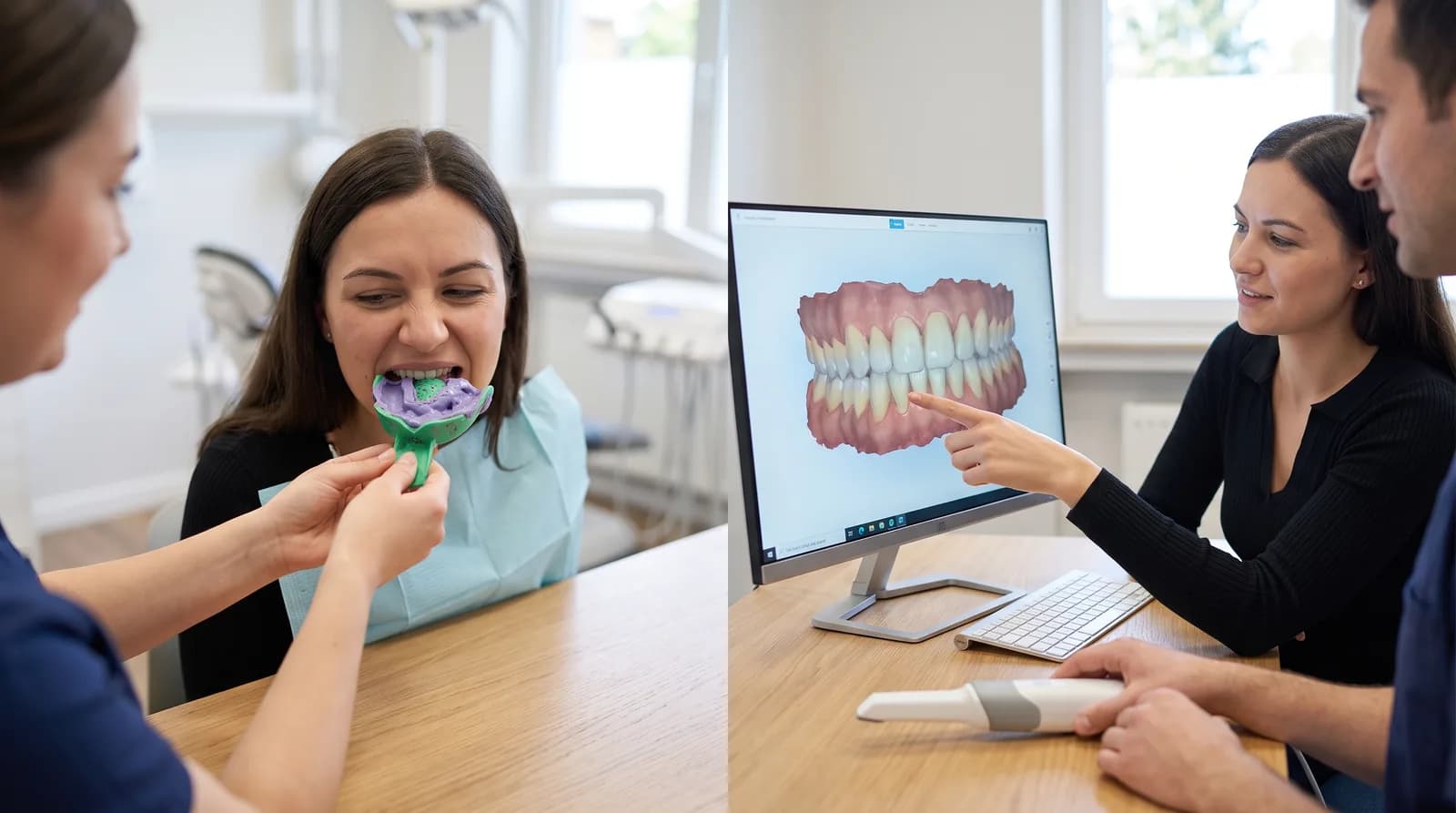
iTero digital scanning vs traditional impressions comes down to one welcome change: no more biting into a tray of thick, goopy material and holding still while it sets. iTero uses a small wand to capture a digital 3D model of your teeth in a few minutes, replacing that whole process entirely.
Nearly all Americans, 99.7% according to the American Academy of Cosmetic Dentistry, consider their smile an important social asset, and getting an accurate model of your teeth is the first step behind nearly every Invisalign case, crown, or veneer. This guide compares iTero digital scanning against traditional impressions directly, from comfort to accuracy to what each actually involves at your appointment.
For patients who've avoided starting Invisalign or putting off a needed crown because of a bad experience with impressions in the past, this comparison matters more than it might seem. The technology behind how your teeth get modeled has changed considerably, and many patients are surprised to learn the goopy tray experience they remember isn't the only option anymore, or even the standard one at many practices today.
iTero digital scanning uses a small handheld wand to capture thousands of images of your teeth and gums per second, stitching them together into a precise 3D digital model in real time, a technology also referenced in the ADA's patient resources on dental technology. No physical material touches your teeth during the process.
The scanner is guided along your teeth in a smooth, continuous motion, and you can watch the 3D model build on a chair-side screen as the scan happens. Most full-mouth scans take just a few minutes, and the resulting digital file can be used immediately for Invisalign planning, crown and veneer fabrication, or simply as a detailed baseline record of your teeth.
The technology behind iTero was originally developed for orthodontic planning, but its use has expanded well beyond that. Because the scan produces a highly detailed, accurate model instantly, dental teams now rely on it across nearly every type of treatment that used to require a physical mold, from a single crown to a full Invisalign case.
Beyond planning treatment, the same scan doubles as a valuable diagnostic record. Comparing scans taken months or years apart can reveal subtle changes in tooth wear, spacing, or alignment that might otherwise go unnoticed between visits, giving Dr. Curley a more complete picture of how your smile is changing over time. Regular dental visits catch 80% of oral health issues before they become serious, according to the ADA, and consistent digital records support that early detection.
Traditional impressions use a thick, putty-like material loaded into a tray, pressed against your teeth, and held in place for one to two minutes while it sets into a mold. That mold is then used to create a physical or digital model.
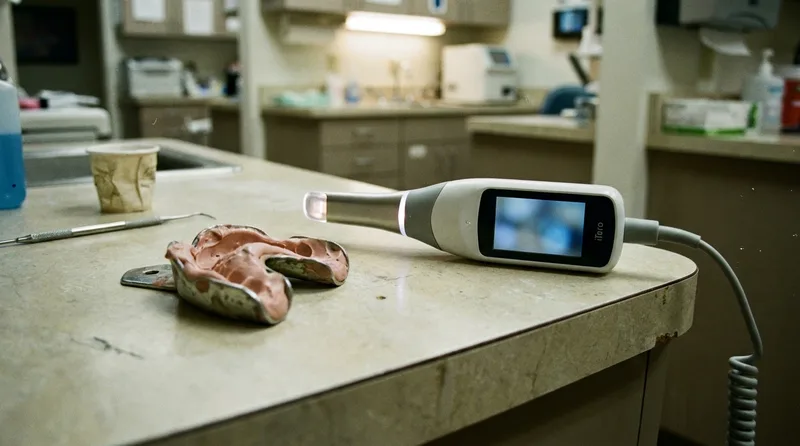
The material has a distinct texture and taste that many patients find unpleasant, and holding still with a full tray in your mouth can trigger a gag reflex for some people, especially for upper arch impressions. Once set, the tray is removed, and the impression itself needs to be handled carefully and often shipped to a lab, since it's a physical mold rather than a digital file that can be sent instantly.
Traditional impressions have been the standard for decades, and they still produce a usable, accurate model in the hands of an experienced dental team. The material itself has improved over the years too, with faster-setting options now common. That said, the fundamental experience, biting into a filled tray and holding still, hasn't changed much despite those material improvements.
iTero digital scanning is significantly more comfortable for most patients, since there's no tray, no setting material, and no need to hold still while something firms up in your mouth. The scanning wand alone is far less likely to trigger a gag reflex.
Patients with a sensitive gag reflex, in particular, tend to notice the biggest difference, since traditional impression material sitting at the back of the palate is a common trigger point. The scanning wand moves continuously and never fills your whole mouth at once, which makes it a realistic option even for patients who've avoided impressions in the past because of that reaction.
Children and anxious patients also tend to tolerate digital scanning noticeably better than a traditional impression, since there's nothing filling the mouth and the process feels more like a quick check than a procedure. For a first-time Invisalign patient who's nervous about the whole experience, a comfortable scanning appointment often sets a much better tone for the rest of treatment.
Dreading a goopy impression?
Ask about iTero digital scanning for your next Invisalign, crown, or veneer appointment.
Schedule a Visit →iTero digital scanning is generally more accurate than traditional impressions, since it avoids common physical issues like material shrinkage, air bubbles, or distortion that can occur while a mold sets and is removed. The digital file also allows immediate review for any gaps or missed areas.
| Factor | iTero Digital Scan | Traditional Impression |
|---|---|---|
| Time in mouth | A few minutes, no holding still | 1 to 2 minutes per tray, holding still |
| Gag reflex risk | Low | Higher, especially upper arch |
| Redo risk | Low, gaps flagged immediately | Possible if material shifts or bubbles |
| Delivery to lab | Instant, digital file | Physical mold shipped |
Traditional impressions depend heavily on technique and material handling, and small errors, like the tray shifting slightly or air trapped in the material, can require a redo. With iTero, the software flags incomplete areas on the spot, so any gaps in the scan can be corrected immediately rather than discovered later after the impression has already been sent out.
This immediate feedback loop is one of the more practical advantages of digital scanning, since it removes the delay of shipping a mold to a lab only to learn days later that it wasn't usable. For time-sensitive cases, like an Invisalign refinement or a crown that needs to move quickly, that immediacy can meaningfully shorten the overall treatment timeline.
iTero scanning creates the exact digital model Invisalign's software uses to plan your entire treatment, including a simulation of how your teeth will move through each stage of aligners. This planning step wouldn't be possible with a traditional impression alone.
Because the scan produces a precise, real-time 3D model, Dr. Curley can show you a simulated preview of your projected results before you commit to Invisalign treatment, similar in spirit to the planning previews used for veneers. That same digital file also gets used throughout treatment to fabricate each stage of aligners and to track your progress against the original plan at follow-up visits.
Progress tracking is one of the more underrated benefits of digital scanning for Invisalign specifically. At follow-up visits, a new scan can be compared directly against the original plan to confirm your teeth are moving as expected, catching any deviation early rather than waiting until a later stage to notice something's off.
This kind of ongoing comparison simply wasn't practical with traditional impressions, since taking a new physical mold at every check-in visit would be both time-consuming and uncomfortable to repeat. A quick digital scan, by contrast, fits naturally into a routine progress check without adding meaningful time to the appointment.
Yes, iTero scanning works for crowns, veneers, and other restorative work, not just Invisalign, since the underlying technology simply captures a precise digital model regardless of what it's used for afterward. Same-day crowns rely on this exact scanning technology.
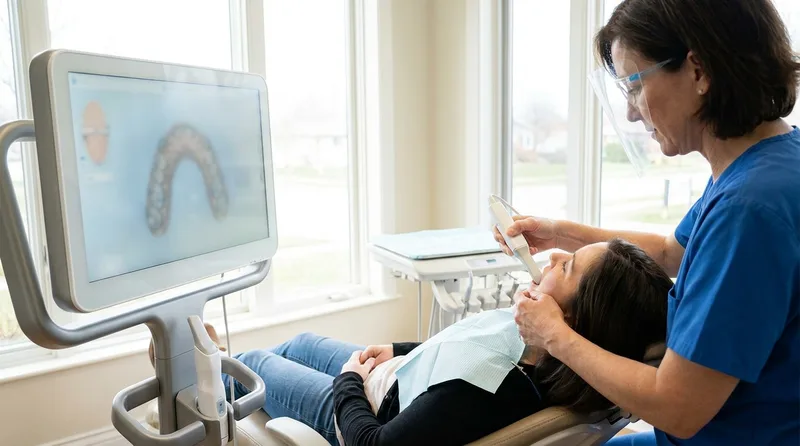
Our same-day crown process depends on exactly this kind of digital scan to design and mill a crown in a single visit, and lab-made crowns and veneers use the same scan data sent electronically instead of shipping a physical mold. One piece of scanning technology now supports a wide range of treatments across the practice.
This versatility is part of why practices invest in iTero once they have it: the same equipment and the same comfortable scanning experience applies whether you're in for a routine checkup, starting Invisalign, or being fitted for a crown. Patients who've had one type of digital scan already know what to expect if another treatment calls for one later.
Digital scanning has very few downsides for most patients, though the equipment itself represents a significant investment, so not every dental office has it available. In rare cases involving very limited mouth opening, a scanner may be harder to maneuver than expected.
For the vast majority of patients and treatment types, digital scanning is simply an upgrade with no real trade-off in outcome. If you've had care elsewhere and were only offered traditional impressions, that likely reflects the equipment available at that particular office rather than any limitation specific to your case.
The main practical downside is availability rather than performance, since the scanning equipment represents a meaningful investment that not every dental office has made yet. As digital scanning becomes more widespread, that gap is closing, but it's still worth confirming with any practice whether they offer digital scanning if avoiding traditional impressions matters to you.
A small number of patients with very limited mouth opening or certain anatomical considerations may find any scanning or impression method takes a bit of extra patience, regardless of which technology is used. In those cases, an experienced dental team can typically adapt the technique to still get a usable, accurate result.
iTero digital scanning vs traditional impressions ultimately comes down to a clear upgrade in comfort and accuracy, without giving up anything in the process. Both methods can produce a usable model, but one asks a lot less of you along the way. Following general oral health guidance from the CDC alongside routine scans and checkups supports a healthy smile long-term. Results may vary. Please consult with your dentist at Susan J. Curley DDS for personalized treatment recommendations.
If a goopy impression has kept you from starting Invisalign or moving forward with a crown or veneer, it's worth knowing that experience isn't the only option anymore.
Ready for a Comfortable Scan Instead?
Schedule a consultation with Dr. Curley in Wall Township and see how iTero digital scanning works for Invisalign or restorative treatment.
Book Appointment →Have questions before booking?
Contact Our Wall Township Office →Written By
Dentist
Full smile makeover plan explained: how to properly sequence Invisalign, whitening, and veneers together for the best result.
Digital smile design mockup explained honestly for patients: how it is created, why it is trustworthy, and what it shows you.
Smile design for a gummy smile: what actually causes it and which treatment options can genuinely help you feel confident.
Book your visit with Dr. Curley online or call us, and we'll take it from there.