
smile-design
How to Build a Full Smile Makeover Plan That Works
Full smile makeover plan explained: how to properly sequence Invisalign, whitening, and veneers together for the best result.
Sep 22, 20266 min read



The dental implant timeline surprises a lot of patients who assume it's a single appointment, similar to getting a filling. In reality, a typical restorative dentistry case runs anywhere from about 3 to 8 months from first consultation to final crown, with most of that time spent healing rather than sitting in a dental chair.
Dental implants have a success rate of 95 to 98% over 10 years, according to the Journal of Oral and Maxillofacial Surgery, and part of that reliability comes from respecting the healing timeline rather than rushing it. This guide walks through each stage of implant treatment, consistent with the ADA's patient resources on dental implants, so you know what to expect at every point along the way.
A straightforward single-implant case typically takes 3 to 6 months from consultation to final crown, while cases needing bone grafting can extend to 8 months or more. The chair time itself is a small fraction of that total, with healing accounting for most of the calendar time.
This surprises many patients specifically because the visits themselves are brief and spaced weeks or months apart. It's easy to assume a process is short when each individual appointment only takes an hour or two. But the biological healing between those appointments is what actually sets the pace.
Knowing this upfront changes how patients approach the whole process. Rather than expecting a quick fix, you can plan around the actual timeline, which tends to reduce frustration at each stage along the way.
Comparing your case to a friend's experience can also be misleading, since even small differences in bone volume or healing speed can shift the overall timeline by weeks or months. Your own CBCT scan and consultation give the only truly accurate picture for your specific situation.
The initial consultation includes a discussion of your goals, an exam, and a CBCT scan to measure the bone available at the implant site. This visit is where your specific timeline actually gets determined, rather than assumed from a generic average.
Most consultations take about an hour, covering both the conversation and the scan itself. You'll typically leave with a general sense of your case, though the full plan is usually confirmed once Dr. Curley has reviewed the scan in detail.
Bringing a list of questions to this visit helps make the most of the time, since this is genuinely the best opportunity to understand your specific timeline before any commitment is made. There's no such thing as too many questions at this stage.

Our guide on CBCT imaging for implant planning covers this scan in more detail. Once Dr. Curley reviews your scan, you'll have a specific plan and timeline rather than a general estimate, since your case may or may not include the extra steps covered next.
Not every patient does. Whether bone grafting is needed depends on the width and height of bone remaining at the implant site, which your CBCT scan measures directly. Many patients have enough bone and move straight to placement without this extra step.
If grafting is needed, it typically adds 3 to 6 months of healing before implant placement can proceed. Our practice covers bone grafting in detail as part of the same consultation, including who actually needs this step and what it involves.
Because this determination happens at your consultation rather than being assumed beforehand, your actual timeline is often better news than the worst-case scenario patients sometimes imagine going in.
It's worth remembering that grafting, when needed, is a single well-understood step rather than an open-ended complication. Once your scan confirms the need, the path forward is clear and predictable rather than uncertain.
Dr. Curley will walk through the specific graft material and technique best suited to your case during this same consultation, so grafting never feels like a separate, disconnected decision made later. It's part of one continuous plan from the very first visit.
Wondering what your specific timeline would look like?
A consultation and CBCT scan give you a real, personalized timeline rather than a general estimate.
Schedule a Consultation →Implant placement involves numbing the area with local anesthetic, placing the titanium implant post into the jawbone, and closing the site to begin healing. Most placement appointments take one to two hours depending on how many implants are being placed.
The procedure itself is more routine than patients often expect, especially for those who've heard secondhand stories rather than firsthand experience. Most of the appointment is spent on careful, precise placement rather than anything dramatic.
Sedation options remain available for patients who feel anxious about the appointment, and mentioning this upfront during your consultation lets your dental team plan accordingly. There's no need to manage anxiety about this step alone.
Most patients describe manageable discomfort afterward, similar to a tooth extraction, that resolves within a few days with over-the-counter medication. You'll typically return to normal activities the next day, though the real healing happens well beneath the surface over the following months.
A soft diet for the first few days and avoiding strenuous activity right after placement both help the site settle without unnecessary irritation. Your dentist will give specific guidance suited to your case at the appointment itself.
Most patients are surprised by how ordinary the days after placement feel. Normal routines resume quickly, and the site mostly requires the same gentle care you'd give any recent dental work while the deeper healing continues out of sight.
The healing period, called osseointegration, typically takes 3 to 6 months as the jawbone fuses directly with the titanium implant post. This step can't be rushed, since it's the biological process that gives an implant its long-term stability.
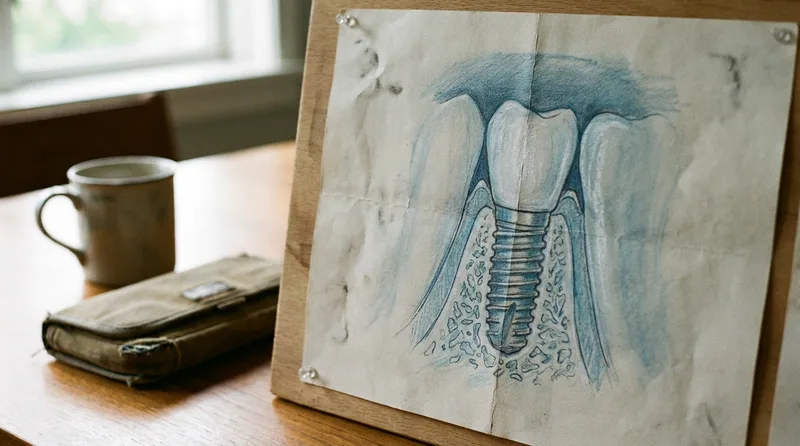
Lower jaw implants generally integrate a bit faster than upper jaw implants, since lower jawbone tends to be denser. Your dentist will confirm you're ready for the next stage with a follow-up exam or imaging before moving forward, rather than assuming a fixed calendar date applies to everyone equally.
This is often the quietest part of the entire process day to day, since there's little to actively do beyond normal oral hygiene and keeping scheduled checkups. Many patients find this stretch passes faster than they expected once they're not actively waiting for an appointment.
Some patients find it helpful to schedule this healing window around other commitments, since there's genuinely nothing to manage beyond routine care. Treating it as a normal stretch of time, rather than a waiting period, tends to make it pass more comfortably.
Checking in periodically, even briefly, helps confirm everything is progressing as expected without requiring a full appointment each time. A quick phone update is often all that's needed between the placement visit and the follow-up scan confirming you're ready for the next stage.
Once healing is confirmed, a small connector called an abutment is attached to the implant, followed by a scan or impression to fabricate your final crown. The crown itself typically arrives and is placed within one to two weeks after that final scan.
Some practices offer same-day crown fabrication using in-office milling, which can shorten this final stage considerably. Our guide on same-day crowns versus lab crowns covers how that technology fits into implant restorations specifically.
This final stage is often the most satisfying part of the process for patients, since it's when the visible result finally comes together after months of healing. Most patients describe the wait as worthwhile once they see the finished crown in place.
In select cases, same-day or immediate-load implants allow a temporary crown the same day as placement, though the final permanent crown still waits for full healing to complete. This isn't appropriate for every case, since it depends heavily on bone quality and implant stability at placement.
For most patients, the timeline isn't something to compress so much as something to plan around, scheduling the process during a period without pressing deadlines rather than trying to rush biology that has its own pace regardless of preference.
Asking directly during your consultation whether your specific case is a candidate for a faster timeline is worthwhile, since it depends entirely on your individual anatomy rather than a general rule that applies to everyone equally.
Bone grafting, slower individual healing, smoking, and uncontrolled diabetes can all extend the standard timeline beyond the typical range. Addressing modifiable factors before treatment begins, where possible, keeps your case closer to the shorter end of the range.
Regular dental visits catch 80% of oral health issues before they become serious, according to the ADA, and starting implant treatment with a genuinely healthy mouth tends to keep the entire process moving as smoothly as your specific anatomy allows.
| Stage | Typical Duration |
|---|---|
| Consultation and CBCT scan | One visit, about an hour |
| Bone grafting, if needed | 3 to 6 months healing |
| Implant placement | One visit, one to two hours |
| Osseointegration healing | 3 to 6 months |
| Abutment and final crown | One to two weeks |
The dental implant timeline runs longer than a single visit, but understanding each stage in advance turns an unfamiliar process into a predictable one. Following general oral health guidance from the CDC throughout the process supports the strong long-term outcomes implants are known for. Results may vary. Please consult with your dentist at Susan J. Curley DDS for personalized treatment recommendations.
If you've been putting off a consultation because you weren't sure what the process actually involves, now you have a clearer picture of what to expect at each stage.
Ready to Start Your Implant Timeline?
Schedule a consultation with Dr. Curley in Wall Township and get your personalized timeline mapped out.
Book Appointment →Have questions before booking?
Contact Our Wall Township Office →Written By
Dentist
Full smile makeover plan explained: how to properly sequence Invisalign, whitening, and veneers together for the best result.
Digital smile design mockup explained honestly for patients: how it is created, why it is trustworthy, and what it shows you.
Smile design for a gummy smile: what actually causes it and which treatment options can genuinely help you feel confident.
Book your visit with Dr. Curley online or call us, and we'll take it from there.