Restorative Dentistry
Chipped Tooth Repair Options Same Day: What to Know
Chipped tooth repair options same day: dental bonding vs a same-day crown, what to do right now, and what your emergency visit will look like.
Aug 23, 202610 min read



Dental crown recovery what to expect the first week comes down to a fairly predictable pattern: some sensitivity, a short adjustment period for your bite, and simple food choices while everything settles. Most of what feels alarming in the first day or two turns out to be completely normal once you know what to expect.
This guide covers eating, sensitivity, and care for both permanent crowns and the temporary crown you'll wear in between visits, part of the restorative dentistry care Susan J. Curley DDS provides. If something you're feeling doesn't match what's described here, that's exactly the kind of thing worth a quick call rather than guessing.
Stick to soft foods for the first few days after a crown, especially if you have a temporary crown in place, and avoid anything sticky, hard, or very chewy on that side of your mouth. Your gums and the crown need time to settle.
Good options include eggs, yogurt, soup, pasta, mashed potatoes, fish, and well-cooked vegetables. Avoid caramel, taffy, gum, hard candy, nuts, ice, and crusty bread, since these can pull off a temporary crown or put unnecessary pressure on a new permanent one before the cement has fully set. Chewing on the opposite side of your mouth for the first day or two is a simple habit that prevents most temporary crown problems before they start.
Temperature matters too, not just texture. Very hot or very cold foods and drinks can trigger the sensitivity that's already elevated during this window, so lukewarm is generally more comfortable than either extreme for the first several days. This tends to ease up naturally as sensitivity fades, so there's no need to permanently avoid your morning coffee or evening ice cream, just give it a few days.
| Timeframe | What to Expect | Food Guidance |
|---|---|---|
| Day 1 to 2 | Mild soreness, some numbness if local anesthetic was used | Soft foods only, avoid the treated side |
| Day 3 to 7 | Sensitivity to hot and cold, bite starting to feel more normal | Gradually reintroduce firmer foods |
| Week 2 | Sensitivity noticeably fading, bite should feel natural | Back to a normal diet in most cases |
| Weeks 3 to 4 | Occasional mild lingering sensitivity in some patients | No restrictions for most patients |
Yes, mild to moderate sensitivity to hot, cold, or pressure is normal after a crown, and it typically improves over one to two weeks as the tooth and surrounding tissue adjust. Preparing a tooth for a crown removes a layer of enamel, which can temporarily expose the nerve to more sensation than usual.
This happens for a straightforward reason. The crown replaces the outer structure of your tooth, but underneath it, the nerve is adjusting to a new material conducting temperature and pressure slightly differently than your natural enamel did. That adjustment period is expected, not a sign anything went wrong with the procedure itself, and it resolves on its own timeline for most patients.

An over-the-counter pain reliever, following the package directions, usually manages any discomfort well during this window. Sensitivity that's mild and gradually improving is expected. Sensitivity that's severe, sharp, or getting worse instead of better as the days pass is the kind of pattern worth a call rather than waiting it out.
Most dental crown recovery wraps up within one to two weeks, though some patients notice mild lingering sensitivity for up to a month as the tooth fully adjusts. The bulk of the adjustment happens in the first week.
The Journal of the American Dental Association's patient page on crowns notes that a crown can be placed in one appointment for certain materials, or require two or more visits when a temporary crown is needed while the permanent one is fabricated. By the second week, most patients report the crown feels close to a natural tooth in daily use. If you had a root canal before your crown, expect that timeline to shift slightly, since some residual tenderness from the root canal itself can overlap with normal crown sensitivity in the same tooth.
Mild soreness, temperature sensitivity, and a slightly unfamiliar bite are all normal the first week. Persistent sharp pain, a crown that feels loose or has visibly shifted, swelling, or a bad taste coming from around the crown are signs worth calling the office about.
This is the core of dental crown recovery what to expect: most sensations are expected, and a short list of specific ones are not. Here's a simple way to sort what you're feeling:
Most first-week calls turn out to be something quick to fix, a small bite adjustment or reassurance that everything is on track. Calling isn't an overreaction; it's exactly what prevents a minor issue from becoming a bigger one. Dental offices would rather answer a question that turns out to be nothing than have a patient wait through days of unnecessary discomfort out of hesitation to call.
Not sure if what you're feeling is normal?
Give us a call. A quick question is always easier than waiting it out and hoping.
Request an Appointment →Care for a temporary crown by avoiding sticky or hard foods on that side, flossing gently by sliding the floss out sideways instead of pulling up, and calling the office right away if it comes loose or falls off. Temporary crowns are meant to hold for a few weeks, not indefinitely.
If your temporary crown does come off, here's what to do:
We can usually get you back in quickly to re-cement it or address whatever caused it to come loose in the first place.
Yes, you can and should brush normally right away, being a little gentler directly around the crown for the first few days. Flossing is fine too, but slide the floss out from the side rather than snapping it up and out, especially around a temporary crown.
Skipping oral hygiene around a new crown to "let it heal" is a common misconception and actually works against you. MouthHealthy, the ADA's patient education site, notes that a crown still needs the same daily brushing and flossing routine as your natural teeth, since the gum tissue and tooth structure underneath remain just as susceptible to plaque and decay. Keeping the area clean actually speeds up how comfortable the crown feels, not the other way around.
The one habit worth adjusting is technique, not frequency. Around a temporary crown especially, an upward floss motion can catch the edge and pull it loose, while sliding it out sideways avoids that risk entirely. Once your permanent crown is in place, that concern mostly goes away, and you can return to whatever flossing style you used before.
A slightly unfamiliar bite after a new crown is common in the first few days, since your mouth needs a short adjustment period to get used to the new shape and height. If it still feels noticeably high or uneven after a few days, that's a quick fix, not something you need to live with.
Your brain is genuinely remapping a small amount of sensory information here. Teeth have an incredibly precise sense of proprioception, meaning your mouth can detect differences measured in fractions of a millimeter. A brand new crown, even one that fits perfectly, registers as slightly different at first simply because it's new, the same way a filling in a different tooth can feel oddly prominent for a day or two before your brain stops noticing it.
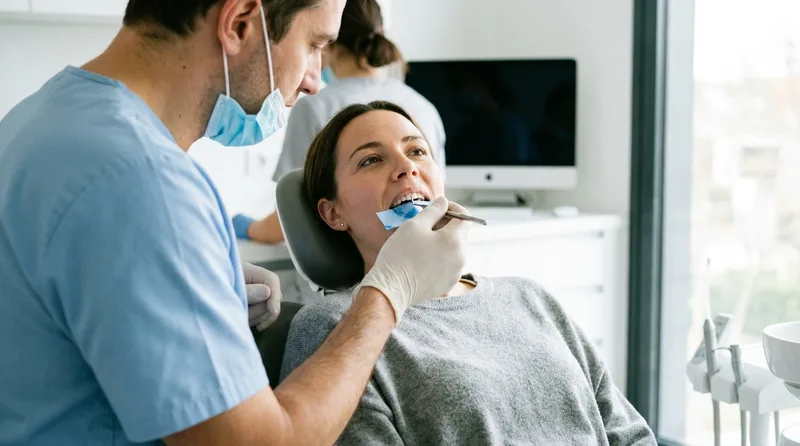
A bite that's genuinely too high concentrates force unevenly every time you chew, which can cause soreness that doesn't fully resolve on its own the way normal sensitivity does. Adjusting this takes a few minutes in the chair and makes an immediate, noticeable difference. There's no reason to push through weeks of an uncomfortable bite hoping it'll wear in naturally, and waiting rarely makes it better on its own.
Contact the office if pain is worsening rather than improving, if the crown feels loose or has shifted, if you notice swelling or a bad taste around it, or if your bite still feels significantly off after a few days. Most of these turn out to have quick, straightforward fixes once we take a look.
Outside of those specific situations, mild sensitivity and a short adjustment period are simply part of dental crown recovery. What to expect the first week is mostly patience and soft foods, not worry. If you're ever unsure which category something falls into, the answer is always to call rather than wait and wonder.
Recovering from a recent crown?
If anything feels off, a quick call settles it faster than waiting it out.
Book Appointment →Most dental crown recovery follows the same simple pattern: soft foods for a few days, mild sensitivity that fades over one to two weeks, and a short adjustment period for your bite. Knowing what's normal ahead of time turns a slightly uncomfortable week into a manageable one, and it's exactly why we'd rather field a quick question than have you wait it out wondering.
It's also worth keeping the bigger picture in mind: a review of the research found 95% of crowns remain functional for at least five years, and more than 90% avoid any serious complications in that same window, so the short adjustment period you're navigating now is a small fraction of the crown's overall lifespan.
Our comparisons of crowns versus bridges and the root canal procedure cover more of what leads up to needing a crown in the first place. Results may vary. Please consult with your dentist at Susan J. Curley DDS for personalized treatment recommendations.
Questions about your crown recovery?
Reach out any time, day or night, if something doesn't feel right after your appointment.
Book Appointment →Deciding between a crown and a bridge?
See the real difference →Written By
Dentist
Chipped tooth repair options same day: dental bonding vs a same-day crown, what to do right now, and what your emergency visit will look like.
TMJ symptoms you shouldnt ignore: jaw clicking, locking, headaches, and ear discomfort, what causes them, and when to see a dentist.
Root canal treatment what to expect: the step-by-step process, sedation options, appointment length, and recovery from a patient-comfort perspective.
Book your visit with Dr. Curley online or call us, and we'll take it from there.