
smile-design
Your First Smile Makeover Consultation: What to Expect
Your first smile makeover consultation: what to expect, from the goals discussion to your digital smile design preview and plan.
Sep 20, 20268 min read


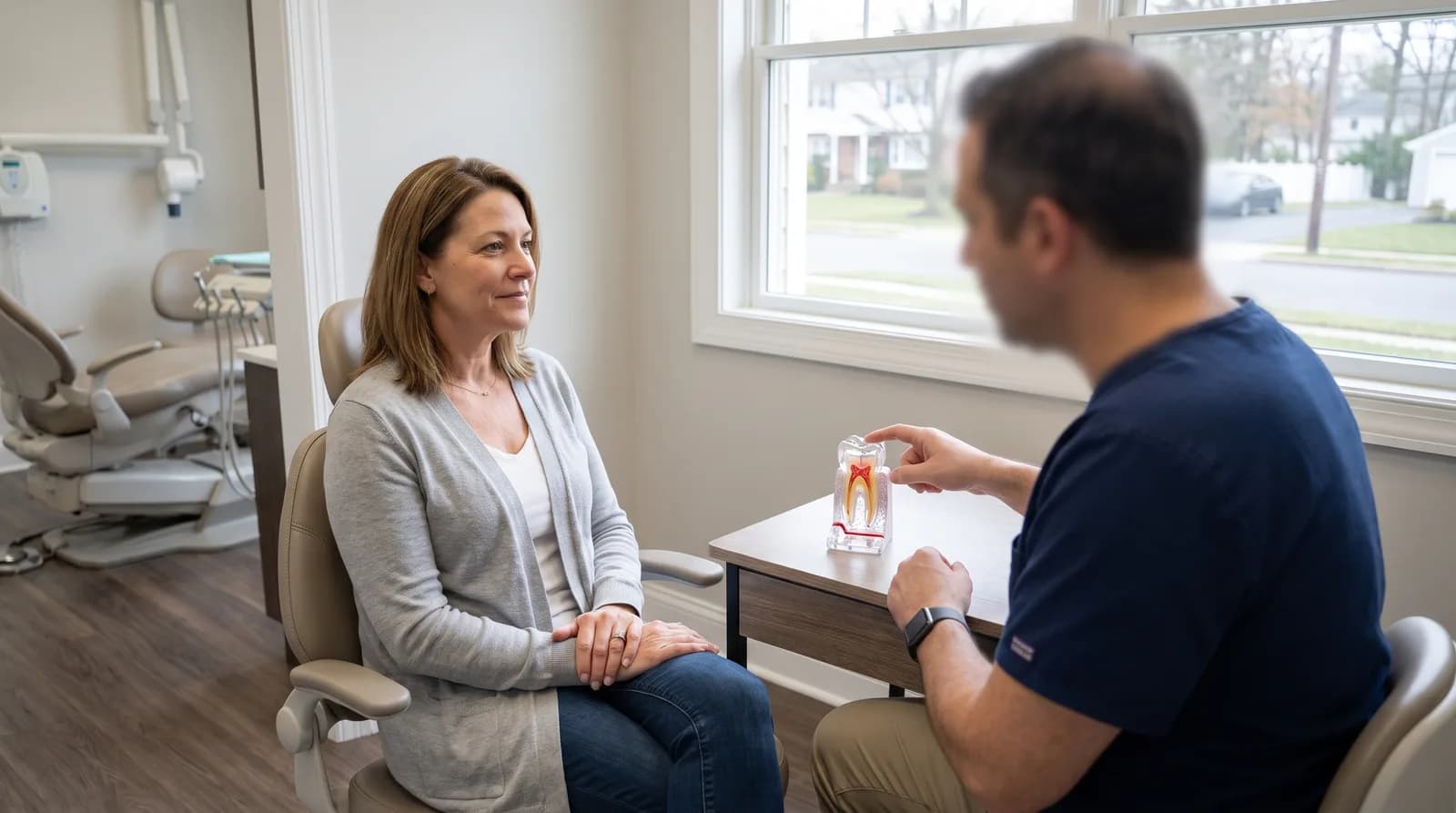
The root canal procedure Wall Township NJ patients dread turns out to be far less involved than its reputation suggests, since modern anesthetic and imaging technology make the treatment itself comparable to getting a filling. This guide walks through exactly what happens at each step, from the first exam to the final crown, so you know what to actually expect rather than relying on old stories about root canals. A root canal is one of the more common procedures in restorative dentistry, and Dr. Susan J. Curley walks every patient through the process before it begins. Most of the fear around root canals comes from outdated stories rather than what the procedure actually involves today.
Dealing With a Toothache?
An exam can confirm whether a root canal is actually needed, and modern treatment is far more comfortable than its reputation suggests.
Book Appointment →A root canal treats infected or inflamed tissue inside a tooth, called the pulp, removing it and sealing the space to prevent further infection. It's recommended when a tooth is too damaged for a filling but can still be saved.
The pulp inside a tooth contains nerves and blood vessels, and it can become infected from deep decay, a crack, or repeated dental procedures on the same tooth. Once infected, that tissue can't heal on its own the way other parts of the body might. A root canal removes the infected pulp entirely, then seals the tooth so the outer structure remains functional. This saves the natural tooth rather than requiring an extraction, which is generally the preferred outcome whenever a tooth can realistically be saved.
Without treatment, an infected tooth typically continues to cause problems and can eventually require extraction instead of a comparatively simpler repair. According to MouthHealthy, the ADA's patient education site, root canal treatment has one of the highest success rates of any dental procedure.
Signs you might need a root canal include persistent tooth discomfort, sensitivity to hot or cold that lingers, swelling near a tooth, or a tooth that's darkened in color. An exam confirms whether treatment is actually necessary, since some of these signs can also point to something else entirely.
Some infected teeth show no symptoms at all in early stages, which is why routine exams and X-rays catch issues that symptoms alone might miss entirely. Twice-yearly checkups are often how an infection gets caught before it progresses to something more noticeable or involved.
The first step involves numbing the tooth completely with local anesthetic and placing a small protective sheet called a dental dam around it. Nothing else begins until you're fully comfortable.
Dr. Curley confirms you're numb before proceeding, the same way she would before any other restorative procedure. The dental dam isolates the tooth being treated, keeping the area clean and dry throughout the rest of the appointment. This step alone often surprises first-time patients, since it's identical to the numbing process for a routine filling, not something more involved or unusual. There's nothing about this part of the appointment that differs meaningfully from a procedure most patients have already experienced before.
Questions are welcome at this stage, and the whole process is explained as it happens rather than all at once beforehand. Patients who feel especially anxious can mention it when booking, so the appointment can be paced accordingly from the very start.
During the procedure, Dr. Curley creates a small opening in the tooth, removes the infected pulp, cleans and shapes the empty canals, then fills and seals them. Local anesthetic keeps the area numb throughout.
Most patients describe the sensation as pressure rather than discomfort, similar to a longer filling appointment, since the tooth is fully numb throughout the entire procedure. The whole visit typically takes 60 to 90 minutes, depending on the tooth and the complexity of its canal structure. Molars, with multiple canals, generally take longer than front teeth, which usually have a single, simpler canal to treat.
Not Sure If You Need One?
Our guide covers the specific signs worth watching for, and why waiting tends to make things worse.
Read the Warning Signs →In most cases, a root canal is preferable to extraction, since saving the natural tooth generally functions better long-term than any replacement option. Extraction becomes the better choice mainly when a tooth is too damaged or infected to save at all.
Keeping a natural tooth, when possible, avoids the additional cost and time involved in replacing it with an implant, bridge, or denture later. A tooth treated with a root canal and topped with a crown can function well for many years, often decades, when properly cared for. Extraction is generally reserved for teeth with extensive fractures below the gumline, severe bone loss around the tooth, or root damage that a root canal can't realistically address. An exam and X-rays are what actually determine which category a specific tooth falls into.
Dr. Curley will always discuss whether your specific tooth is a good candidate for a root canal before recommending extraction as an alternative. That conversation happens before any treatment begins, not after, so you understand the reasoning behind whichever path is recommended.
No, a root canal is not more uncomfortable than getting a filling, since both use the same local anesthetic to fully numb the area before any work begins. The reputation for discomfort mostly reflects outdated procedures from decades ago.
Modern anesthetic techniques and equipment have changed considerably since root canals earned their reputation, and most patients today report the appointment feels comparable to a longer filling rather than anything dramatically different. Some soreness in the days afterward is normal, similar to what follows other restorative work, and is generally manageable with over-the-counter medication. If you feel anything more than pressure during the procedure itself, telling Dr. Curley right away allows more anesthetic to be given before continuing. Many patients say the anticipation beforehand was harder than the appointment itself once it actually got underway.
3D endodontic imaging also helps Dr. Curley plan the procedure with more precision, often making treatment more efficient than older approaches allowed. Seeing the exact shape of the canals ahead of time reduces guesswork during the procedure itself, which contributes to both comfort and a more predictable outcome.
Most teeth need a crown after a root canal, since the tooth becomes more brittle once the pulp is removed and needs the added protection a crown provides. This is especially true for back teeth that handle significant chewing force.
Same-day 3D-printed crowns mean many patients can complete both the root canal and the crown in a shorter overall timeline than older methods required, sometimes even the same day depending on the situation. Without a crown, a tooth that's had a root canal is more prone to cracking under normal chewing pressure, since it no longer has the internal support the natural pulp once provided. Front teeth with less biting force sometimes need only a filling rather than a full crown, though a back molar almost always benefits from the extra protection.
Dr. Curley will discuss the specific timeline for your crown during your root canal appointment, so you know what to expect for the following visit. In the meantime, a temporary filling protects the tooth well enough for normal daily use, with some care taken around especially hard foods.
Recovery from a root canal typically involves mild soreness for a few days, manageable with over-the-counter medication, and a return to normal activities almost immediately. Most patients are back to their usual routine the same day.
Avoiding chewing directly on the treated tooth until a permanent crown is placed helps protect it while it's more vulnerable than usual, since a temporary filling isn't designed to withstand full biting force indefinitely. Nearly 1 in 4 adults in the US has untreated tooth decay, according to CDC data, and a root canal is often what stands between a damaged tooth and losing it entirely, which is part of why the procedure exists in the first place. Regular dental visits catch roughly 80% of oral health issues before they become serious, according to the ADA, and untreated decay progressing to infection is exactly the kind of issue that benefits from being caught early. Most patients find recovery considerably easier than they expected going in.
If swelling or discomfort worsens instead of improving after the first few days, that's worth a follow-up call rather than waiting it out. That pattern, worse instead of better, is the clearest signal something needs a closer look.
A root canal procedure Wall Township NJ patients need is rarely the ordeal its reputation suggests, especially with modern anesthetic and imaging technology making the process comparable to a routine filling. Understanding each step ahead of time tends to be the biggest factor in feeling comfortable through treatment. Susan J. Curley DDS walks every patient through exactly what to expect, whether it's your first root canal or your third, and whether the tooth in question is in the front of your smile or a back molar.
Results may vary. Please consult with your dentist at Susan J. Curley DDS for personalized treatment recommendations.
If you're dealing with a persistent toothache, the next step is an exam to find out whether a root canal is actually the right path forward.
Dealing With a Persistent Toothache?
Book an appointment with Susan J. Curley DDS and find out what your tooth actually needs.
Book an Appointment →Prefer to talk it through first?
Call 732-681-8604 →Written By
Dentist
Your first smile makeover consultation: what to expect, from the goals discussion to your digital smile design preview and plan.
What is digital smile design? A preview technology that lets you see your proposed new smile before treatment even begins.
Am I a candidate for veneers? Six clear signs that suggest veneers could be a good fit for your smile and long-term goals.
Book your visit with Dr. Curley online or call us, and we'll take it from there.