smile-design
Your First Smile Makeover Consultation: What to Expect
Your first smile makeover consultation: what to expect, from the goals discussion to your digital smile design preview and plan.
Sep 20, 20268 min read


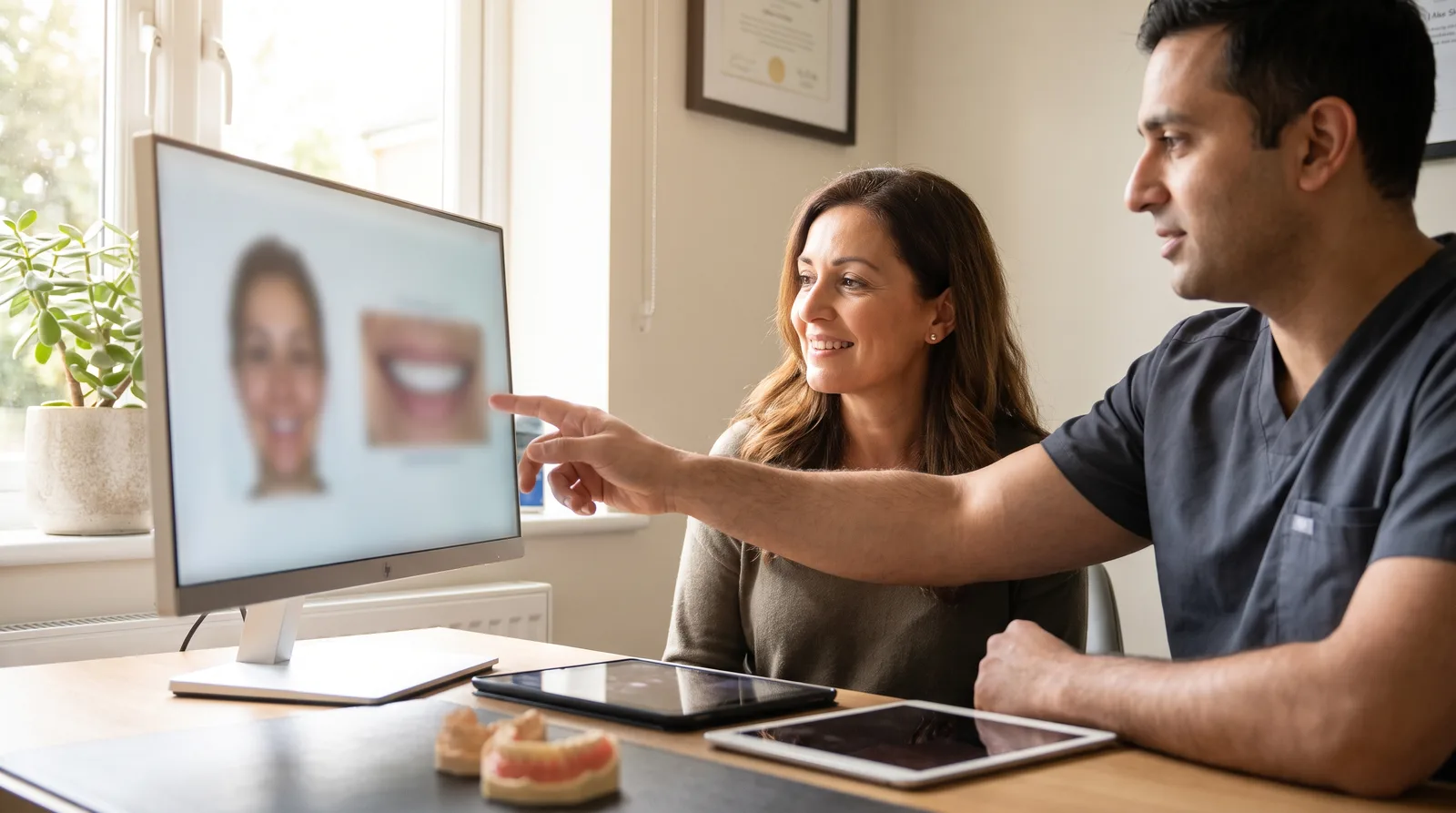
What is digital smile design is a common question for anyone researching a cosmetic upgrade before visiting our digital smile design practice. It's a technology-driven planning process. It lets you preview your new smile before any treatment begins.
Rather than committing to treatment based on a general description alone, this technology lets you see a realistic version of your own future smile first.
This shift, from imagining to actually seeing, is what makes modern cosmetic dentistry feel far more collaborative than it did even a decade ago.
By the end of this guide, you'll understand exactly how this technology fits into a typical treatment plan and what to expect if you pursue it.
Nearly all Americans, 99.7% according to the American Academy of Cosmetic Dentistry, consider their smile an important social asset, consistent with the ADA's patient resources on cosmetic treatments. This guide explains exactly what digital smile design is and how the process actually works.
None of this technology replaces the skill or judgment of your dentist. It simply gives both of you a shared, visual reference to plan around together.
Think of it as a common language between you and your dental team, translating what you want into something specific and measurable rather than a vague impression.
This shared understanding tends to reduce miscommunication considerably, since both sides are literally looking at the same proposed outcome rather than describing it in words.
Patients who've been through this process often say it gave them far more confidence going into treatment than a traditional consultation alone would have.
That confidence carries through the entire treatment timeline, since you already know what to expect at each stage rather than discovering it as you go.
Digital smile design is a planning method that uses photos, video, and digital scans of your face and teeth to design your new smile before treatment starts. It removes much of the guesswork from cosmetic dentistry.
Rather than relying on a verbal description alone, you and your dentist can see a realistic simulation of the proposed result together, ahead of any actual dental work.
This approach has become standard for many cosmetic practices precisely because it closes the gap between what a patient imagines and what a dentist can actually deliver.
The process starts with detailed photos and video of your face, lips, and smile. These are combined with a digital scan of your teeth to build an accurate, personalized model.
This scan replaces the traditional putty impressions many patients remember from past dental visits, offering a faster and more comfortable way to capture the same information.
The combination of visual and digital data also means fewer surprises later, since the plan accounts for your actual bite and facial proportions from the very beginning.
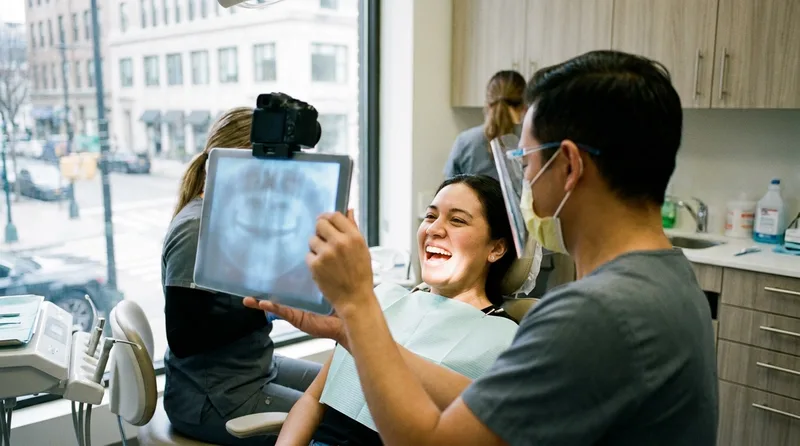
Each step builds on the last, creating a complete picture before a single tooth is ever touched. This sequence is what makes the whole process so predictable.
Skipping any one of these steps would leave gaps in the plan, which is exactly why each practice that offers digital smile design follows this same general sequence.
The entire intake process, from first photo to finished design, typically takes less time than patients expect, often completed within a single consultation visit.
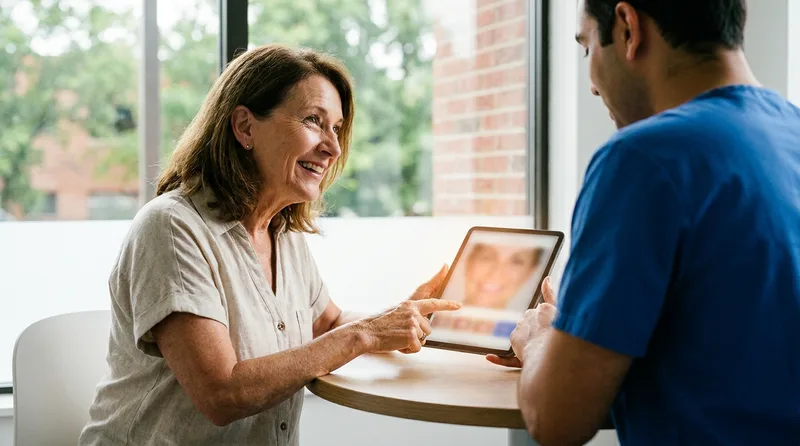
The preview shows your proposed new smile mapped directly onto your own face and features. You can see tooth shape, size, color, and alignment changes clearly before committing to treatment.
Some practices, including ours, can even show you a short video of yourself smiling and speaking with the new design in place, giving an even more realistic sense of the result.
Seeing yourself talk and smile naturally with the proposed design, rather than just a static photo, often makes the biggest difference in how confident patients feel moving forward.
This is very different from imagining a change based on words alone. Seeing the proposed result on your own photos makes the decision far more concrete and informed.
Many patients describe this moment, seeing their own future smile for the first time, as the point where a vague idea turns into a genuine, confident decision.
This emotional shift matters just as much as the technical accuracy of the preview, since confidence in your decision affects how satisfied you feel throughout treatment.
Curious what digital smile design could show you?
A consultation lets you see a personalized preview of your own new smile.
Schedule a Consultation →Digital smile design is commonly used for veneers, crowns, and full smile makeovers, since these treatments benefit most from precise, visual planning. It can also support Invisalign treatment planning directly.
Combination cases, where veneers and Invisalign work together toward a final result, benefit especially from this kind of unified planning across multiple treatment types.
Even a single crown on a highly visible front tooth can benefit from this level of planning, since matching a single restoration to the rest of your smile requires real precision.
The stakes are simply higher for front teeth, where even a slight mismatch in shade or shape is far more noticeable than it would be on a back tooth.
This is exactly the kind of detail digital smile design captures well, since the software accounts for how a restoration will actually look next to your natural teeth.
Lighting conditions, camera angles, and even your natural skin tone are all factored into a well-done digital simulation, making the final preview genuinely reflective of daily life.
This level of detail is part of why the technology has earned trust among both patients and dentists over the years it's been in widespread use.
Our guide on what affects veneer cost covers how planning fits into the overall veneer process. The preview step itself is typically included as part of thorough treatment planning.
This means you're rarely paying separately for digital smile design as a standalone add-on, since it's built into the standard planning process for most cosmetic cases.
Asking directly whether this planning step is included in your treatment estimate is a reasonable question to bring to any cosmetic consultation.
The preview is a highly accurate planning tool, though it's a guide rather than an exact guarantee of the final result. Small adjustments sometimes happen once treatment is actually underway.
Biological factors, like exactly how gum tissue responds during treatment, can introduce minor variables that software alone can't predict with complete certainty.
Your dentist's skill in executing the plan matters as much as the software itself. The preview sets expectations, but the hands placing your veneers or crowns bring it to life.
This is exactly why choosing an experienced dentist matters as much as choosing a practice with advanced technology, since both pieces work together toward your final result.
Asking about a dentist's specific experience with digital smile design, not just whether they own the software, gives you a clearer picture of what to expect.
A portfolio of past cases, ideally similar to your own, is one of the most useful things a dentist can share to demonstrate this real-world experience.
Not every case requires the full digital smile design process, especially very minor, single-tooth adjustments. Larger cases involving multiple teeth generally benefit the most from this level of detailed planning.
Understanding who typically benefits most from this kind of thorough, visual planning process helps set expectations before your consultation.
If your case involves just one or two teeth with a straightforward fix, your dentist may reasonably decide a simpler approach gets you the same result more efficiently.
Trusting your dentist's judgment on this point, rather than insisting on the full process regardless of case complexity, generally leads to a more efficient use of everyone's time.
That said, there's nothing wrong with requesting the full preview process even for a smaller case, if seeing the result beforehand matters to you personally.
| Case Type | Typical Benefit From DSD |
|---|---|
| Single tooth, minor concern | Optional, often not necessary |
| Multiple veneers | High benefit, ensures consistency |
| Full smile makeover | Essential for predictable results |
| Front tooth crown | High benefit for precise matching |
What is digital smile design ultimately comes down to a planning tool that removes guesswork from cosmetic dentistry. Regular dental visits catch 80% of oral health issues before they become serious, according to CDC oral health data, and the same proactive approach applies to planning cosmetic treatment thoroughly. Results may vary. Please consult with your dentist at Susan J. Curley DDS for personalized treatment recommendations.
If you're considering a smile makeover of any size, understanding this planning process ahead of time helps you walk into a consultation feeling prepared rather than uncertain.
Bringing specific questions about the preview, the timeline, and how adjustments are handled ensures you get the most out of that first conversation with your dentist.
If you're considering a smile makeover and want to see your results before committing, digital smile design is worth asking about at your consultation.
See Your New Smile Before You Commit
Schedule a digital smile design consultation with Dr. Curley in Wall Township.
Book Appointment →Have questions before booking?
Contact Our Wall Township Office →Written By
Dentist
Your first smile makeover consultation: what to expect, from the goals discussion to your digital smile design preview and plan.
Am I a candidate for veneers? Six clear signs that suggest veneers could be a good fit for your smile and long-term goals.
Composite vs porcelain veneers: cost, durability, and finish compared to help you choose the right material for your smile goals.
Book your visit with Dr. Curley online or call us, and we'll take it from there.