
smile-design
How to Build a Full Smile Makeover Plan That Works
Full smile makeover plan explained: how to properly sequence Invisalign, whitening, and veneers together for the best result.
Sep 22, 20266 min read



Composite vs porcelain veneers is one of the first decisions patients face once they're considering a smile makeover at our cosmetic dentistry practice. Both materials can improve your smile. They differ enough in cost, durability, and finish that the right choice depends on your specific goals.
Neither option is universally better, despite what some marketing might suggest. The right answer genuinely depends on your budget, your timeline, and what you're hoping to achieve.
Whichever material ends up being the right fit, understanding why it's recommended helps you feel confident in the decision rather than simply defaulting to whichever option comes up first.
The sections below walk through each factor in turn, so by the time you reach a consultation you already know which questions matter most to your specific case.
Dental implants have a success rate of 95 to 98% over 10 years, according to the Journal of Oral and Maxillofacial Surgery, and both veneer materials aim for that same kind of dependable, long-term outcome when properly cared for.
Nearly all Americans, 99.7% according to the American Academy of Cosmetic Dentistry, consider their smile an important social asset, consistent with the ADA's patient resources on veneers. This guide breaks down how composite and porcelain veneers actually compare, so you can make an informed choice.
This guide walks through the specific factors that actually matter, so you can walk into a consultation already understanding the trade-offs rather than choosing based on price alone.
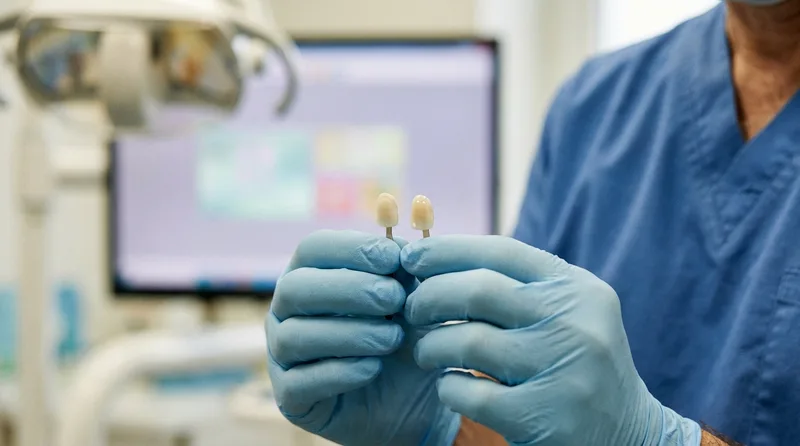
Composite veneers are built directly on your tooth from a tooth-colored resin, often completed in a single visit. Porcelain veneers are custom-fabricated in a lab and bonded on during a separate appointment.
This fundamental difference in how each is made drives most of the other differences between them, from cost to durability to how long the whole process takes.
Neither approach is inherently rushed or careless. Composite simply moves faster because the material is sculpted chairside, while porcelain's lab step adds precision at the cost of time.
Both processes have been refined over decades of cosmetic dentistry, and both remain widely used today precisely because each serves a genuine, distinct purpose.
Understanding which purpose fits your situation, a quick, accessible fix or a longer-term investment, is really the core question this entire comparison comes down to.
Composite veneers generally cost less than porcelain, since they skip the lab fabrication step and often require less chair time overall. This makes composite an accessible starting point for many patients.
This lower entry cost is exactly why composite appeals to patients testing the idea of veneers for the first time, without committing to the larger investment porcelain typically requires.
Financing options through CareCredit or Sunbit are available for either material, which can make the higher upfront cost of porcelain more manageable if that's the material you choose.
Asking about financing early in the conversation, rather than after you've already decided on a material, gives you the full picture before committing to either option.
This same conversation is also a good time to ask how many teeth your specific concern actually involves, since that number affects both the cost and the material decision together.
A single tooth versus a full smile makeover can genuinely shift which material makes more sense, since the calculation changes once several teeth are involved rather than just one.
| Factor | Composite | Porcelain |
|---|---|---|
| Relative cost | Generally lower | Generally higher |
| Typical lifespan | 5 to 7 years | 10 to 15 years, often longer |
| Stain resistance | Moderate | Excellent |
| Visits required | Often just one | Typically two |
Porcelain veneers generally last 10 to 15 years, and sometimes longer with excellent care. Composite veneers typically last 5 to 7 years before needing replacement or significant touch-ups. This gap matters for long-term planning.
This longevity gap is one of the biggest factors in the budget conversation. A lower upfront cost for composite can mean more frequent replacement costs over the same period of time.
Thinking in terms of total cost over ten or fifteen years, rather than just the upfront number, often changes how patients weigh this decision.
A patient replacing composite veneers twice over fifteen years may find the total cost approaches or exceeds what porcelain would have cost from the start, depending on specific pricing.
This isn't a reason to avoid composite, simply something worth factoring into the decision if long-term cost is a bigger priority for you than the lower starting price.
Every patient weighs this trade-off differently, and there's no universally correct answer, only the one that fits your specific financial picture and priorities.
Not sure which veneer material fits your goals?
A consultation helps match the right material to your budget and smile goals.
Schedule a Consultation →Porcelain generally has an edge in mimicking the translucency of natural enamel, since it's fabricated to match your exact shade and shape with precision. Composite can look excellent too, especially with a skilled dentist.
The gap between the two has narrowed considerably as composite materials have improved, though porcelain still tends to hold its finish and shine more consistently over years of use.
Lighting also plays a role in how noticeable any difference actually is. Under normal, everyday lighting, a well-placed composite veneer often looks just as convincing as porcelain to most observers.
The skill and experience of the dentist placing either material genuinely matters here, sometimes more than the material choice itself, when it comes to the final natural appearance.
Looking at a dentist's past cosmetic work, whether composite or porcelain, gives you a more reliable sense of the outcome to expect than the material specification alone.
Photos of previous cases, taken under normal lighting rather than a studio setup, give you the most realistic sense of what either material looks like in everyday life.

Porcelain also resists staining better over time, which helps it maintain that natural appearance for years. Composite is more porous and can pick up stains gradually.
Understanding how long veneers typically last, and what affects that lifespan, covers staining and maintenance for both materials in more detail.
Whichever material you choose, good daily habits, brushing, flossing, and avoiding excessive staining foods, help either one look its best for as long as possible.
Composite often suits patients wanting a lower-commitment starting point, a quick fix for a single tooth, or a way to test a new smile before a bigger investment. Porcelain suits patients planning a long-term, durable result.
Neither material is universally better. The right choice depends on your budget, your timeline, and whether you're addressing one tooth or planning a fuller smile makeover.
Being honest with yourself about your priorities, cost, longevity, or a mix of both, is the most useful thing you can bring into this decision.
There's no wrong answer here, only the answer that fits your specific situation. A dentist experienced with both materials can help you weigh these factors against your actual goals.
Approaching your consultation with genuine curiosity, rather than a fixed decision already made, often leads to the recommendation that actually fits your case best.
Yes, many patients start with composite veneers and upgrade to porcelain later once they've confirmed they like the look and are ready for a longer-term investment. This phased approach works well for many budgets.
Your dentist can plan the composite case with this future upgrade in mind, making the eventual transition to porcelain smoother when you're ready.
This staged approach also gives you real-world experience with the look and feel of veneers before committing to the material with the longer lifespan and higher upfront cost.
Not every patient needs or wants this staged path, and going straight to porcelain is equally valid if you're already confident in your decision.
Both paths lead to the same category of result, an improved smile, they simply differ in how you get there and how much you invest along the way.
Keeping that broader goal in mind, rather than fixating on the material label itself, tends to lead to a more satisfying decision overall.
Bring your budget, your timeline, and your specific concerns to your consultation. A thorough dentist walks through both options honestly rather than defaulting to whichever material is more profitable to place.
Our guide on what affects veneer cost covers the specific factors that influence pricing for either material in more detail.
Composite vs porcelain veneers ultimately comes down to matching the material to your budget and goals rather than one option being universally superior. Regular dental visits catch 80% of oral health issues before they become serious, according to CDC oral health data, and the same principle of proactive care applies to either veneer material. Results may vary. Please consult with your dentist at Susan J. Curley DDS for personalized treatment recommendations.
Whichever material you're leaning toward, bringing your specific priorities to a consultation ensures the recommendation actually fits your situation rather than a generic default.
If you're weighing these two options, bringing your specific priorities to a consultation is the most direct way to get a clear recommendation.
Find the Right Veneer Material for You
Schedule a consultation with Dr. Curley in Wall Township to discuss your options.
Book Appointment →Have questions before booking?
Contact Our Wall Township Office →Written By
Dentist
Full smile makeover plan explained: how to properly sequence Invisalign, whitening, and veneers together for the best result.
Digital smile design mockup explained honestly for patients: how it is created, why it is trustworthy, and what it shows you.
Smile design for a gummy smile: what actually causes it and which treatment options can genuinely help you feel confident.
Book your visit with Dr. Curley online or call us, and we'll take it from there.