smile-design
How to Build a Full Smile Makeover Plan That Works
Full smile makeover plan explained: how to properly sequence Invisalign, whitening, and veneers together for the best result.
Sep 22, 20266 min read


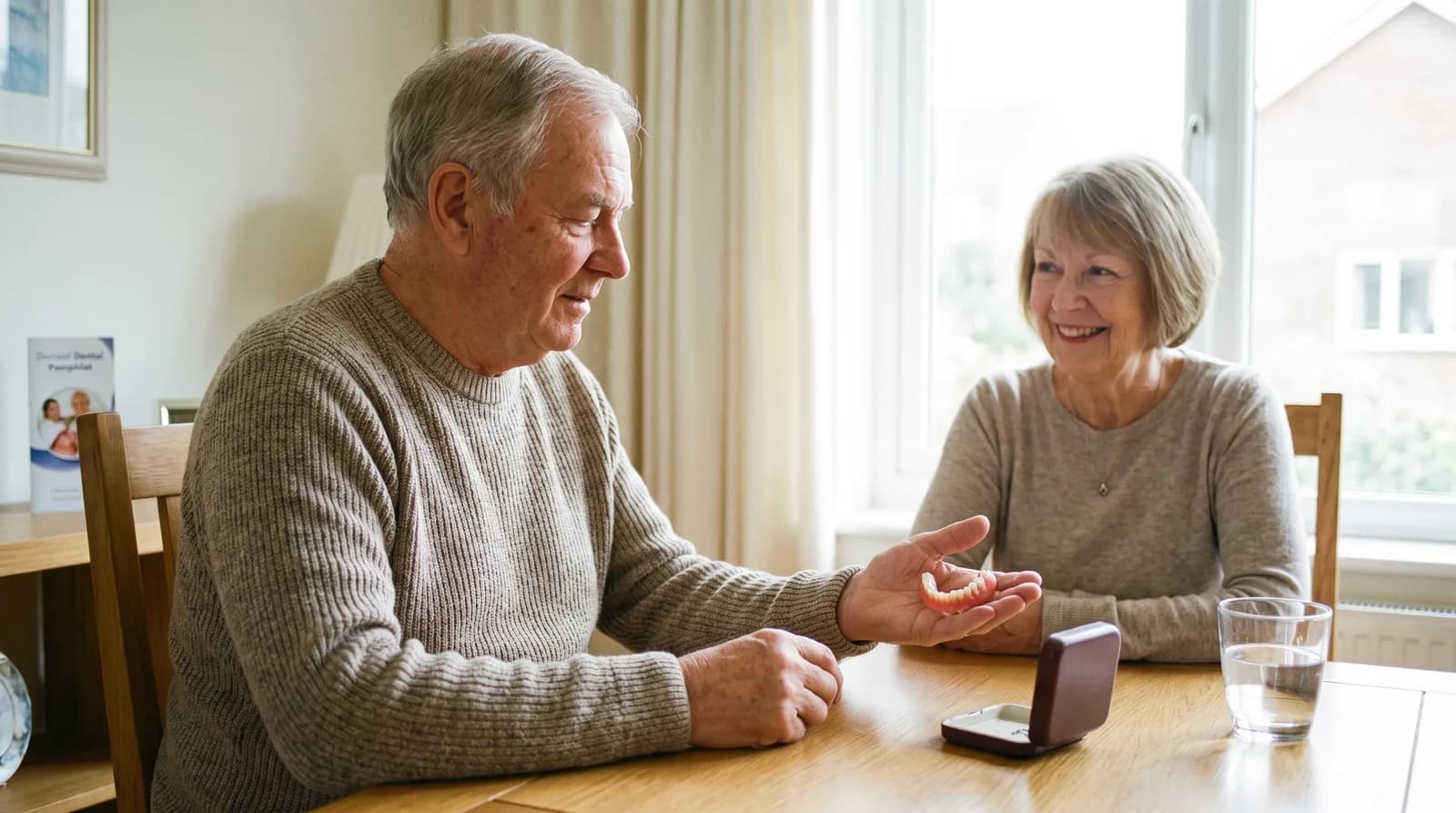
Implant supported overdentures explained simply: they're a removable denture that clips onto two to four dental implants instead of resting on your gums alone. For patients who've watched their dentures shift while eating or talking, that difference is huge. A denture that's anchored to restorative dentistry implants doesn't slide, doesn't need adhesive, and lets you chew with far more confidence.
Nearly 120 million Americans are missing at least one tooth, according to the American College of Prosthodontists, and a large share of them eventually face the same decision covered in the ADA's patient guide to dentures: stick with a removable plate, or find something more secure. This guide walks through what implant supported overdentures actually are, how they compare to both traditional dentures and full-arch options like All-on-X, and what the process looks like from a Jersey Shore practice that coordinates every step of your care.
Implant supported overdentures are removable dentures that snap onto two or more implants anchored in the jawbone, rather than sitting loose on the gums. The implants act like tiny attachment points, so the denture locks into place and stays put during eating and speaking. That's a meaningful upgrade from a traditional plate held on by suction and adhesive alone.
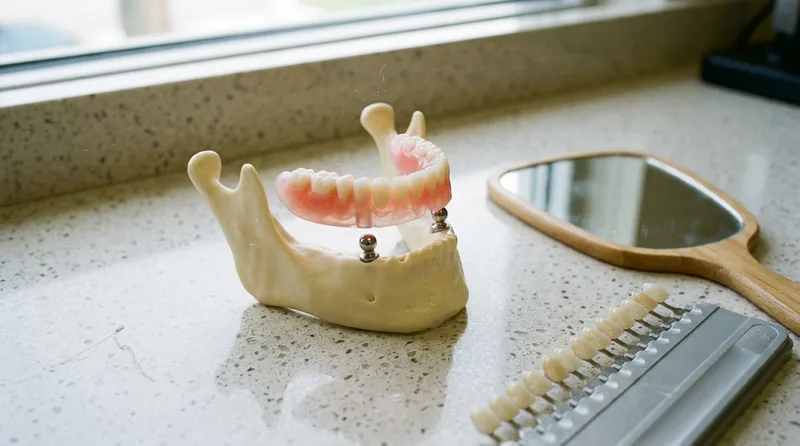
Most designs use a bar or a set of individual attachments (often called locators) fixed to two to four implants. The denture itself clips over these attachments and can be removed nightly for cleaning, the same way a conventional denture is. Because the implants carry most of the biting force, the denture can be made smaller and thinner, without the bulky palate coverage many long-time denture wearers dislike.
For patients transitioning from a traditional plate, the change in stability is often the first thing they notice. Speaking clearly and eating foods they'd avoided for years become possible again within weeks. This is the core idea behind implant supported overdentures explained in plain terms: fewer implants than a fixed arch, far more hold than a loose plate.
Traditional dentures rest on the gums and jawbone ridge, held in place by suction and adhesive. Implant supported overdentures attach directly to implants, which anchor the denture mechanically instead of relying on suction alone.
That mechanical connection changes almost everything about daily life with a denture. Traditional dentures can shift when you laugh, cough, or bite into something firm, and many wearers avoid certain foods entirely. An overdenture locks onto its attachments, so biting force transfers through the implants into the jawbone the way it would with natural tooth roots.
Jawbone preservation matters more than most patients expect. Once teeth are gone, the bone that supported them begins to resorb over time. Implants placed in that bone provide ongoing stimulation, which slows that process in a way a traditional denture cannot, a distinction that matters most for the roughly 120 million Americans missing at least one tooth, per the American College of Prosthodontists.
Implant supported overdentures are removable and typically use two to four implants, while All-on-X restorations are fixed in place and use four to six implants per arch. Both replace a full arch of missing teeth, but the trade-offs are different.
All-on-X delivers a fixed, non-removable bridge that feels closest to natural teeth and generally needs the most implants and the highest upfront investment. An overdenture bridges the gap for patients who want the stability of implants without committing to a fixed, non-removable arch, and it typically works with fewer implants and a lower overall cost. Some patients prefer being able to remove the appliance for cleaning, which an overdenture allows and a fixed arch does not.
Dr. Curley's practice provides the restorative side of both options. Because the office coordinates directly with the placing surgeon, patients get one consistent point of contact from consultation through the final fitted restoration.
| Feature | Implant Overdenture | All-on-X |
|---|---|---|
| Implants needed | 2 to 4 per arch | 4 to 6 per arch |
| Removable | Yes, patient removes nightly | No, fixed in the mouth |
| Relative cost | Lower, fewer implants required | Higher, more implants and lab work |
| Feel | Secure, still denture-like | Closest to natural teeth |
Not sure which option fits your case?
Dr. Curley can walk you through overdentures, All-on-X, and every option in between during a consultation at our Wall Township office.
Explore Full Mouth Reconstruction →Good candidates are adults missing most or all teeth in an arch who have enough jawbone to support two to four implants and want more stability than a traditional denture offers. Bone volume matters more here than age.
Many patients considering implant supported overdentures have worn a traditional denture for years and are frustrated with slipping, sore spots, or the taste-blocking palate coverage of an upper plate. Others are planning ahead after losing several teeth and want to avoid that experience altogether. Health conditions like uncontrolled diabetes or active gum disease can affect implant success, so a full evaluation, including imaging of the jawbone, comes first, following the general candidacy guidance in the ADA's patient guide to dental implants.
If you've been told in the past that you don't have enough bone for a fixed full-arch option, an overdenture may still be within reach since it typically requires fewer implants than All-on-X.
Related: If you're weighing a bridge against implant options for a smaller gap, see our comparison guide. Dental Bridge vs Implant: Which Fits Your Case →
The process starts with a consultation and imaging, moves to implant placement by a coordinating oral surgeon or periodontist, includes a healing period, and finishes with Dr. Curley designing and fitting your custom overdenture. Most patients complete the full journey in a few months.
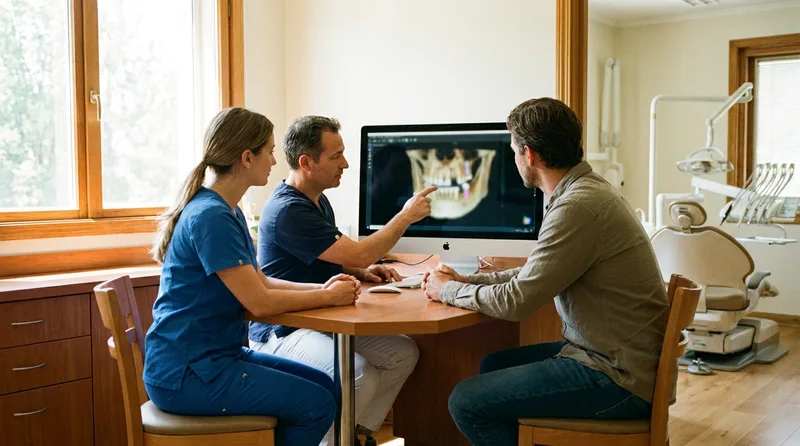
Because the office focuses on the restorative side of implant care, Dr. Curley reviews every surgical plan and stays involved throughout healing, then handles the design, materials, and fit of the final overdenture herself. That coordinated approach means one dentist tracking your case from first scan to final fitting, rather than juggling separate offices with no shared record.
The main benefits are stability while eating and speaking, preservation of jawbone density, and a smaller, more comfortable denture design compared to a traditional plate. Many patients also regain foods they'd given up entirely.
According to the American Academy of Implant Dentistry, implant-supported teeth can restore up to 90% of natural chewing power, a dramatic jump from the roughly 25 to 30% typical of a traditional denture. That difference shows up at dinner. Foods like steak, apples, and corn on the cob, often abandoned by long-time denture wearers, become realistic again for many patients.
Research published through the Journal of Oral and Maxillofacial Surgery puts implant success rates at 95 to 98% over ten years when patients maintain routine dental visits, which is worth weighing against the ongoing maintenance a traditional denture requires regardless. That success rate is a major reason implant supported overdentures have become a standard recommendation for patients who qualify.
Adjustment typically takes two to four weeks as you get used to the feel of the attachments and any new bite pattern. Daily care means removing the denture nightly, cleaning both the appliance and the attachments, and keeping regular checkups.

The first week or two often involves minor sore spots where the denture meets the gum tissue, which Dr. Curley can adjust chairside. Speech may sound slightly different at first since the palate coverage is reduced, but most patients adapt within days. It's a shorter adjustment period than many people expect after years with a traditional plate.
Ongoing care is straightforward: remove and rinse the denture after meals when possible, brush the attachment points with a soft brush, and soak the appliance overnight in a denture-safe solution. Skipping cleanings around the attachments is the most common reason overdentures need earlier-than-expected servicing.
Already wearing a traditional denture?
If you're in the early weeks with a new plate, our guide covers the realistic timeline for sore spots, speech, and eating.
Read the First Month Guide →Implant supported overdentures generally cost more than a traditional denture but less than a fixed All-on-X arch, since they use fewer implants and simpler attachment hardware. The exact figure depends on how many implants you need and whether bone grafting is required.
Cost drivers include the number of implants placed, the attachment system used (bar-retained systems tend to cost more than individual locator attachments), whether any teeth need extraction first, and the materials chosen for the final denture. Insurance coverage for implant components varies widely, so a written treatment plan with itemized costs is worth requesting before you decide.
Financing options, including CareCredit, are available through the practice for patients spreading the investment over time. Ask during your consultation what a full breakdown looks like for your specific case.
Two questions come up constantly: how long the implants last, and whether the switch from a traditional denture feels disruptive. Both have straightforward answers once you understand the mechanics involved.
Implants themselves, being titanium fixtures fused to bone, tend to outlast the overdenture attached to them. The denture and its clips experience normal wear and are designed to be relined or replaced periodically, similar to maintenance on any removable appliance. As for the switch, most patients describe a short adjustment window followed by relief that the shifting and adhesive routine is gone for good.
One more consideration: not every patient is a candidate for the lower-implant-count overdenture approach. Severe bone loss may call for grafting first, and Dr. Curley will walk through those specifics based on your imaging.
Choosing between a traditional denture, an implant supported overdenture, and a fixed All-on-X arch comes down to how much stability you want and how many implants you're comfortable committing to. For many patients weighing full or partial tooth loss, implant supported overdentures land in a practical middle ground: more secure than a removable plate, less involved than a full fixed arch. Results may vary. Please consult with your dentist at Susan J. Curley DDS for personalized treatment recommendations.
If shifting dentures or missing teeth have been holding back your daily life, a conversation about implant supported overdentures is worth having sooner rather than later.
Ready to Talk About Implant Supported Overdentures?
Schedule a consultation with Dr. Curley in Wall Township and find out which tooth replacement option fits your case and your budget.
Book Appointment →Have questions before booking?
Contact Our Wall Township Office →Written By
Dentist
Full smile makeover plan explained: how to properly sequence Invisalign, whitening, and veneers together for the best result.
Digital smile design mockup explained honestly for patients: how it is created, why it is trustworthy, and what it shows you.
Smile design for a gummy smile: what actually causes it and which treatment options can genuinely help you feel confident.
Book your visit with Dr. Curley online or call us, and we'll take it from there.