
smile-design
How to Build a Full Smile Makeover Plan That Works
Full smile makeover plan explained: how to properly sequence Invisalign, whitening, and veneers together for the best result.
Sep 22, 20266 min read



Missing a tooth narrows the decision down to two realistic restorative dentistry options for most patients, and dental bridge vs implant which is right is genuinely a case-by-case question rather than one option being universally better. Both work well. They just work differently.
The right answer depends less on which option sounds more advanced and more on the specific condition of the gap, the neighboring teeth, and what a patient actually wants out of the next ten or twenty years.
Neither bridges nor implants are new or experimental. Both have decades of clinical use behind them, which means the comparison genuinely comes down to fit for a specific case rather than one option being more proven than the other.
Working through this decision with an actual exam, rather than research alone, tends to surface details that change the calculus, like the specific condition of a neighboring tooth or the exact amount of bone available. This guide is a starting point for that conversation, not a substitute for it.
This guide compares how each option actually functions, how they hold up over time, and who tends to be a better candidate for each. For general restorative options, see this practice's restorative dentistry services.
A dental bridge tends to fit patients who want a faster process and have healthy neighboring teeth, while a dental implant tends to fit patients focused on long-term durability who don't want to involve adjacent teeth at all.
Neither option is objectively better in every case. The right choice depends on the condition of neighboring teeth, how much time a patient wants to spend on treatment, and how much long-term durability matters relative to everything else.
More than 120 million Americans are missing at least one tooth, according to the American College of Prosthodontists, and both bridges and implants remain common, well-established ways to address that gap. Leaving a gap untreated, by comparison, tends to cause more problems over time than choosing either restorative option.
According to ADA guidance, both options are considered standard, reliable treatments when properly planned and maintained, which is part of why the decision comes down to individual fit rather than one option being outdated.
A dental bridge replaces a missing tooth by anchoring a false tooth to crowns placed on the two neighboring teeth, physically bridging the gap without involving the jawbone underneath it at all.
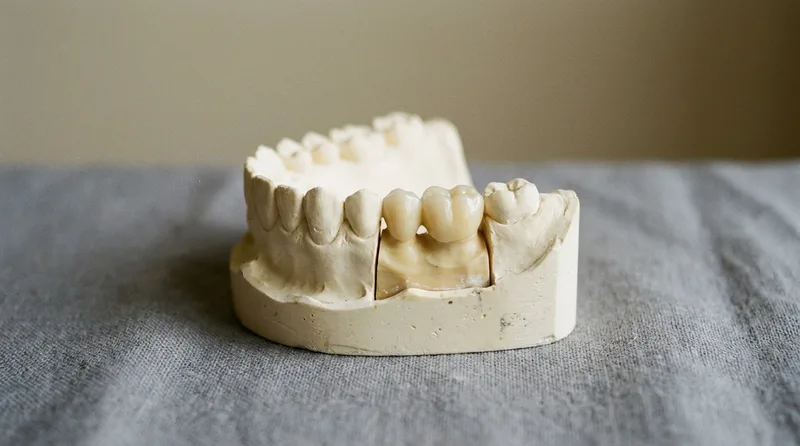
The neighboring teeth need to be shaped down to accept crowns, similar to preparing a tooth for a standard crown. That preparation is permanent, which is one of the bigger tradeoffs worth understanding upfront.
Once placed, a bridge functions much like natural teeth for chewing and speaking. The process typically takes two visits, with a temporary bridge worn in between while the permanent one gets fabricated.
Materials have improved considerably over the years, and a modern bridge, whether porcelain or a porcelain-metal combination, blends in naturally enough that it's rarely noticeable to anyone other than the patient and dentist. Caring for a bridge day to day involves the same brushing and flossing routine as natural teeth, with a specific floss threader sometimes recommended to clean underneath the false tooth.
A bridge typically works well for replacing one or two adjacent missing teeth, though a longer span may call for additional support or a different restorative approach entirely.
Not Sure Which Fits Your Case?
A consultation with imaging gives a far clearer answer than research alone.
Schedule a Consultation →A dental implant replaces a missing tooth by placing a titanium post directly into the jawbone, which then fuses with the bone over several months before a crown gets attached on top.
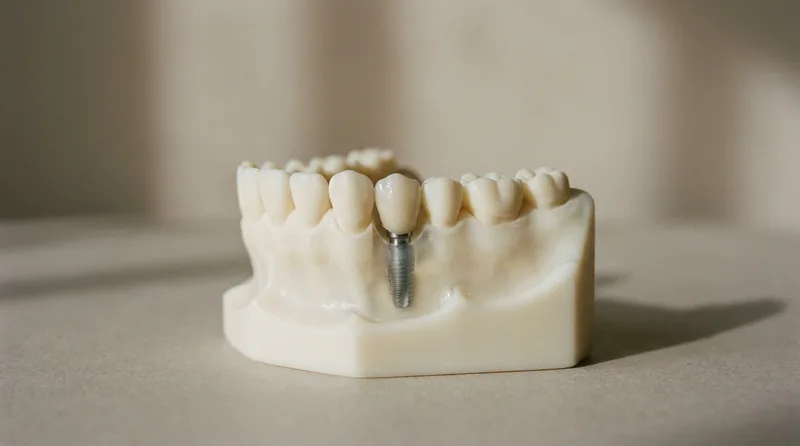
Because the implant post fuses directly with the jawbone, it functions independently of neighboring teeth entirely. Nothing about the adjacent teeth needs to change for an implant to work.
Dental implants have a success rate of 95 to 98% over ten years, according to the Journal of Oral and Maxillofacial Surgery, and implant-supported teeth can restore up to 90% of natural chewing power, according to the AAID.
The healing period, called osseointegration, typically takes three to six months before the final crown gets attached. That timeline is longer than a bridge, but it produces a restoration that functions much closer to a natural tooth root. Caring for an implant day to day is essentially the same as caring for a natural tooth, without any special cleaning tools required.
Multiple missing teeth can sometimes be addressed with a single implant-supported bridge or full-arch solution, which is a different conversation from a single-tooth implant but follows similar underlying principles.
Implants generally last longer than bridges, often 20 years or more compared to 10 to 15 years for a well-maintained bridge, and implants also help preserve jawbone density in a way that bridges don't.
A bridge doesn't stimulate the jawbone the way a natural tooth root does, since it sits entirely above the gumline. Over time, that section of jawbone can gradually lose density, similar to what happens with any missing tooth left untreated.
An implant post replaces that root function directly, which helps maintain jawbone density in the treated area much the way a natural tooth root would. That difference tends to matter more the longer a patient expects to keep the restoration, particularly for a younger patient facing several decades ahead.
According to Mayo Clinic's general guidance on dental care, preserving jawbone density after tooth loss tends to support better long-term outcomes for the surrounding teeth and facial structure alike.
| Factor | Dental Bridge | Dental Implant |
|---|---|---|
| Neighboring teeth | Must be shaped down for crowns | Left completely untouched |
| Typical longevity | 10 to 15 years | 20+ years, often a lifetime |
| Jawbone preservation | Does not prevent bone loss | Helps preserve jawbone density |
| Total treatment time | Typically 2 to 3 weeks | Several months, start to finish |
25+ Years Coordinating Restorative Care
Dr. Curley walks through both options honestly, based on your specific case.
Meet Dr. Curley →A bridge affects neighboring teeth permanently, since those teeth need to be shaped down for crowns, while an implant leaves neighboring teeth completely untouched throughout the entire restorative treatment process.
This is one of the more significant tradeoffs to weigh directly. Shaping down healthy neighboring teeth is irreversible, and those teeth then carry the additional load of supporting the bridge going forward.
If the neighboring teeth already need crowns for an unrelated reason, a bridge can make practical sense, since the preparation work would be happening anyway. If those teeth are otherwise healthy, that tradeoff carries more weight in the decision.
An implant sidesteps this consideration entirely, which is exactly why patients with strong, healthy neighboring teeth often lean toward it once this specific tradeoff becomes clear during a consultation. Once explained directly, this factor alone shifts a lot of patients toward one option over the other.
A bridge tends to be a better fit for patients with healthy neighboring teeth that already need crowns, patients who prefer a shorter overall treatment timeline, or patients who aren't good candidates for implant surgery.
Certain health conditions or insufficient jawbone density can rule out implants without additional procedures like bone grafting first. In those situations, a bridge offers a reliable, faster path to replacing the missing tooth.
A bridge also makes sense for a patient who simply wants the process finished quickly, since it typically wraps up within two to three weeks compared to the several months an implant usually requires from start to finish.
Patients managing significant health conditions that complicate surgery sometimes prefer a bridge specifically to avoid a surgical procedure altogether, even when they'd otherwise be reasonable implant candidates. That preference is entirely reasonable and worth discussing openly during a consultation, without any pressure to choose the option with the longer-term reputation.
An implant tends to be a better fit for patients with healthy neighboring teeth they'd rather not alter, patients focused on long-term durability, and patients with adequate jawbone density to support the implant post.
Leaving healthy neighboring teeth completely untouched is one of the clearest reasons patients choose an implant specifically. There's no reason to involve teeth that don't need any work of their own.
Patients planning to keep a restoration for decades, rather than expecting to replace it again in ten to fifteen years, also tend to lean toward an implant once they understand the longevity difference directly.
Adequate jawbone density matters here too. A patient who's been missing a tooth for years sometimes has some bone loss in that area, which doesn't necessarily rule out an implant but may call for a bone graft first.
Non-smokers and patients with well-managed overall health tend to see the highest implant success rates, though these factors get discussed individually during a consultation rather than serving as automatic disqualifiers on their own. Most patients turn out to be reasonable candidates once the full picture is evaluated directly.
Getting a personalized recommendation starts with a consultation and imaging to evaluate jawbone density, the condition of neighboring teeth, and overall health factors that affect candidacy for either restorative option.

Neither option should be chosen based on a general comparison alone. The specific condition of the gap, the neighboring teeth, and the jawbone underneath all factor into which option actually makes sense for a given case.
Regular dental visits can catch about 80% of oral health issues before they become serious, according to the CDC, and a consultation about a missing tooth follows that same preventive logic rather than waiting for the gap to cause further problems.
For a closer look at what drives cost specifically between the two options, this practice's broader library of implant guides covers pricing, candidacy, and recovery in more detail. Insurance coverage also varies between the two options, which is worth confirming directly with a provider before finalizing a decision.
The short version: a bridge offers a faster process for patients with healthy neighboring teeth, while an implant offers longer-term durability and leaves neighboring teeth untouched. Neither is universally right, and the specific case determines the better fit.
Results may vary. Please consult with your dentist at Susan J. Curley DDS for personalized treatment recommendations.
A consultation is the most reliable way to find out which option actually fits a specific gap, rather than guessing based on a general comparison alone. Most patients find the actual decision clearer once an exam replaces the general research phase.
Have a question about either option?
Contact Us →Written By
Dentist
Full smile makeover plan explained: how to properly sequence Invisalign, whitening, and veneers together for the best result.
Digital smile design mockup explained honestly for patients: how it is created, why it is trustworthy, and what it shows you.
Smile design for a gummy smile: what actually causes it and which treatment options can genuinely help you feel confident.
Book your visit with Dr. Curley online or call us, and we'll take it from there.