
smile-design
Your First Smile Makeover Consultation: What to Expect
Your first smile makeover consultation: what to expect, from the goals discussion to your digital smile design preview and plan.
Sep 20, 20268 min read


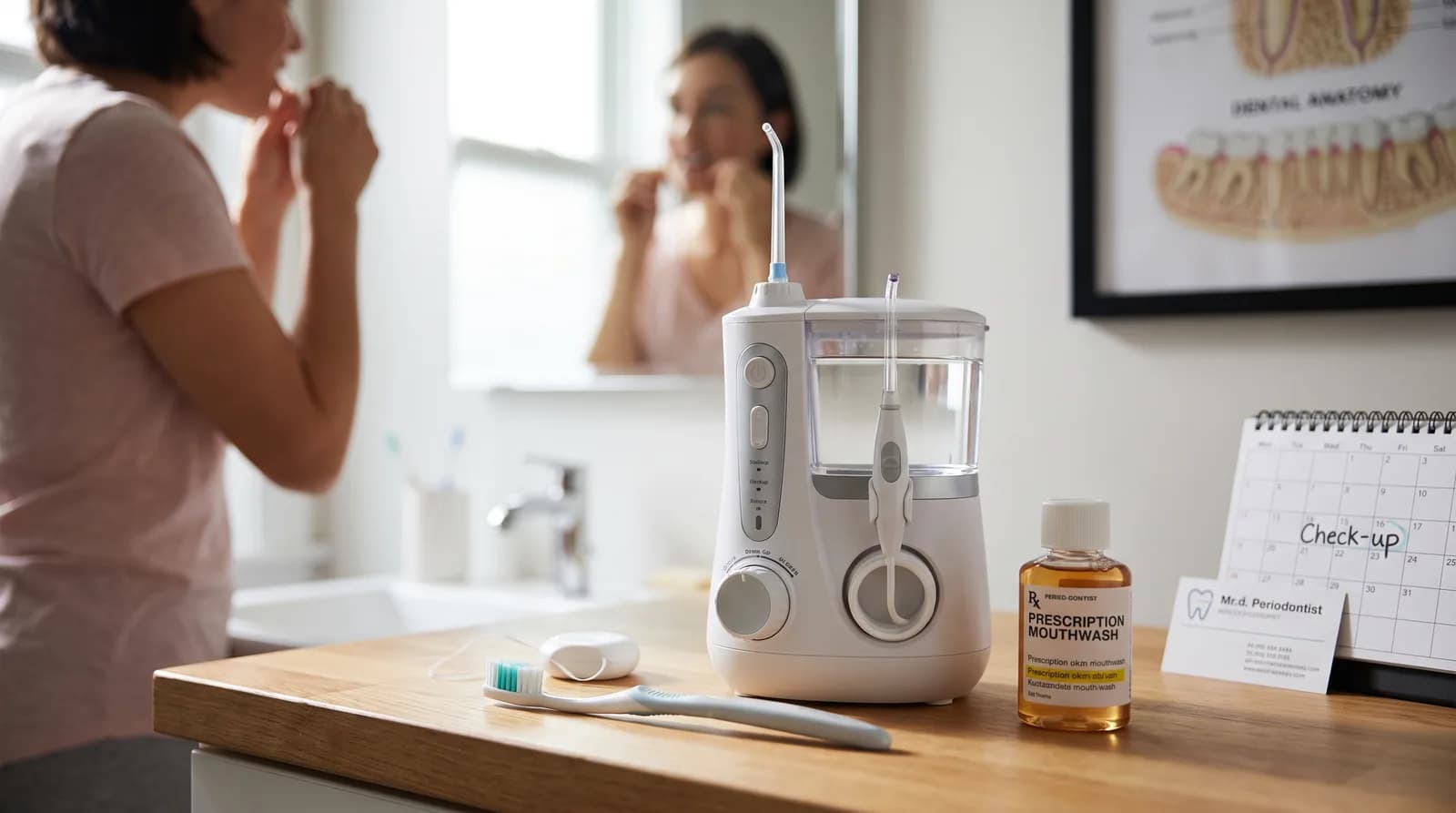
Understanding gum disease treatment stages helps answer the question most patients actually want answered: how bad is this, really, and what happens next? Gum disease isn't one condition with one treatment. It's a spectrum, and where you fall on it changes everything about the plan. Our periodontal treatment team at Susan J. Curley DDS mapped out each stage here so you can see exactly where you stand.
We covered the early warning signs of gum disease in a separate guide. This one goes further, walking through each stage from the mildest to the most advanced, what treatment looks like at each point, and why acting sooner rather than later makes such a difference.
Most patients assume gum disease is one thing: you either have it or you don't. In reality, it's a progression, and knowing which point you're at changes both the urgency and the type of treatment that makes sense. A cleaning solves one stage; a specialist referral solves another.
Not sure which stage applies to you?
A gum pocket measurement at your next exam gives a clear, specific answer.
Book an Appointment →Gum disease progresses through four general stages: gingivitis, mild periodontitis, moderate periodontitis, and advanced periodontitis. Each stage reflects more bone and tissue loss around the teeth, and each one calls for a different level of treatment.
It helps to picture these stages as a slope rather than four separate boxes. Nobody wakes up one day with moderate periodontitis out of nowhere; it develops gradually from an untreated earlier stage, which is exactly why the stages matter as a warning system rather than just a diagnostic label after the fact.
Gingivitis is the only stage that's fully reversible. Everything past that point involves some permanent change to the supporting structures around your teeth, which is exactly why dentists emphasize catching it early rather than waiting for symptoms to become obvious.
Dentists determine your stage using a few specific measurements: gum pocket depth (measured in millimeters with a small probe), whether bleeding occurs during that measurement, and how much bone loss appears on dental X-rays. None of these are things you can accurately assess on your own at home, which is exactly why the staging happens during a professional exam rather than a self-check.
| Stage | Gum Pocket Depth | Typical Treatment |
|---|---|---|
| Gingivitis | 1-3mm, no bone loss | Professional cleaning, improved home care |
| Mild Periodontitis | 4-5mm, early bone loss | Scaling and root planing (deep cleaning) |
| Moderate Periodontitis | 5-7mm, moderate bone loss | Deep cleaning, localized antibiotics, closer maintenance |
| Advanced Periodontitis | 7mm+, significant bone loss | Specialist referral, possible surgical treatment |
Gingivitis is the earliest stage of gum disease, caused by plaque buildup along the gumline that leads to redness, swelling, and bleeding when you brush or floss. It's the only stage that's fully reversible with a professional cleaning and consistent home care.
At this stage, the bone and connective tissue holding your teeth in place haven't been affected yet, which is exactly why treatment can fully undo the damage. A cleaning, better brushing technique, and more consistent flossing are often enough to return gums to a healthy state within a few weeks.
According to CDC oral health resources, gingivitis is extremely common and, importantly, doesn't automatically mean you're on a path toward periodontitis. With consistent care, many people stay at this reversible stage indefinitely, or return to it after a single round of treatment.
Gingivitis progresses to periodontitis when plaque and tartar below the gumline trigger an immune response that begins breaking down the bone and connective tissue anchoring your teeth. Once that happens, some of the damage becomes permanent, even after successful treatment.
This shift usually happens gradually and often without pain, which is part of why periodontitis frequently goes unnoticed until a routine exam catches it. Genetics, smoking, uncontrolled diabetes, and inconsistent home care all speed up this progression, while good oral hygiene and regular checkups slow it down considerably.
The mechanics behind this shift come down to the body's own immune response. Bacteria below the gumline trigger inflammation meant to fight off infection, but that same inflammatory process, left unchecked over time, ends up breaking down the bone and ligament fibers anchoring the tooth. It's a case where the body's defense mechanism, if it runs unchecked for too long, becomes part of the problem.
Some patients are simply more prone to this progression than others, even with similar home care habits. Family history of gum disease, certain autoimmune conditions, and hormonal changes can all shift how aggressively the immune response reacts to the same amount of bacterial buildup, which is part of why two people with seemingly similar habits can end up at very different stages.
Wondering where you stand?
A pocket-depth measurement gives a precise, honest answer, not a guess.
Contact Us →The gum disease treatment stages escalate together: gingivitis needs a cleaning and better home care, mild periodontitis typically needs scaling and root planing, and moderate to advanced periodontitis often adds antibiotics, more frequent maintenance, or specialist referral.
It's worth noting that these stages aren't always a one-way street either. A patient with mild periodontitis who commits to consistent home care and maintenance cleanings can often stabilize the condition and prevent it from ever reaching the moderate stage, even though the mild bone loss that's already occurred won't fully reverse. Stopping progression early is a genuine win, even without full reversal.
Home care matters at every single stage, not just the earliest one. Even patients receiving more advanced treatment still need consistent brushing, flossing, and maintenance cleanings to keep the condition from progressing further.
Here's roughly how a treatment plan typically unfolds once gum disease is diagnosed at any stage:
Moderate to advanced periodontitis often requires treatment beyond a standard deep cleaning: localized antibiotics placed directly in deep pockets, more frequent maintenance visits, and sometimes referral to a periodontist for surgical procedures that reduce pocket depth or regenerate lost bone.
Maintenance cleanings often shift to every 3 months at these stages, rather than the standard six-month schedule, since the goal becomes managing the condition and preventing further loss rather than simply maintaining health. Some patients also benefit from a coordinated approach between their general dentist and a periodontal specialist, especially when bone loss is significant.
Surgical options at advanced stages can include flap surgery to access and clean deeper areas, bone grafting to rebuild lost support, or guided tissue regeneration to encourage new bone and tissue growth. These procedures are typically performed by a periodontal specialist rather than a general dentist, and Dr. Curley's team coordinates that referral when it's the right next step. Dental issues account for roughly 2 million emergency room visits per year in the US, according to the ADA Health Policy Institute, and untreated periodontal infection is a meaningful contributor to that number.
Periodontitis can't be fully cured once bone loss has occurred, but it can be effectively managed and stopped from progressing further with consistent treatment and home care. Many patients successfully keep periodontitis stable for decades with the right maintenance plan.
Think of it less like a condition that goes away and more like one that gets controlled, similar to how high blood pressure is managed rather than cured. The goal shifts from reversal to stability: keeping pocket depths from deepening further and protecting the bone and teeth you still have.
This distinction matters for expectations more than anything else. Patients sometimes feel discouraged learning that periodontitis is "for life" rather than something a single treatment fixes permanently. In practice, a well-managed case of periodontitis, with consistent maintenance visits and good home care, often has no more day-to-day impact than having healthy gums to begin with. The management, not a cure, is what keeps it that way.
See a dentist about gum disease if you notice bleeding gums, persistent bad breath, gum recession, or any looseness in your teeth. Since early periodontitis often causes no pain, routine checkups are the most reliable way to catch it before symptoms appear.
Nearly half of adults over 30 have some form of gum disease, with the CDC placing the figure at about 42% of that age group, which means routine screening matters for almost everyone, not just people with obvious symptoms. Waiting for discomfort to show up often means waiting until the disease has already progressed past the easiest stage to treat.
Twice-yearly checkups remain the standard recommendation for most patients specifically because gum disease develops silently. A routine pocket-depth measurement takes just a few minutes during a regular exam, and it's the single most reliable way to catch a shift from gingivitis toward periodontitis before it becomes noticeable in daily life.
Results may vary. Please consult with your dentist at Susan J. Curley DDS for personalized treatment recommendations.
The single most useful thing to take from these gum disease treatment stages: earlier is always simpler. Gingivitis reverses with a cleaning; advanced periodontitis needs ongoing management for the rest of your life. Regular checkups are what determine which one you're dealing with, long before you'd ever notice it yourself. There's no substitute for a professional measurement when it comes to knowing exactly where you stand. Explore more of our Periodontal Care articles for more on treatment and prevention.
Ready to find out where you stand?
Susan J. Curley DDS will map out exactly what stage you're at and what treatment fits.
Book Appointment →Prefer to talk it through first?
Call 732-681-8604 →Written By
Dentist
Your first smile makeover consultation: what to expect, from the goals discussion to your digital smile design preview and plan.
What is digital smile design? A preview technology that lets you see your proposed new smile before treatment even begins.
Am I a candidate for veneers? Six clear signs that suggest veneers could be a good fit for your smile and long-term goals.
Book your visit with Dr. Curley online or call us, and we'll take it from there.