crowns
Temporary Crown Care Tips: What to Avoid Before Your Crown
Temporary crown care tips: what to avoid eating, how to floss carefully, and what to do if it comes loose or falls off entirely.
Sep 13, 20269 min read


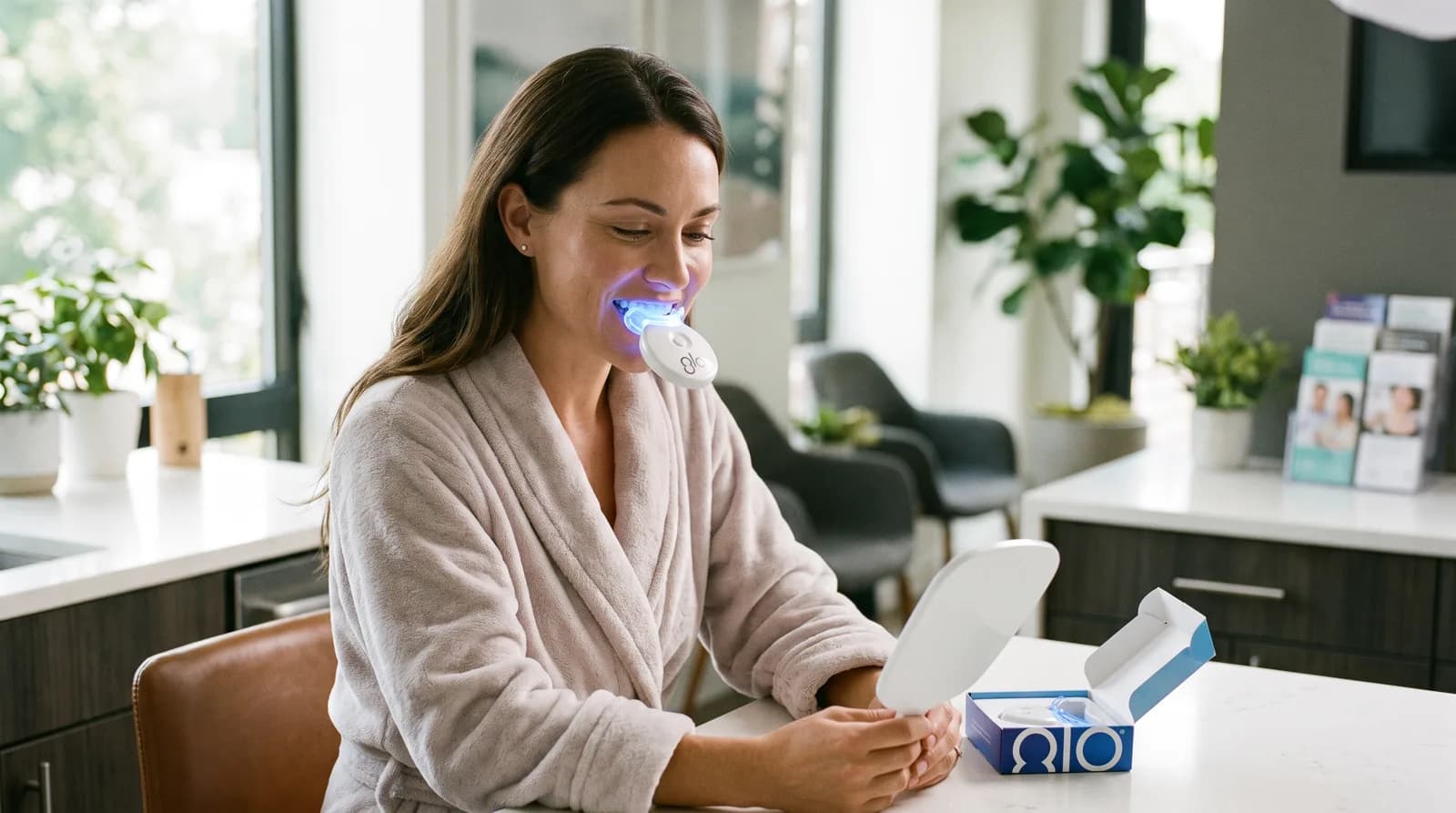
If you have been searching for professional teeth whitening in Wall Township, NJ, you may have come across GLO teeth whitening as one of the options available at Susan J. Curley DDS. GLO stands for Guided Light Optics, and it is a chairside professional whitening system that uses a combination of hydrogen peroxide gel and LED heat and light to accelerate and deepen the whitening effect. This article explains how the system works, what a session involves, what kind of results are realistic, and who is a good candidate.
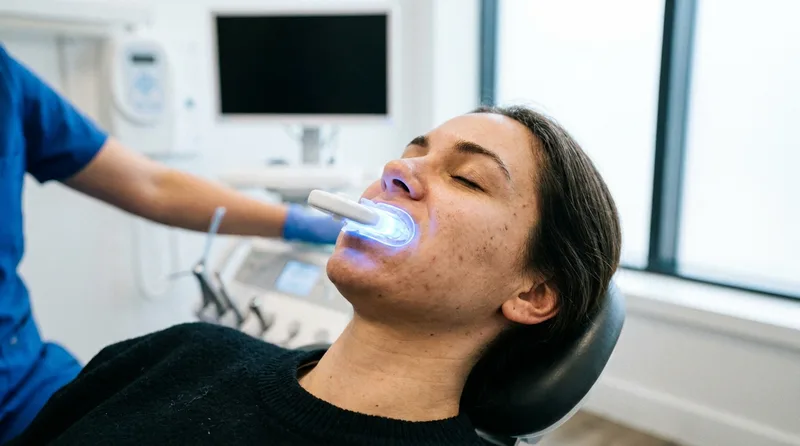
GLO whitening combines a professional-strength hydrogen peroxide gel with a device that delivers heat and LED light directly to the teeth. The heat and light accelerate the oxidation reaction in the gel, allowing it to penetrate enamel and break up the chromogenic molecules responsible for tooth discoloration.
GLO whitening uses two elements working together to whiten teeth more effectively than either can alone: a professional-strength hydrogen peroxide whitening gel and a GLO device that delivers heat and LED light directly to the gel while it is on the teeth. The heat and light accelerate the oxidation reaction in the whitening gel, allowing the active ingredient to penetrate the enamel and break up the chromogenic molecules responsible for intrinsic tooth discoloration.
The mechanism is similar to other professional light-assisted whitening systems in its chemistry, but the GLO device is specifically designed to maintain consistent heat and light contact with the teeth throughout each application cycle. This consistency reduces the variability that can occur with systems that rely on positioning a separate light source at a distance from the teeth, which can result in uneven exposure across the arch.
According to the American Dental Association, professional whitening systems using hydrogen peroxide are among the most effective approaches to tooth whitening when supervised by a dental professional, and the concentration of hydrogen peroxide used in chairside systems is higher than what is available over the counter.
A GLO whitening appointment at Susan J. Curley DDS begins with a dental examination to confirm that the teeth and gums are healthy enough for whitening. Whitening is not appropriate for teeth with active decay, cracked enamel, or significant gum inflammation, so a baseline assessment is the standard first step regardless of which whitening system is used.
The session itself involves multiple short application cycles. The whitening gel is applied to the teeth and the GLO mouthpiece is worn for eight minutes per cycle, with the heat and light active throughout. After each cycle, the gel is rinsed, fresh gel is applied, and the process repeats for a total of three to four cycles in a single appointment. Total chair time for the whitening portion of the appointment is typically 30 to 45 minutes.
The GLO system is designed to minimize gum irritation relative to some other chairside systems because the mouthpiece delivers the light directly to the tooth surfaces without the same degree of gum exposure that occurs when light is projected from a fixed external source. Gum protection is still applied as a precaution, but the design of the system reduces the risk of soft tissue sensitivity during the procedure.

Realistic results depend on the cause of discoloration. Extrinsic staining from food, beverages, and tobacco responds well; intrinsic discoloration from tetracycline, fluorosis, or trauma responds less. Most patients achieve 4 to 8 shades of improvement in a single session, according to published clinical data on professional hydrogen peroxide whitening systems.
Realistic expectations for GLO whitening depend on the cause and degree of the existing discoloration. Professional whitening is highly effective for extrinsic staining from food, beverages, and tobacco, and for the natural yellowing of enamel that occurs with age. It is less effective for intrinsic discoloration caused by tetracycline antibiotic exposure during tooth development, fluorosis, or discoloration from trauma to a specific tooth.
Most patients achieve four to eight shades of whitening improvement in a single chairside session, according to published clinical data on professional hydrogen peroxide whitening, though individual results vary significantly based on tooth color baseline, enamel thickness, and the cause of the discoloration. The final result is also influenced by how recently significant staining exposures, such as coffee, wine, or tobacco, occurred before the appointment.
According to published research on professional tooth whitening outcomes, hydrogen peroxide-based chairside whitening produces statistically significant shade improvements in the majority of patients, with results that are clinically meaningful in terms of perceived smile brightness, according to that body of evidence. Results are not permanent and require maintenance to sustain over time.
Whitening results are not permanent. Most patients find chairside whitening results most visible for six months to a year before gradual restaining occurs. Touch-up whitening with take-home custom trays or a repeat in-office session restores the result and extends it significantly.
Whitening results are not permanent. The enamel continues to accumulate new staining from dietary and lifestyle exposures after the procedure, which gradually returns color over months and years. Most patients find that chairside whitening results are most visible for six months to a year, after which touch-up treatment with take-home whitening trays or a repeat chairside session can restore the result.
Patients who avoid or reduce heavy staining exposures including coffee, tea, red wine, and tobacco maintain their results significantly longer than those who continue the same consumption patterns unchanged. Whitening maintenance is far more effective when combined with a reduction in the exposures that caused the original staining than when used to compensate for ongoing heavy staining without behavioral changes.
Take-home whitening trays used periodically after the initial chairside treatment are one of the most effective approaches to maintaining results. Custom-fitted trays with a lower-concentration hydrogen peroxide gel worn for short sessions every few weeks provide a continuous maintenance effect that prevents staining from accumulating to the degree that prompted the original chairside session. Dr. Curley can prescribe take-home whitening as a follow-up to the in-office GLO session.
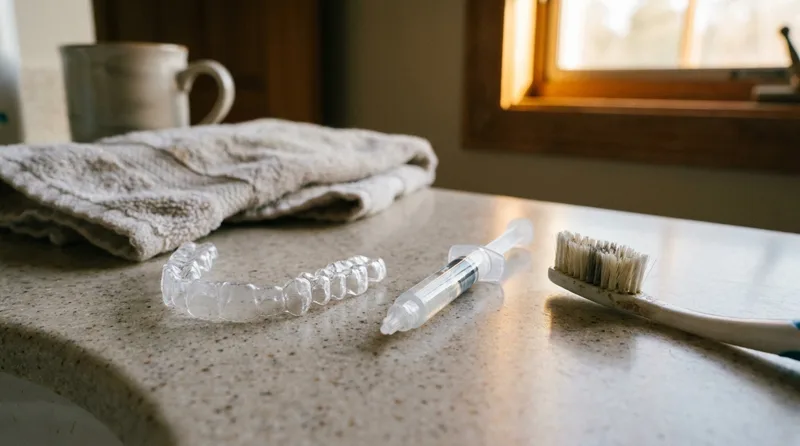
Good candidates are adults with healthy teeth and gums whose discoloration is extrinsic or age-related. Existing restorations will not respond to whitening gel and will not change shade, which can create a mismatch if they are in the visible smile zone. Patients with significant restorations should discuss this before proceeding.
Good candidates for GLO whitening are adults with healthy teeth and gums whose discoloration is primarily extrinsic or age-related. Existing restorations including crowns, veneers, and tooth-colored fillings will not respond to whitening gel, so their color will not change during the procedure. This can create a mismatch between newly whitened natural teeth and existing restorations that were placed to match a darker shade. Patients with significant restorations in the visible smile zone should discuss this with Dr. Curley before whitening so expectations are accurate.
Whitening is not recommended for pregnant or nursing patients, for patients with known peroxide sensitivity, or for patients with significant gum recession or exposed root surfaces, where the dentinal surface is more sensitive to the whitening gel than intact enamel. Younger patients whose teeth are still developing are also not candidates for professional whitening.
The evaluation at the beginning of the whitening appointment confirms candidacy. If a condition is identified that makes whitening inadvisable at that time, Dr. Curley will explain why and what would need to be addressed first. To schedule a whitening consultation, visit susanjcurleydds.com/book-appointment.
GLO is one of several professional whitening systems. The primary advantage of any chairside professional system over at-home options is higher hydrogen peroxide concentration, professional supervision, and same-appointment results. The choice between systems matters less than ensuring proper professional oversight and realistic expectations.
GLO is one of several professional whitening systems available, and it competes with other chairside systems as well as with custom take-home tray whitening and over-the-counter strip-based products. The primary advantage of any chairside professional system over at-home options is the concentration of hydrogen peroxide available, the supervision of a dental professional during the procedure, and the speed of results in a single appointment.
The choice between GLO and other professional whitening options is largely a clinical and preference-based decision. Different patients respond differently to different systems, and what matters more than the specific system is that the whitening is done with appropriate professional oversight, with properly fitted protective measures in place, and with realistic expectations established before the procedure begins. Our existing article on GLO whitening vs OTC strips covers that specific comparison in depth.
Ready for a brighter smile?
Book a GLO whitening consultation at Susan J. Curley DDS in Wall Township, NJ. Dr. Curley will assess your current shade, confirm candidacy, and give you a realistic picture of what whitening can achieve for your specific teeth.
Explore Cosmetic DentistryGLO whitening is one part of the cosmetic dentistry picture at Susan J. Curley DDS.
Results may vary. Please consult with your dentist at Susan J. Curley DDS for personalized treatment recommendations.
Written By
Dentist
Temporary crown care tips: what to avoid eating, how to floss carefully, and what to do if it comes loose or falls off entirely.
Cost of veneers NJ: what actually drives the price, from the number of veneers to material choice and treatment planning.
Crown after root canal: why almost every treated tooth needs one, what happens if you skip it, and the right treatment timeline.
Book your visit with Dr. Curley online or call us, and we'll take it from there.