Preventive Dentistry
Fluoride Treatment for Adults Necessary or Not Now?
Fluoride treatment for adults necessary in some cases, not others. See who actually benefits, how it works, and how it differs from toothpaste.
Aug 16, 202610 min read


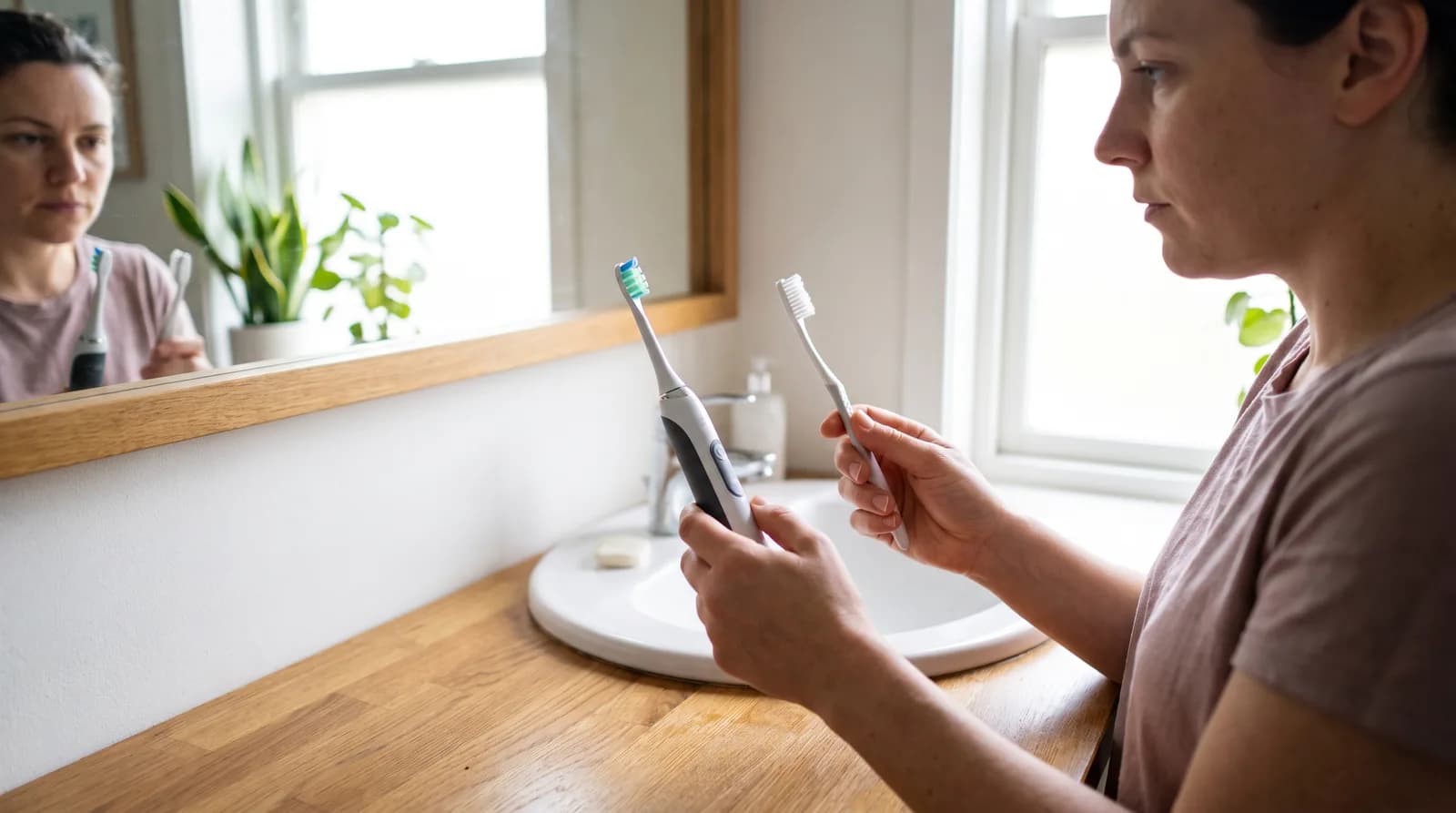
Standing in the toothpaste aisle wondering about electric vs manual toothbrush options is a common moment of indecision, and the short answer is that the electric vs manual toothbrush question matters less than most marketing suggests. Both can clean teeth effectively, and the real differences come down to a handful of specific situations rather than one being universally superior. Here's the actual verdict, section by section. Toothbrush guidance is part of routine general dentistry care at Susan J. Curley DDS. No single answer applies to every patient walking into that aisle, despite what packaging and advertising often claim.
Still Not Sure Which to Buy?
Ask at your next visit for a recommendation based on your specific habits and needs.
Book Appointment →Electric toothbrushes have a slight, measurable edge in plaque removal, largely thanks to consistent motion and built-in timers. But a manual toothbrush used correctly for two full minutes closes most of that gap in practice. Neither wins by a wide enough margin to call it a clear, universal must-upgrade for every single patient.
The electric brush's advantage comes from consistency rather than raw power. Its oscillating or vibrating head maintains the same motion and pressure throughout brushing, regardless of user fatigue near the end. A manual brush depends entirely on the person holding it, which means results vary more from person to person and even day to day. For someone with solid technique and genuine follow-through, the manual brush holds its own quite well against its pricier counterpart.
An exam and cleaning can confirm whether your current tool and technique are actually reaching everywhere they should, regardless of which one you use. According to MouthHealthy, the ADA's patient education site, both electric and manual toothbrushes are effective when used correctly and consistently.
Oscillating-rotating and sonic electric brushes both clean effectively, and the difference between them comes down to sensation and personal preference more than a meaningful gap in results. Neither type has a clear edge over the other for most patients, based on the available research comparing them.
Oscillating-rotating brushes rotate in small circles, cleaning one tooth at a time with a compact, round head designed for that specific motion. Sonic brushes vibrate at high frequency across a wider head, creating a noticeably different feel during brushing compared to the rotating motion. Both have solid evidence behind their effectiveness, and patients often develop a strong preference for one sensation once they've tried both models for a reasonable trial period. Price ranges vary considerably within each category, from basic models to versions with multiple settings, smart features, and app connectivity.
Trying a specific model for a few weeks is a reasonable way to figure out which sensation actually works for you before committing further, especially since return policies vary by retailer.
Patients who struggle with brushing technique, have limited dexterity, or tend to brush too hard are the clearest candidates for an electric upgrade, since the tool compensates for exactly those specific gaps. Patients already brushing well with manual have less to gain from switching.
If none of these describe you, the upgrade is more about personal preference than a meaningful clinical difference worth chasing after, at least based on current research.
Yes, the verdict shifts somewhat for kids, since a fun, engaging electric brush sometimes encourages a reluctant child to brush longer and more thoroughly than a plain manual brush ever would. Engagement matters more for children than for most adults.
Many kid-focused electric brushes include music, lights, or characters that turn a chore into something a child actually looks forward to each day, which often matters more than any technical cleaning difference between electric and manual. Getting a child to brush consistently for two full minutes is frequently the bigger challenge, not the specific tool used to accomplish that goal. For adults, existing habits and personal preference tend to carry more weight than novelty or added features marketed toward kids.
Age-appropriate brush heads and some adult supervision remain important regardless of which type of toothbrush a child ends up using at home.
Cost justifies the switch for the specific patients listed above, but not universally. A manual toothbrush used well costs a fraction of an electric model and produces comparable day-to-day results for someone with good habits already in place.
| Situation | Verdict |
|---|---|
| Already brushing well with manual | Electric is optional, not necessary |
| Struggling with technique or duration | Electric is worth the investment |
| Braces, implants, or limited dexterity | Electric often makes cleaning easier |
The right call depends more on your specific situation than on either tool being objectively superior in general, which is why a blanket recommendation rarely fits everyone.
Curious About Advanced Cleaning Technology?
Guided Biofilm Therapy offers a modern, comfortable approach to professional cleanings.
Read About Guided Biofilm Therapy →Electric often has a genuine edge for patients with braces, implants, or other restorative work, since the brush head can maneuver around brackets and restorations with less manual dexterity required than careful manual technique demands. This is another situation where the upgrade tends to pay off.
Braces create tight spaces and awkward angles that a manual brush struggles to navigate consistently, especially for patients who are new to caring for orthodontic hardware for the first time. An electric brush's consistent motion helps compensate for the extra complexity, reducing the risk of missed spots around brackets and wires that are easy to overlook otherwise. Similarly, patients with implants or bridges often find electric brushes easier to maneuver around restorative work, without needing to relearn an entirely new manual technique from scratch.
If you have braces or recent restorative work, this is worth bringing up specifically at your next visit, since the recommendation may differ from the general guidance that applies to most patients.
Yes, for patients prone to brushing too hard, an electric brush with a built-in pressure sensor genuinely protects gum tissue better. It provides direct, real-time feedback that a manual brush simply can't offer. This is one of the more clear-cut wins for electric.
Heavy-handed brushing with a manual toothbrush is a common, gradual cause of gum recession, often happening without the person realizing it until a dentist points out the pattern. Pressure sensors interrupt that habit immediately, buzzing or stopping when force gets excessive, which corrects the behavior faster than verbal reminders alone. For patients who already brush gently, this advantage simply doesn't apply, since the problem it solves isn't present in the first place.
If gum recession or bleeding has come up at a previous cleaning, this is one area where the electric upgrade has a genuine, evidence-backed edge worth taking seriously. Roughly 42% of adults aged 30 and older have some form of periodontal disease, according to CDC 2024 data, which underscores how much brushing pressure and technique matter regardless of which tool is used.
Both types need regular replacement on a similar schedule, roughly every three to four months, though electric brush heads tend to cost more per replacement than a full manual toothbrush. This is a small but real ongoing cost difference worth factoring in.
A manual toothbrush is replaced in its entirety, while an electric brush only requires swapping the head, keeping the handle and motor for years with proper care and regular cleaning. Bristles on either type wear down and become less effective at removing plaque well before they look visibly worn, which is why the three-to-four-month guideline exists regardless of how the bristles actually look. Some electric models include a built-in reminder that signals when it's time to replace the head, removing the guesswork some patients find helpful when tracking replacement schedules manually.
Sticking to a consistent replacement schedule matters more for effective cleaning than which specific toothbrush type you've chosen to use day to day.
Technique, duration, and consistency matter more than electric versus manual. Two full minutes of thorough brushing, twice daily, outperforms either tool used carelessly or briefly. The tool is secondary to the habit surrounding it.
Brushing quickly for thirty seconds with an expensive electric brush accomplishes less than two full minutes with a basic manual one. Flossing daily matters just as much, since neither brush type cleans effectively between teeth on its own. Replacing your brush head or toothbrush every three to four months also plays a meaningful role, regardless of which type you're using day to day.
The upgrade question matters less once these fundamentals are already solid, which is why the honest verdict here is more nuanced than a simple "electric wins." Both tools can support excellent oral health when used well. Regular dental visits catch roughly 80% of oral health issues before they become serious, according to the ADA, which matters more than either toothbrush choice on its own.
Electric vs manual toothbrush comes down to a genuinely split verdict: electric wins clearly for patients with specific technique, dexterity, or gum-health challenges, while manual holds its own for everyone else with good habits already in place. Susan J. Curley DDS can help assess which category actually fits you best, based on your specific habits and any dental work you currently have.
Results may vary. Please consult with your dentist at Susan J. Curley DDS for personalized treatment recommendations.
If you're still torn between the two, bringing the question to your next visit gets you a recommendation based on your actual mouth, not a generic answer. CDC oral health data notes that consistent daily brushing remains the foundation of good oral health regardless of tool choice.
Ready for a Personalized Recommendation?
Book an appointment with Susan J. Curley DDS and get guidance tailored to your specific habits.
Book an Appointment →Prefer to talk it through first?
Call 732-681-8604 →Written By
Dentist
Fluoride treatment for adults necessary in some cases, not others. See who actually benefits, how it works, and how it differs from toothpaste.
Dental sealants for adults worth it? For molars with deep grooves, yes. See how they work, who's a candidate, and how they compare to a filling.
Laser gum surgery recovery time is faster than most patients expect. See the realistic day-by-day timeline compared to traditional scalpel surgery.
Book your visit with Dr. Curley online or call us, and we'll take it from there.