
smile-design
How to Build a Full Smile Makeover Plan That Works
Full smile makeover plan explained: how to properly sequence Invisalign, whitening, and veneers together for the best result.
Sep 22, 20266 min read


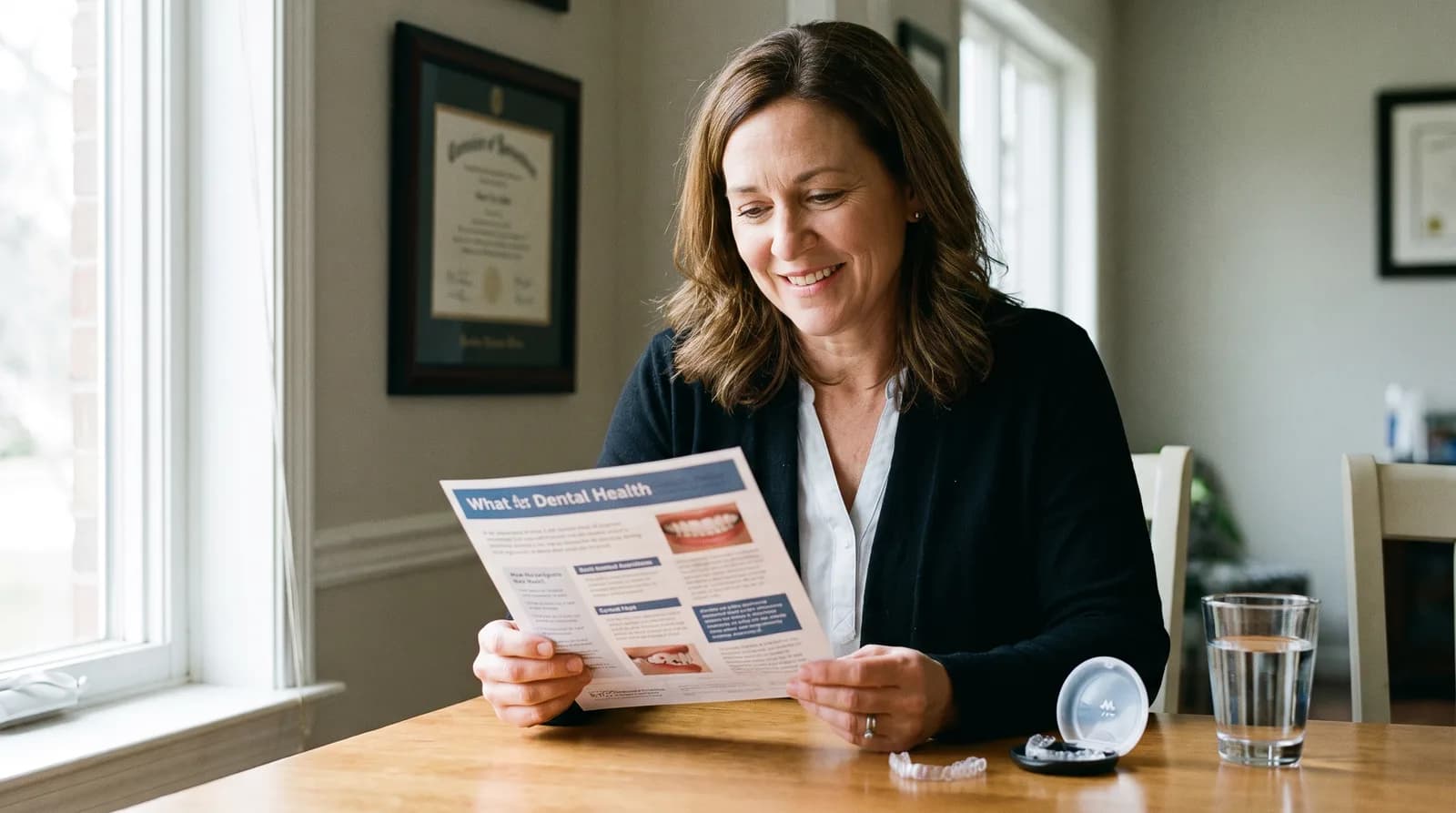
Sealants get marketed almost entirely toward kids, which is exactly why so many adults quietly search "dental sealants for adults worth it" before their next cleaning rather than asking the dentist directly. The honest answer is that they can be a genuinely useful, low-effort way to protect specific teeth from decay, particularly molars with deep grooves that a toothbrush bristle can't fully reach.
A lot of adults assume sealants are something they aged out of once childhood dental visits ended, which isn't quite accurate. The same tooth anatomy that made sealants useful at age eight is still present decades later, and it doesn't become less vulnerable to decay simply because a patient got older. If anything, decades of chewing and acid exposure can make those same grooves more vulnerable, not less.
This guide covers how sealants actually work, why an adult might need them even after decades without a cavity, and how the value compares to treating a cavity after it forms. For general preventive and restorative care beyond sealants specifically, see this practice's general dentistry services.
Dental sealants for adults are worth it in the right situation: a thin protective coating on a molar with deep grooves, applied once, that meaningfully lowers the odds of a cavity forming in that specific spot.
Sealants aren't a universal recommendation for every adult tooth. They make the most sense for molars with deep pits and grooves, the kind that trap food and bacteria even with good brushing habits. A smooth, shallow tooth surface generally doesn't need one.
42% of adults aged 30 and older have some form of periodontal disease, according to the CDC, and cavities remain common well into adulthood despite the assumption that decay risk drops off after childhood. Sealants address one specific, preventable piece of that broader picture.
The decision isn't about age at all, in other words. It's about the specific shape and history of an individual tooth, which is why a dentist needs to actually look at the tooth in question rather than making a blanket recommendation based on how old a patient is.
Some adults have molars that were never quite deep enough to warrant a sealant in childhood, only to see the enamel wear in a way that creates new risk decades later. Tooth anatomy isn't entirely static over a lifetime, even without any cavities along the way.
Dental sealants work by filling in the deep grooves on a molar's chewing surface with a thin resin coating, creating a smoother surface that's far easier to keep clean than the natural, pitted tooth underneath.
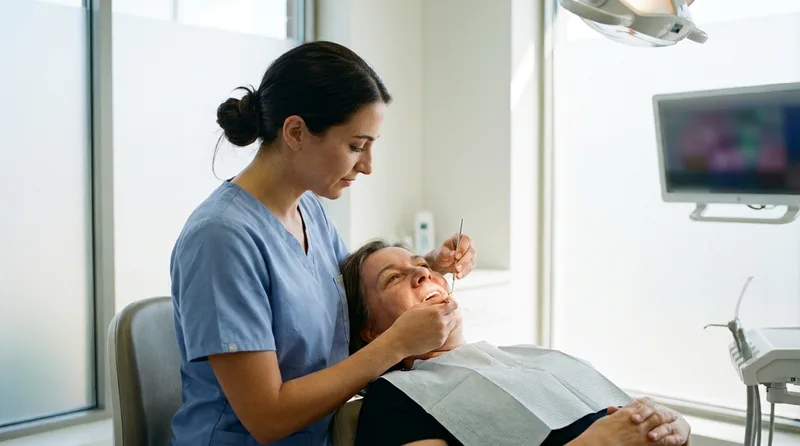
The application itself takes only a few minutes per tooth. The surface gets cleaned and dried, the resin gets applied directly into the grooves, and a curing light hardens it in place. There's no drilling and no anesthetic required for most patients.
Once in place, the sealant acts as a physical barrier. Bacteria and food particles that would otherwise settle into a deep groove instead sit on top of a smooth surface that a normal toothbrush can actually clean effectively.
The whole process typically adds only a few extra minutes to an already-scheduled cleaning appointment, which is part of why it's such an easy addition once a dentist identifies a tooth that would actually benefit.
Wondering If a Sealant Makes Sense for You?
A routine exam is the easiest way to find out. No pressure, just a look at your actual teeth.
Schedule a Cleaning →Adults can benefit from sealants because molar grooves don't disappear with age, and years of missed opportunities to protect them means cumulative decay risk in those exact spots, not less risk simply because childhood has passed.
Sealants are studied most heavily in children, and the research specifically showing decay risk reduction in school-age kids is well established. The same physical principle, a smoother surface resists decay better than a deeply grooved one, applies just as directly to an adult molar with the same anatomy.
Adults who never had sealants as children, or whose old sealants have worn away, are sometimes surprised to learn the option is still available and still useful. It's not something a patient ages out of; it's simply underdiscussed once childhood dental visits are years in the past.
Diet and cavity risk stay connected throughout adulthood too, not just in childhood. For a closer look at how snacking habits specifically affect cavity risk between cleanings, see this guide on diet, snacking, and cavity risk.
Nearly 1 in 4 adults in the US has untreated tooth decay, according to CDC data, and a meaningful share of new adult cavities show up in the same deep-groove molar surfaces that sealants are specifically designed to protect. That overlap is exactly why the conversation is worth having at a routine visit rather than assuming it's not relevant anymore.
Dental sealants generally cost meaningfully less than treating the cavity they're designed to prevent, making them a reasonable value even before factoring in the discomfort and time a filling or crown eventually requires.
A sealant is a preventive investment rather than a treatment for an existing problem, which is exactly why the value comparison favors it. Treating a cavity after it forms usually means a filling at minimum, and sometimes a crown if decay has progressed far enough before it's caught.
Dental insurance frequently covers sealants for this exact reason: insurers recognize that preventing a cavity costs less than treating one down the line. It's worth checking specific coverage details, since policies vary, but sealants are commonly included under preventive care benefits.
Beyond the direct value comparison, there's also the simple matter of time and disruption. A sealant takes minutes and requires no recovery. A filling means numbing, drilling, and at least some residual sensitivity for a day or two afterward. That difference alone tends to matter for a busy adult weighing the two paths.
Thinking of a sealant as an investment rather than an expense tends to make the decision easier. The cost of prevention is consistently lower than the cost of treatment across nearly every area of dentistry, and sealants are one of the more straightforward examples of that principle in practice.
| Option | Time Required | Typical Longevity |
|---|---|---|
| Dental sealant | A few minutes per tooth | 5 to 10 years |
| Tooth-colored filling | 30 to 60 minutes | 7 to 10 years |
| Dental crown | One to two visits | 15+ years |
Prevention Over a Bigger Fix Later
A quick sealant now is a lot simpler than a filling or crown down the road.
Explore General Dentistry →Good candidates for adult sealants include patients with deep grooves in their molars, a history of cavities in those specific spots, or dry mouth conditions that reduce saliva's natural protective effect on tooth enamel.
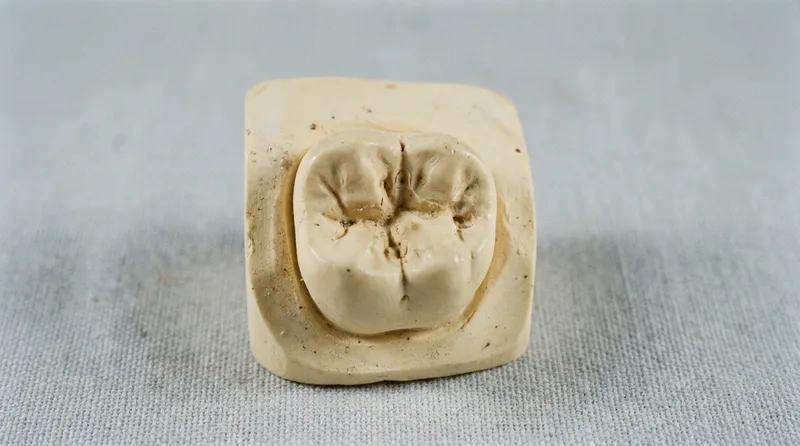
Dry mouth, whether from medication side effects, certain health conditions, or age-related changes, reduces the natural rinsing and remineralizing effect saliva normally provides. That makes deep grooves even more vulnerable than usual, which is exactly the situation sealants are designed to address.
Patients who've had a cavity filled in one molar sometimes benefit from a sealant on the matching tooth on the opposite side of the mouth, since similar anatomy tends to carry similar risk. Dr. Curley evaluates this during a routine exam rather than applying sealants as a blanket recommendation for every adult patient.
Adults returning to regular dental care after a long gap are also reasonable candidates to discuss sealants. A fresh set of eyes on tooth anatomy that hasn't been evaluated in years often turns up an opportunity that would have otherwise gone unaddressed.
According to ADA guidance, regular dental exams are the most reliable way to identify which specific teeth would actually benefit from a sealant, rather than guessing based on age or general risk factors alone.
Dental sealants typically last five to ten years with normal wear, though they should be checked at routine cleanings since they can wear down or chip earlier depending on individual biting and grinding habits.
A worn or chipped sealant doesn't need to be a concern on its own, but it does mean the protective barrier is no longer fully intact. Reapplication is quick and straightforward, similar to the original application, and it's a normal part of long-term maintenance rather than a sign anything went wrong.
Patients who grind their teeth at night sometimes see faster wear on sealants than patients who don't. That's one more reason a nightguard recommendation and a sealant recommendation sometimes come up in the same conversation during an exam.
A routine cleaning visit is the natural point to check on existing sealants, since the hygienist can visually confirm whether the coating is still intact or whether it's time to reapply. This usually doesn't require a separate appointment on its own.
Sealants that have worn away completely sometimes go unnoticed for a while, simply because there's no discomfort associated with the wear itself. That's one more reason a routine check-in matters more than waiting for a symptom to prompt a visit.
Finding out if sealants make sense involves a routine dental exam where Dr. Curley checks each molar's groove depth and decay history, since sealants work best as a targeted decision rather than a blanket treatment.

There's no separate specialty visit required. Sealant candidacy typically comes up naturally during a regular cleaning and exam, once the actual condition of each molar is visible under close inspection rather than guessed at from a patient's age or general history.
According to Mayo Clinic's general guidance on dental care, preventive measures like sealants tend to be most effective when identified early during a routine exam, rather than after a cavity has already started forming in that same spot.
Regular dental visits can catch about 80% of oral health issues before they become serious, according to the ADA. A sealant conversation is exactly the kind of small, preventive decision that a routine visit tends to surface naturally.
The short version: dental sealants for adults are worth it for the right teeth, specifically molars with deep grooves that are harder to keep clean through brushing alone. They're quick to apply, generally well covered by insurance, and a meaningfully better value than treating the cavity they're designed to prevent.
Results may vary. Please consult with your dentist at Susan J. Curley DDS for personalized treatment recommendations.
If it's been years since anyone mentioned sealants as an adult option, that's more about how they're marketed than whether they still make sense for your teeth specifically. A routine exam settles the question either way.
Have a question about coverage or candidacy?
Contact Us →Written By
Dentist
Full smile makeover plan explained: how to properly sequence Invisalign, whitening, and veneers together for the best result.
Digital smile design mockup explained honestly for patients: how it is created, why it is trustworthy, and what it shows you.
Smile design for a gummy smile: what actually causes it and which treatment options can genuinely help you feel confident.
Book your visit with Dr. Curley online or call us, and we'll take it from there.