crowns
Temporary Crown Care Tips: What to Avoid Before Your Crown
Temporary crown care tips: what to avoid eating, how to floss carefully, and what to do if it comes loose or falls off entirely.
Sep 13, 20269 min read


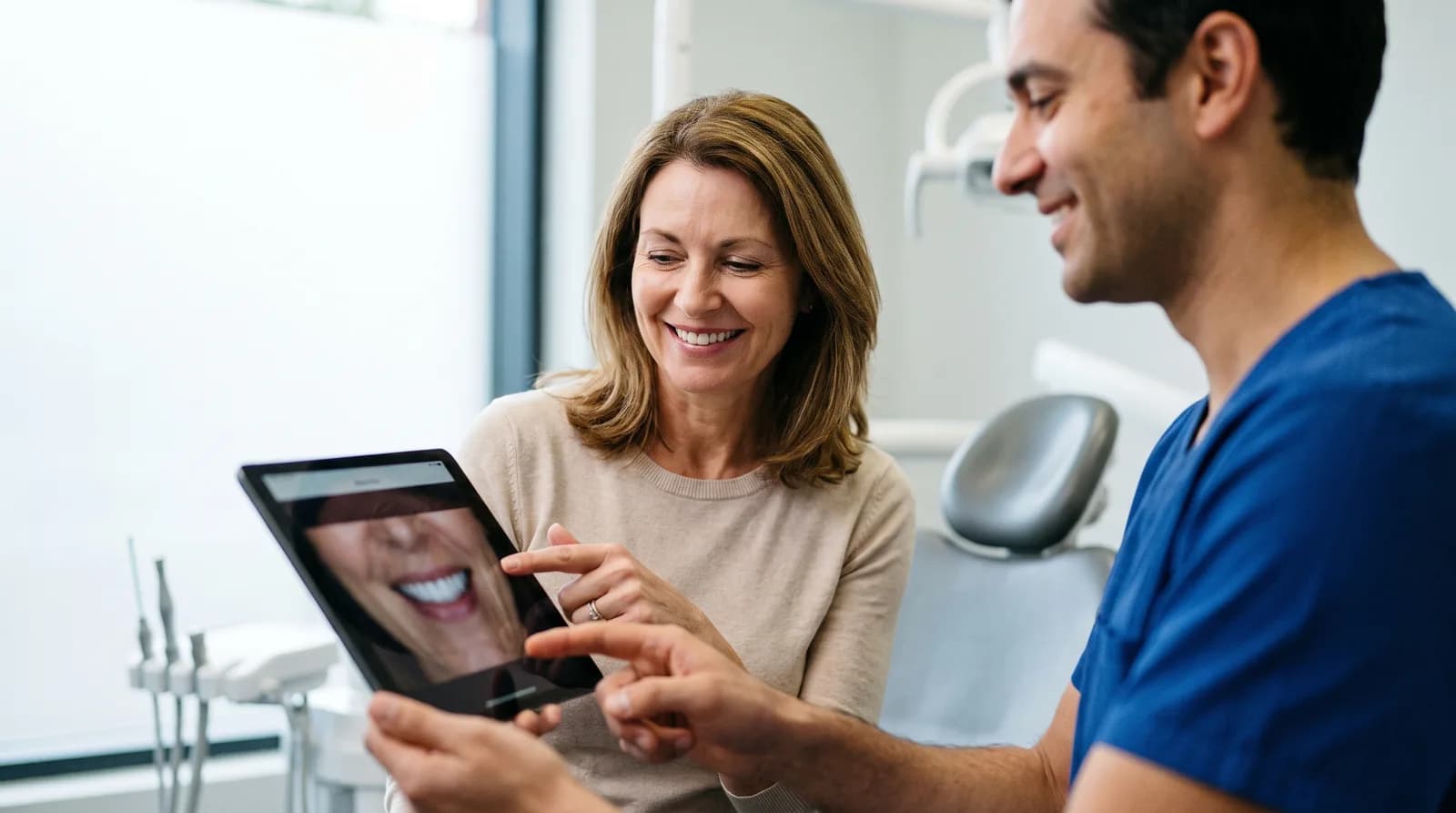
Digital smile design vs photo simulation is one of the most common points of confusion for patients researching cosmetic dentistry. Both use a photo of your smile. Only one is a clinical planning document the dentist is committed to delivering. Patients considering veneers, bonding, or a full smile makeover often say the same thing: I want to know what it is going to look like before I commit to anything, and a growing number of smile-preview apps promise exactly that, which is why it is worth understanding what actually separates real digital smile design from a filter.
At Susan J. Curley DDS in Wall Township, NJ, digital smile design is a standard part of the cosmetic consultation process for patients considering significant smile changes, and understanding how it differs from a simple photo simulation changes what you should expect from the process.
Digital smile design is a planning and communication tool that maps proposed tooth changes onto photographs and digital models of a patient's actual face and teeth, creating a realistic preview before any irreversible treatment step begins. At Susan J. Curley DDS, the process starts with standardized facial and dental photographs, moves through smile-design software that maps proposed changes onto those images, and often ends with a temporary physical mock-up the patient can see and feel in their own mouth. For the full step-by-step breakdown of what happens at each stage, see our complete Digital Smile Design New Jersey guide. What this article focuses on instead is a question patients ask constantly once they start researching: is this the same thing as those photo filters that whiten your teeth in an app?

Digital smile design is used in the planning phase for any significant cosmetic treatment where the visual outcome matters to the patient's decision. It is most commonly used for porcelain veneer cases, full smile makeovers, composite bonding redesigns, cosmetic crowns, and orthodontics where the post-alignment appearance matters.
It is particularly valuable in cases involving multiple front teeth, where the changes need to look balanced and natural across the full smile zone rather than just correct for individual teeth. A single crown that matches the adjacent tooth well is relatively straightforward to plan visually; eight veneers that need to look natural together while improving the smile's symmetry and proportions benefit significantly from pre-treatment digital planning.
This process also connects directly to Dr. Curley's iTero scanning workflow. Because the iTero scan captures precise three-dimensional geometry of the teeth and gum tissue, the design can be built from exact measurements rather than photographic approximations. This means the proposed tooth dimensions in the preview correspond to dimensions that can actually be fabricated and seated correctly, making the design preview clinically grounded, not just visually appealing. The digital scan data feeds into the smile design process, so the preview is based on the precise geometry of the prepared or existing teeth rather than a photograph approximation. For patients who have already had an iTero scan, the same data can be used to preview cosmetic options at no additional clinical time.
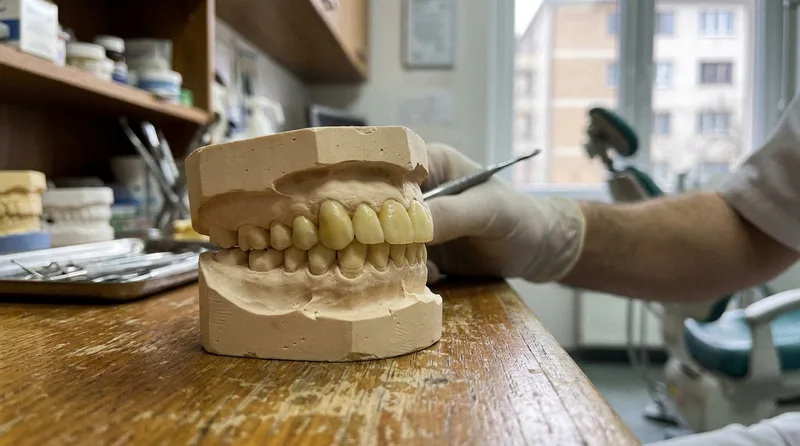
Cosmetic dental treatment is elective and often irreversible. Veneer preparation removes enamel that cannot be replaced. Patients who enter treatment without a clear visual understanding of the expected outcome take a larger leap of faith than most realize. This reduces uncertainty substantially.
Cosmetic dental treatment is elective and irreversible in ways that other dental procedures are not. A veneer preparation involves removing a small amount of enamel that cannot be replaced. A crown preparation involves reshaping the tooth to accept the crown. These are permanent commitments, and patients who make them without a clear visual understanding of the expected outcome are taking a larger leap of faith than most realize.
Digital smile design reduces that uncertainty substantially. Patients who see a realistic preview of the proposed result and have the opportunity to provide feedback, request adjustments, and ultimately approve or modify the plan before treatment begins are entering the restorative phase with a shared understanding rather than an assumption. This reduces the risk of post-treatment disappointment and eliminates the most common source of dissatisfaction: the gap between what a patient imagined and what was actually delivered.
According to the American Dental Association, studies show that communication breakdowns account for a significant proportion of post-treatment dissatisfaction in cosmetic dentistry, with some research finding that up to 40% of complaints relate to outcome expectations rather than technical quality, according to that data. Informed consent requires that patients have a clear understanding of the proposed outcome before treatment begins, which is precisely what digital smile design provides in a way that verbal descriptions cannot match.
| Factor | Photo Simulation / App Filter | Digital Smile Design |
|---|---|---|
| Basis for the preview | Generic whitening/shape filter applied to any photo | Actual tooth, gum, and facial geometry from your own photos and scans |
| Clinical accountability | None, not tied to a treatment plan | Dentist is clinically committed to the mapped result |
| Aesthetic principles used | Usually none | Smile symmetry, golden proportion, incisal edge position, gum line |
| Physical mock-up option | Not available | Wax-up can be temporarily placed on your teeth to test in person |
This process is more than a simple photo edit that whitens teeth. A properly executed design is based on the actual geometry of the patient's teeth, uses established aesthetic principles, and produces a result the dentist is clinically committed to delivering, not just a flattering approximation.
Digital smile design is more than a simulation and should not be confused with simple photo editing that makes teeth look whiter or slightly different. A properly executed digital smile design is based on the actual geometry of the patient's teeth and face, uses established dental aesthetic principles to guide the proposed changes, and produces a result that the dentist is clinically committed to delivering.
The distinction matters because a cosmetic simulation that simply brightens and whitens teeth in a photograph is easy to produce but does not reflect what is actually achievable or what the dentist is planning to do. A digital smile design that maps specific tooth dimension changes onto precise scan data, incorporates gum tissue contour, and accounts for bite relationship is a genuine planning document that both the patient and the dentist can hold the final result accountable to.
According to the American Dental Association's MouthHealthy resource, cosmetic procedures including veneers require a thorough evaluation of the teeth and overall oral health before proceeding, and the planning process is where the clinical team and patient align on the expected outcome. It is the tool that makes that alignment concrete.
It is for anyone considering a significant cosmetic change who wants to see the result before committing. It is especially valuable for patients who have hesitated because they could not visualize the outcome clearly enough to feel confident moving forward.
Digital smile design is for anyone considering a significant cosmetic change and wanting to see what the result would look like before committing to treatment. It is not a diagnostic tool for patients with purely functional concerns, but for any patient who is weighing a cosmetic investment and has questions about what the outcome will actually look like, it provides the most direct and honest answer available.
It is particularly valuable for patients who have wanted to improve their smile for a long time but have hesitated because they could not visualize the result clearly enough to feel confident committing. The ability to see, evaluate, and approve the proposed design before treatment begins transforms that hesitation into informed confidence.
To schedule a cosmetic consultation including a cosmetic preview consultation at Susan J. Curley DDS, visit susanjcurleydds.com/services/digital-smile-design or call the office directly. To request an appointment, visit susanjcurleydds.com/book-appointment.
Want to see your new smile before treatment begins?
Book a cosmetic consultation at Susan J. Curley DDS in Wall Township, NJ. Dr. Curley will walk you through the smile design preview process so you know exactly what to expect before committing to any treatment.
Explore Cosmetic DentistryDigital smile design sits at the intersection of technology and cosmetic dentistry at Susan J. Curley DDS.
Results may vary. Please consult with your dentist at Susan J. Curley DDS for personalized treatment recommendations.
Written By
Dentist
Temporary crown care tips: what to avoid eating, how to floss carefully, and what to do if it comes loose or falls off entirely.
Cost of veneers NJ: what actually drives the price, from the number of veneers to material choice and treatment planning.
Crown after root canal: why almost every treated tooth needs one, what happens if you skip it, and the right treatment timeline.
Book your visit with Dr. Curley online or call us, and we'll take it from there.