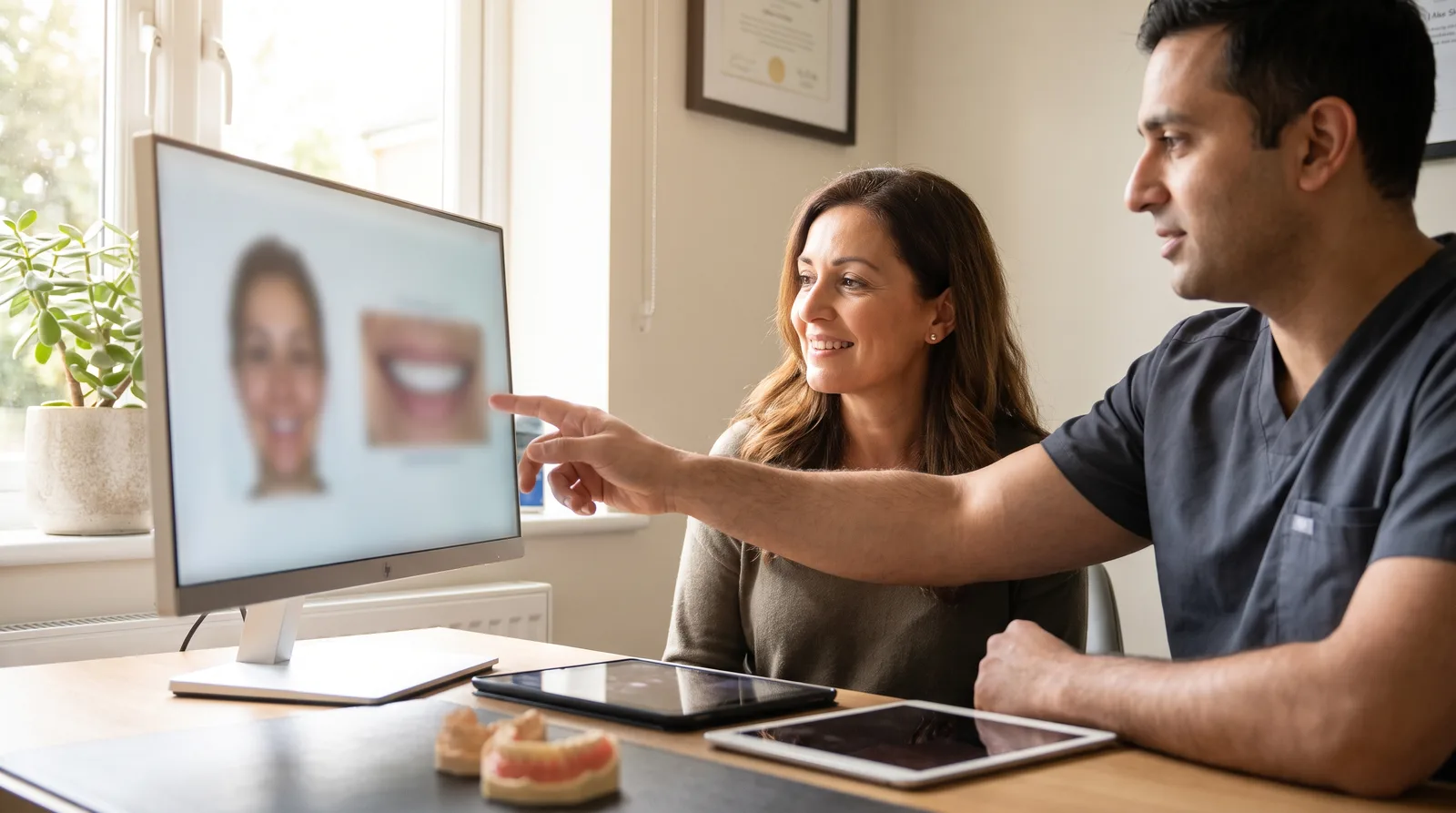
smile-design
Your First Smile Makeover Consultation: What to Expect
Your first smile makeover consultation: what to expect, from the goals discussion to your digital smile design preview and plan.
Sep 20, 20268 min read



Choosing between dentures vs dental implants is less about which option is clinically superior and more about which one actually fits how you live. Both replace missing teeth well, but they ask different things of you day to day, from maintenance routines to how they hold up at a dinner out with friends. This guide walks through the real lifestyle trade-offs, not just a feature comparison, so you can figure out which direction makes sense for your specific life. Both options fall under restorative dentistry at Susan J. Curley DDS, and the right choice depends entirely on your situation. Roughly 120 million Americans are missing at least one tooth, according to the American College of Prosthodontists, so this is a decision a lot of people eventually face.
Not Sure Which Fits Your Life?
A consultation with Dr. Curley can walk through your specific situation and goals.
Book Appointment →Dentures are removable replacement teeth that sit on your gums, while implants are anchored into your jawbone and function like permanent, fixed teeth. That structural difference shapes nearly every lifestyle trade-off between the two options.
Because dentures rest on the gums rather than anchoring into bone, they can shift slightly during eating or speaking and need to be removed for cleaning each day. Implants integrate with the jawbone over several months, after which they function much like natural teeth, brushed and flossed in place rather than removed. Dr. Curley handles the restorative crown portion of implant treatment, while surgical placement is coordinated with a specialist. That healing period is part of the trade-off for the more permanent, natural-feeling result implants ultimately provide.
Neither option is universally better. The right fit depends on your daily habits, budget, timeline, and how much bone structure you currently have. Two people with the exact same missing teeth can reasonably land on different answers based on how they actually want to live day to day.
With dentures, daily life includes removing them nightly, cleaning them separately from the rest of your mouth, and occasionally adjusting to some movement while eating or talking. With implants, daily care looks almost identical to caring for natural teeth, without a separate cleaning routine to remember.
| Daily Life Factor | Dentures | Implants |
|---|---|---|
| Cleaning routine | Removed and soaked nightly | Brush and floss in place |
| Eating certain foods | Some foods may be harder to manage | Functions close to natural teeth |
| Speaking confidence | Can take an adjustment period | Little to no adjustment needed |
| Travel and social settings | Requires case and cleaning supplies | No special travel considerations |
If your lifestyle involves frequent travel, dining out often, or public speaking, these daily differences may matter more to you than they would to someone with a quieter routine. Someone who works from home with a predictable schedule may weigh these factors quite differently than someone constantly on the move.

Dentures generally cost less upfront than implants, though implants are often more cost-effective over the long run since they don't typically need replacement every several years. Insurance coverage and financing options also factor into the real-world comparison.
Dentures may need relining or replacement over time as your jaw and gums naturally change shape, adding to their long-term cost in a way that's easy to underestimate at the outset. Implants involve a larger upfront investment, including the surgical and restorative phases, but they're built to last many years with proper care once the process is complete. Many patients weigh the lower initial cost of dentures against the longer-term value of implants when making this decision. A useful way to think about it is total cost over ten or fifteen years, rather than just the number on the initial estimate.
Ask about financing options and what your specific insurance plan covers for each option before deciding, since the real cost difference varies quite a bit by individual plan. A clear breakdown of both options side by side often makes the decision feel less abstract than comparing rough estimates alone.
Considering a Middle Ground?
If you're missing just one or a few teeth, our guide to implants vs. bridges covers another common decision point.
Read Implants vs. Bridges →Yes, bone health plays a major role, since implants require enough jawbone density to anchor into, while dentures don't. Significant bone loss may mean a bone graft is needed before implants are possible, or that dentures are the more practical starting point.
Implants also help preserve jawbone over time, since they stimulate the bone the way natural tooth roots do. Dentures, sitting on top of the gums rather than anchoring into bone, don't provide that same stimulation, which is part of why jawbone can continue to shrink gradually under long-term denture wear. An exam and imaging determine where your bone health currently stands and what options are realistically on the table. Mayo Clinic notes that adequate jawbone density is one of the key factors determining implant candidacy. This is one reason waiting too long after losing a tooth can narrow your options later, since bone loss tends to progress gradually once a tooth is gone.
If bone loss is significant, Dr. Curley will discuss whether a bone graft could open up the possibility of implants down the road, or whether dentures remain the more practical near-term choice. This conversation happens early, before any commitment to one path over the other.
Dentures typically need relining or replacement every five to ten years as your mouth changes shape, while implants can last decades, sometimes a lifetime, with proper care. Longevity is one of the clearer differences between the two options.
Dental implants have a success rate of 95% to 98% over ten years, according to research published in the Journal of Oral and Maxillofacial Surgery, and many continue functioning well beyond that window. According to MouthHealthy, the ADA's patient education site, dentures also remain a reliable, well-established option for many patients. Dentures, while durable, are designed around the expectation of periodic adjustment or replacement, since your jaw and gum tissue continue to change shape over the years regardless of which option you choose.
If longevity and minimizing future dental visits matter most to you, that consideration often weighs in favor of implants, assuming your bone health supports them. For someone who would rather handle a larger decision once than revisit it every several years, that difference can carry real weight.
Implants generally restore chewing function closer to natural teeth than dentures do, since they're anchored directly into bone rather than resting on the gums. This matters most for foods that require firm, confident biting.
Implant-supported teeth can restore up to 90% of natural chewing power, according to the American Academy of Implant Dentistry, while dentures typically restore a smaller percentage due to the way they sit on the gums rather than anchoring into bone. For many patients, this becomes noticeable with foods like corn on the cob, steak, or crusty bread, all of which can feel more manageable with implants. Dentures can still handle a wide range of foods comfortably, just with a bit more caution around especially firm or sticky textures.
If maintaining a wide, unrestricted diet is a priority, this is one of the more significant lifestyle factors to weigh in the decision. Someone who eats out often or enjoys a wide variety of textures may find this the deciding factor over everything else.
Implants generally look and feel closer to natural teeth than dentures, since they're fixed in place and shaped individually rather than as a full arch. Many patients also find implants easier to forget about once they've healed.
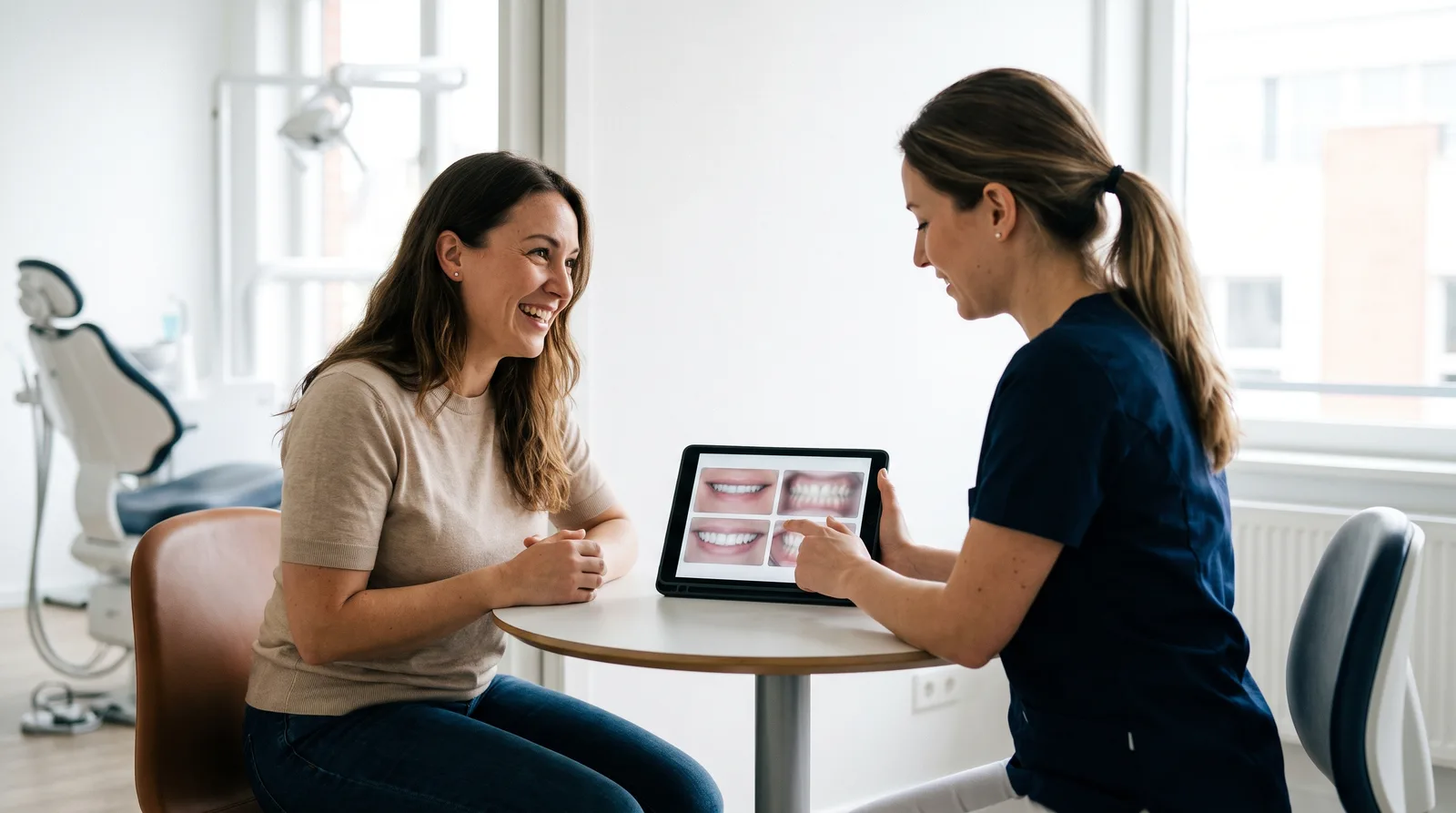
Modern dentures have improved significantly and can look quite natural in photos and everyday conversation, but some patients notice a subtle difference in how they feel compared to their original teeth, particularly with taste sensation and the sensation of biting down. Implants, since they don't cover the roof of the mouth or shift during use, tend to feel less like an appliance and more like simply having your teeth back. Digital Smile Design can help visualize either option before treatment begins, giving you a clearer sense of the expected result before committing to either path.
Neither option is wrong here. It comes down to which trade-off, cost and timeline versus a slightly more natural feel, matters more to you personally.
Yes, many patients start with dentures and transition to implants later, once finances, bone health, or priorities shift. The two options aren't necessarily a permanent, one-time decision, and revisiting the choice down the road is completely normal.
Some patients choose dentures initially due to cost or timeline, then revisit implants once they've had time to save, once bone grafting has restored adequate jawbone density, or once they've experienced the daily trade-offs of dentures firsthand and decided implants are worth the investment. This flexibility means the decision today doesn't have to be the final word on your long-term dental plan. It's a genuinely common path, not an unusual one.
Bringing this up at a consultation, even if you're leaning toward dentures now, helps Dr. Curley plan in a way that keeps the implant option realistically open for later if you want it. There's no pressure to commit to a permanent answer at your very first visit.
Dentures vs dental implants ultimately comes down to which trade-offs fit your actual life, not which option looks better on paper. Cost, bone health, daily routine, and how you eat and socialize all factor into a decision that's genuinely personal rather than one-size-fits-all. Susan J. Curley DDS walks through all of these factors with you before recommending either path, and there's no pressure to decide anything on the spot.
Results may vary. Please consult with your dentist at Susan J. Curley DDS for personalized treatment recommendations.
If you're weighing this decision, the next step is a consultation to see which option actually fits your specific bone health, budget, and daily life.
Ready to Explore Your Options?
Book a consultation with Susan J. Curley DDS and find out which option genuinely fits your life.
Book an Appointment →Prefer to talk it through first?
Call 732-681-8604 →Written By
Dentist
Your first smile makeover consultation: what to expect, from the goals discussion to your digital smile design preview and plan.
What is digital smile design? A preview technology that lets you see your proposed new smile before treatment even begins.
Am I a candidate for veneers? Six clear signs that suggest veneers could be a good fit for your smile and long-term goals.
Book your visit with Dr. Curley online or call us, and we'll take it from there.