crowns
Temporary Crown Care Tips: What to Avoid Before Your Crown
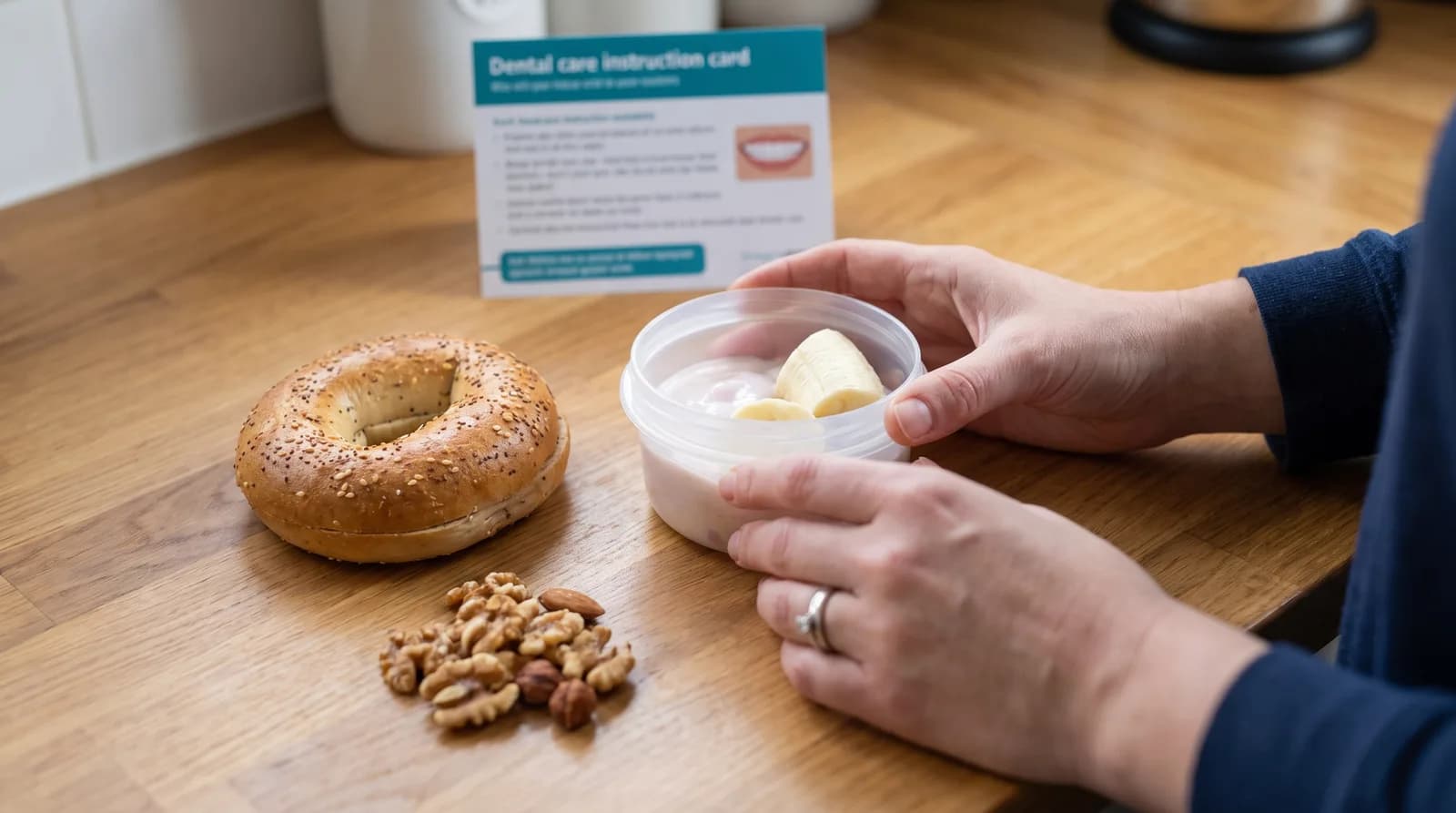
Temporary crown care tips: what to avoid eating, how to floss carefully, and what to do if it comes loose or falls off entirely.
Sep 13, 20269 min read



Finding a dentist that accepts my insurance Wall Township patients search for often comes down to a quick, direct answer rather than a long explanation, so here it is upfront: Susan J. Curley DDS accepts Delta Dental, Blue Cross Blue Shield, Cigna, Principal, and most PPO plans. This guide covers exactly what that means for your specific coverage and what to do if your plan isn't on this list. Insurance questions are handled directly as part of scheduling at Susan J. Curley DDS, so you're never left guessing before your appointment.
Want to Confirm Your Specific Plan?
Call or book online and our team will verify your specific coverage before your visit.
Book Appointment →Susan J. Curley DDS accepts Delta Dental, Blue Cross Blue Shield, Cigna, Principal, and most PPO plans. HMO plans and Medicaid or Medicare are not accepted at this practice, though patients with these plans can still pay directly or use financing.
If your specific plan isn't listed here by name but is a PPO plan, it's still worth calling to confirm, since PPO coverage is generally accepted even when the exact carrier isn't explicitly named above. Insurance carriers change and update their plan names regularly, so a quick call is always the most reliable way to confirm. According to Mayo Clinic, consistent access to dental care, regardless of insurance type, plays a meaningful role in preventing common issues like cavities.
PPO plans generally allow you to choose your own dentist and offer partial reimbursement even for out-of-network providers, while HMO plans typically require using specific in-network dentists with less flexibility. This distinction is why PPO plans are widely accepted here while HMOs are not, and it's one of the more important things to understand about your own coverage.
PPO, or Preferred Provider Organization, plans are structured around a network of dentists who've agreed to specific rates, but they generally still allow visits to dentists outside that network at a different reimbursement level. HMO, or Health Maintenance Organization, plans are more restrictive, typically requiring care through a specific assigned provider with little flexibility to go elsewhere. Because Susan J. Curley DDS operates independently rather than as part of an HMO network, PPO plans are the more compatible structure for most patients here. This structural difference is the main reason for the distinction, not anything about the quality of care itself.
If you're unsure whether your plan is a PPO or an HMO, your insurance card or a quick call to your provider usually clarifies this quickly. According to the ADA's Health Policy Institute, understanding your specific plan structure is one of the more overlooked factors in getting the most value from dental coverage.
Susan J. Curley DDS doesn't accept HMO, Medicaid, or Medicare plans because these structures typically involve significantly lower reimbursement rates and more restrictive networks than PPO plans, making it difficult for an independent practice to participate while maintaining consistent quality of care and access to modern technology.
HMO dental plans often require a designated primary dentist and offer limited flexibility for patients to choose their own provider, which doesn't align with how an independent, patient-focused practice like this one operates. Medicaid and Medicare dental benefits, where available, typically reimburse at rates significantly below standard fees, which can make it financially difficult for many independent practices to participate while still offering the level of technology and care patients expect. This isn't a reflection of judgment about how patients pay for care; it's simply a practical business reality shared by many independent dental practices. Many independent practices in the area face this same limitation for the same underlying reasons, which is worth keeping in mind when comparing options nearby.
Patients with these plan types are still welcome to pay directly or explore financing options like Sunbit or CareCredit for their treatment, making care accessible regardless of which specific plan you have.
If your specific insurance plan isn't listed among the accepted carriers, call the office directly rather than assuming it isn't accepted, since PPO plans from other carriers are often still compatible even without being named individually. A brief phone call is usually all it takes to get a definitive answer.
| Situation | What to Do |
|---|---|
| Your carrier is listed above | Book directly; coverage is generally straightforward |
| Your plan is a PPO but a different carrier | Call to confirm; often still compatible |
| Your plan is an HMO, Medicaid, or Medicare | Not accepted; ask about self-pay or financing options |
Calling ahead avoids any confusion or surprises when you arrive for your appointment, and the team is happy to walk through the specifics of your plan over the phone.
Want to Understand Your Coverage Better?
Our guide breaks down PPOs, coverage, and annual maximums in plain language.
Read About Dental Insurance →Patients without dental insurance can pay directly using major credit cards, or use financing options like Sunbit or CareCredit to spread the cost of treatment over time. Lack of insurance doesn't mean lack of options for getting care, and the team can walk through what makes sense for your specific situation.
Visa, MasterCard, American Express, and Discover are all accepted for direct payment. For larger treatment plans, Sunbit offers financing without requiring a traditional credit check, making it accessible for a wider range of patients, while CareCredit provides another financing pathway with various payment term options. Combining a partial upfront payment with financing for the remainder is also a common approach for larger treatment plans, giving patients flexibility in how they manage the cost.
Discussing payment options during your consultation, before any treatment begins, helps you plan around whatever fits your specific budget, without any pressure to decide on the spot.
At your first visit, the front desk team confirms your insurance details, explains what your specific plan covers for the visit, and lets you know your estimated out-of-pocket portion before any treatment begins. Nothing about your coverage should feel like a surprise afterward.
Bringing your insurance card and any relevant paperwork to your first appointment speeds up this process considerably, though the team can also often verify coverage over the phone ahead of time if you'd prefer to know before you arrive. For routine cleanings and exams, this process is usually quick and straightforward, since these procedures are typically well covered under most PPO plans. For more involved treatment, the team walks through your specific coverage and any out-of-pocket costs before scheduling, so you can make an informed decision about timing and payment.
This upfront transparency is part of the same judgment-free, patient-focused approach the practice takes with every other part of your care.
Most dental insurance plans, including PPOs, have an annual maximum, a cap on how much the plan will pay toward your care each year, after which any additional cost becomes your responsibility. Understanding this maximum helps you plan for larger treatment needs.
Annual maximums vary by plan but are typically set well below what a full year of comprehensive dental work might cost, especially if a larger restorative procedure comes up unexpectedly. Preventive care, like cleanings and exams, is often covered at a higher percentage and sometimes doesn't count against the annual maximum at all, depending on your specific plan. Knowing where your plan stands relative to its annual maximum, particularly toward the end of the calendar year, can help with timing larger procedures strategically. Scheduling a larger procedure in December versus January, for example, can sometimes make a meaningful difference in your out-of-pocket cost.
The office can help clarify where you stand relative to your specific plan's annual maximum before recommending a treatment timeline.
Verifying your specific coverage before your visit involves calling the office with your insurance information, or providing it when booking online so the team can check your benefits ahead of time. This avoids surprises about coverage on the day of your appointment, letting you plan financially with confidence beforehand.
Having your insurance card handy when you call or book makes the verification process faster, since the team can look up your specific plan details, including what portion of common procedures your plan covers. This is particularly useful before more involved procedures like crowns or Invisalign, where knowing your coverage ahead of time helps you plan for any out-of-pocket portion.
Regular dental visits catch roughly 80% of oral health issues before they become serious, according to the ADA, and having your insurance sorted out ahead of time removes one more barrier to keeping up with that routine care. Roughly 42% of adults aged 30 and older have some form of periodontal disease, according to CDC 2024 data, and consistent access to dental care, insurance or otherwise, plays a role in catching these issues early. This small bit of preparation tends to make the whole visit feel more predictable, especially for patients managing a specific budget.
If you're not sure what your plan covers, the office can typically verify this for you rather than requiring you to research it yourself beforehand. CDC oral health data notes that cost and coverage uncertainty remain common barriers to regular dental care nationwide.
A dentist that accepts my insurance Wall Township patients search for often comes down to Susan J. Curley DDS accepting Delta Dental, Blue Cross Blue Shield, Cigna, Principal, and most PPO plans, with financing options available for patients without applicable coverage. If you're unsure about your specific plan, a quick call is the fastest way to get a clear answer, rather than assuming one way or the other.
Results may vary. Please consult with your dentist at Susan J. Curley DDS for personalized treatment recommendations.
If you're ready to schedule, mentioning your insurance plan when you call or book online is the simplest way to confirm your coverage upfront, and there's no obligation attached to simply asking.
Ready to Book Your Visit?
Book an appointment with Susan J. Curley DDS and we'll help confirm your coverage first.
Book an Appointment →Prefer to talk it through first?
Call 732-681-8604 →Written By
Dentist
Temporary crown care tips: what to avoid eating, how to floss carefully, and what to do if it comes loose or falls off entirely.
Cost of veneers NJ: what actually drives the price, from the number of veneers to material choice and treatment planning.
Crown after root canal: why almost every treated tooth needs one, what happens if you skip it, and the right treatment timeline.
Book your visit with Dr. Curley online or call us, and we'll take it from there.