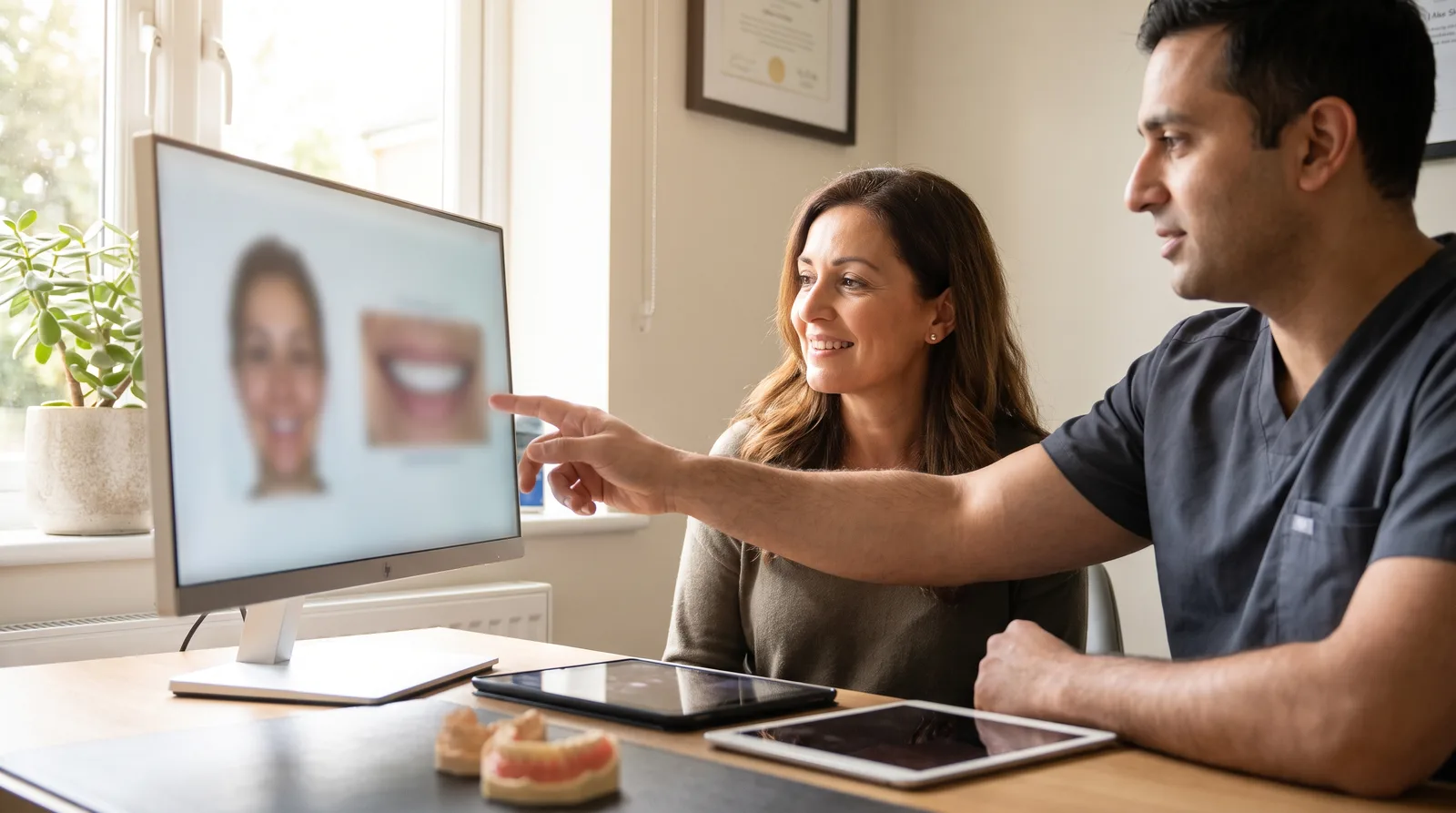
smile-design
Smile Design for a Gummy Smile: Can It Really Help?
Smile design for a gummy smile: what actually causes it and which treatment options can genuinely help you feel confident.
Sep 21, 20268 min read



Anyone researching dental implant pricing ads: what to know before committing has probably already seen a headline number that looked surprisingly low. Full-arch implant treatment advertised in the high teens of thousands of dollars shows up often enough in this market that it's worth understanding exactly what that number does and doesn't include before treating it as an apples-to-apples comparison.
This isn't about naming any specific advertiser. It's about the pattern behind headline implant pricing generally, and what a more transparent quote actually accounts for. Patients often assume a lower number means a worse provider or a better deal, when in reality it usually just means fewer details were disclosed upfront.
For a deeper look at what drives implant costs specifically, see this practice's existing guide on what actually drives dental implant cost in NJ.
Dental implant ads often quote a low starting price because that number typically covers only the most straightforward version of treatment, before any of the exams, adjustments, or materials most patients actually need get added on.

A headline price in an ad is usually a "starting at" figure attached to the simplest possible case: adequate bone density, no infection to treat first, and the most basic materials tier available. Real cases vary enough that the advertised number often applies to a small minority of actual patients.
That's not necessarily dishonest advertising. It's standard practice across a lot of industries to lead with the lowest configuration. The problem shows up when a patient books a consultation expecting that number and then hears a substantially higher one once their actual case gets evaluated, sometimes after already mentally committing to a specific budget.
The gap between the advertised figure and the actual quote tends to grow with case complexity. A patient with healthy bone and no remaining teeth to extract might land close to the advertised number. A patient who's been missing teeth for years, with bone loss and lingering infection to address first, almost never will.
None of this is unique to dentistry. Any service industry that advertises a starting price tends to face the same gap between the headline figure and what most customers actually pay once their specific situation gets factored in. Dental implants just happen to involve a wider range of possible complications than most advertised services do, which widens that gap further than most people expect going in.
Low advertised implant prices commonly leave out bone grafting, sedation, extractions, follow-up adjustments, and any upgrade from the most basic materials tier, all of which apply to a meaningful share of real cases.
Here's a general breakdown of what tends to get added after the initial quote:
More than 120 million Americans are missing at least one tooth, according to the American College of Prosthodontists. A meaningful share of that group also deals with bone loss significant enough to require grafting before implant placement is even possible. Regular preventive care can catch a lot of these issues early. About 80% of oral health issues are identifiable before they become serious, according to the ADA, which is part of why bone loss and infection so often show up together in patients who've gone years without routine visits.
Want a Written, Detailed Quote?
Start with an exam and imaging, not a generic average, so the numbers reflect your actual case.
Schedule a Consultation →A transparent implant quote spells out the materials tier, whether grafting or extractions are included, what sedation options cost, and what happens if an adjustment is needed after the initial healing period.
The difference between a transparent quote and a headline ad price usually isn't the honesty of either provider. It's the level of detail offered before a patient commits to anything. A quote built around an actual exam, current imaging, and a specific treatment plan tends to hold up better than one built around a generic average.
Dental implants have a success rate of 95 to 98% over ten years, according to the Journal of Oral and Maxillofacial Surgery, but that statistic assumes proper planning, adequate bone support, and quality materials. A rushed plan built around hitting a specific advertised number doesn't automatically produce a worse outcome, but it removes some of the margin that makes a good outcome more likely.
According to Mayo Clinic's general guidance on dental care, treatment planned around a thorough exam and imaging tends to produce more predictable long-term results than treatment planned around a fixed budget alone. That's a reasonable way to think about the tradeoff between a low headline number and a fully detailed quote.
| Often Missing From a Headline Price | What a Transparent Quote Specifies |
|---|---|
| Bone grafting, if needed | Whether grafting is included or billed separately |
| Extractions of remaining teeth | Whether extractions are part of the base plan |
| Sedation beyond local anesthetic | Which sedation options are available and at what cost |
| Materials tier assumed by the ad | Exact materials used and why that tier was chosen |
| Post-treatment adjustments | Warranty terms and what a follow-up adjustment costs |
Susan J. Curley DDS leads with 25-plus years of experience and coordinated restorative care rather than a headline number, because the restoration is the part that determines daily comfort and long-term durability.
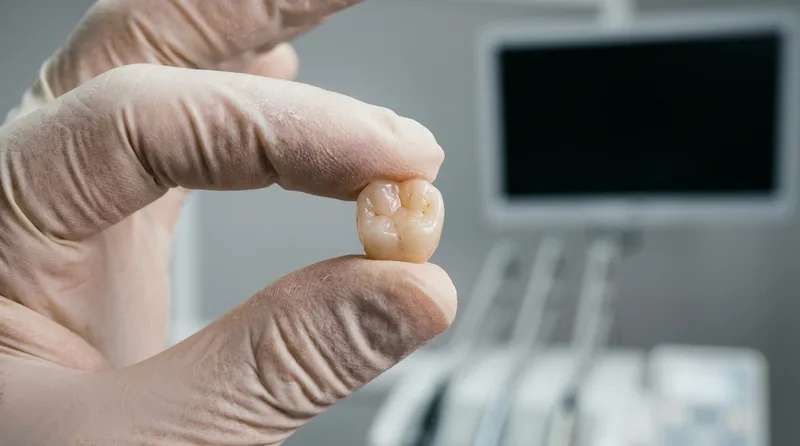
The practice provides restorations for implant-supported teeth, including crowns and full-arch prosthetics, working alongside the oral surgeon or periodontist who places the implant itself. That division of labor is standard in dentistry. It means the restorative side, the part a patient actually feels every time they bite down, gets the same attention to detail as any other cosmetic or restorative case at the practice.
Nearly 99.7% of Americans believe a smile is an important social asset, according to the American Academy of Cosmetic Dentistry. A restoration that fits precisely and looks natural tends to matter more to daily confidence than the specific number on an initial ad. Digital Smile Design and CBCT imaging both play a role in getting that fit right the first time, rather than adjusting it repeatedly after the fact. That's exactly the kind of detail a headline price rarely accounts for.
For more on how the practice approaches full-arch restoration, see the full mouth reconstruction service overview, which covers how the restorative and surgical sides of treatment fit together.
25+ Years Coordinating Restorative Care
Dr. Curley has worked alongside oral surgeons and periodontists on implant restorations for decades.
Meet Dr. Curley →When a lower-cost restoration doesn't hold up, the usual problems are a poor fit, faster wear on lower-grade materials, or a bite that was never quite adjusted correctly, all of which mean more visits later rather than fewer.
None of this means every value-priced provider does inferior work. It means the margin for error shrinks when a plan is built around hitting a specific number rather than around what a specific patient's mouth actually needs. A prosthetic that doesn't fit precisely can cause ongoing irritation, uneven wear on remaining teeth, or a bite that never feels quite right, none of which shows up in an ad.
Patients who keep up with routine care and well-fitted restorative work are roughly 60% less likely to lose teeth over time, according to the Journal of Dental Research. A restoration that needs frequent adjustment or early replacement works against that outcome regardless of what the original price looked like on paper. According to CDC data, oral health problems tend to compound the longer they go unaddressed, which is part of why a poorly fitted restoration rarely stays a small issue for long.
The real cost comparison, in other words, isn't the number on day one. It's the total cost across five or ten years, once adjustments, replacements, and any related dental work are factored into the original decision. A slightly higher upfront quote that avoids two or three follow-up corrections often ends up costing less over that longer window.
The most useful way to compare two implant quotes is to ask both providers the same specific questions about materials, inclusions, and warranty terms rather than comparing two different headline numbers directly.
A quote with more line items isn't automatically the better one, but a quote with no line items at all is genuinely hard to evaluate. Asking for a written breakdown puts both providers on equal footing and makes it possible to compare like with like instead of comparing a detailed plan against a marketing number.
Providers who answer these questions directly and in writing tend to be more predictable to work with over the life of a restoration than providers who prefer to keep the conversation focused on the headline number alone. A provider who hesitates to put any of this in writing is worth treating as a signal in itself.
For a fuller look at how coordinated, transparent care works in practice, see this guide on complete dental care under one roof in NJ.
Before choosing a provider for implant restorations, ask about experience with full-arch cases specifically, request a written breakdown of costs, and confirm who handles both the surgical and restorative sides of treatment.

Implant restoration is a long-term investment in daily function, not just appearance, and the questions worth asking reflect that. Experience with the specific type of case matters more than general implant familiarity, since full-arch restorations involve different planning than a single-tooth replacement.
It's also worth asking directly how the surgical and restorative sides of treatment are coordinated, since some patients assume one provider handles everything when in practice it's often a team split between a surgeon and a restorative dentist. Knowing that upfront avoids confusion partway through treatment, especially if a question comes up after the surgical portion is already complete.
Dr. Susan J. Curley, DDS has coordinated restorative care for implant-supported teeth for more than 25 years, working alongside oral surgeons and periodontists on the surgical side of that process. That kind of established working relationship between specialists tends to produce smoother handoffs than a one-time referral arranged for a single case, since both sides already understand how the other communicates and plans.
The short version: a low headline price for implant treatment isn't automatically a bad sign, but it's rarely the whole picture either. Understanding what's typically excluded, and asking for a written breakdown before committing, tends to prevent the most common surprises later in treatment.
Results may vary. Please consult with your dentist at Susan J. Curley DDS for personalized treatment recommendations.
For a specific quote based on an actual exam rather than a generic starting price, the next step is a conversation, not another ad. A written breakdown built around an actual mouth tends to be worth more than a headline number built around an average one.
Have a quote from elsewhere you'd like a second opinion on?
Contact Us →Written By
Dentist
Smile design for a gummy smile: what actually causes it and which treatment options can genuinely help you feel confident.
Your first smile makeover consultation: what to expect, from the goals discussion to your digital smile design preview and plan.
What is digital smile design? A preview technology that lets you see your proposed new smile before treatment even begins.
Book your visit with Dr. Curley online or call us, and we'll take it from there.