crowns
Temporary Crown Care Tips: What to Avoid Before Your Crown
Temporary crown care tips: what to avoid eating, how to floss carefully, and what to do if it comes loose or falls off entirely.
Sep 13, 20269 min read



If you have avoided the dentist for longer than you would like to admit, and the main thing standing between you and making an appointment is the thought of what the dentist is going to say, this article is written for you. Dental anxiety is one of the most common reasons people put off care, and the fear of judgment from a provider is one of its most specific and underacknowledged forms. The honest truth is that dentists who work with anxious or long-absent patients every day are not surprised by how long it has been. They have seen longer. The question at Susan J. Curley DDS is never how long it has been. It is where to start, and how to make the next visit easier than the last one you remember. These dental anxiety tips are a starting point for anyone who needs them.
Dental anxiety exists on a spectrum from mild apprehension to phobic avoidance. Approximately 36% of adults experience some degree of dental anxiety, and about 12% avoid care entirely due to phobia, according to published epidemiological data. The shame that often accompanies avoidance adds a second barrier on top of the fear itself.
Dental anxiety exists on a spectrum, from mild apprehension before an appointment to phobic avoidance that prevents any dental care for years or decades. Wherever a person falls on that spectrum, the experience is real and the avoidance it produces has real consequences for oral health. The shame that often accompanies dental avoidance, the sense that a reasonable adult should simply be able to schedule a cleaning, is one of the most counterproductive aspects of the problem because it adds a second barrier on top of the fear itself.
According to published research on dental anxiety and care access, approximately 36% of adults in the United States experience some degree of dental anxiety, and approximately 12% experience dental phobia severe enough to avoid care entirely, according to that epidemiological data. These are not rare or unusual responses. They are common human experiences that dentists who work with anxious patients have seen and understand.
The factors that most commonly drive dental anxiety include negative past experiences with dental care, fear of pain, embarrassment about the current state of the teeth, fear of the sounds and sensations associated with dental work, and a general sense of loss of control in the dental chair. Each of these is addressable with the right approach, but only at a practice that takes them seriously rather than dismissing them as something to push through.
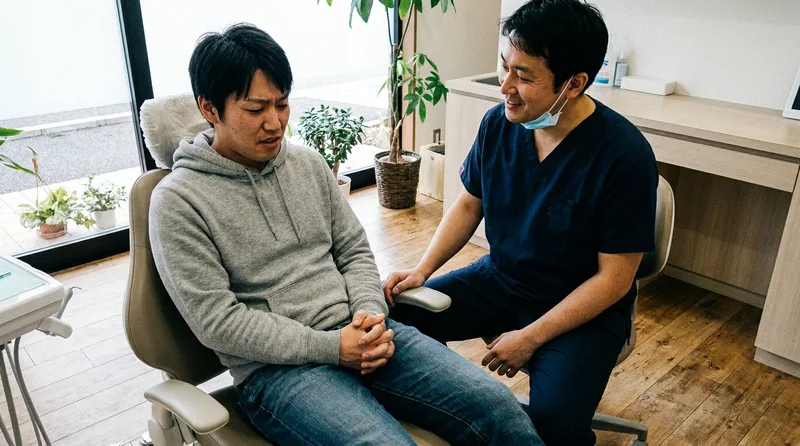
In practice, it means the difference between a provider who lectures about past decisions and one who focuses on current options. Patients who come in after a long absence are told what the situation looks like today and what the most sensible next steps are, without commentary on what should have been done differently.
Judgment-free is a phrase that gets used in dental marketing, and patients who have had discouraging experiences in the past are right to be skeptical of it as a descriptor. What it actually means in practice is the difference between a provider whose first response to a long gap in care is a lecture about what should have been done differently, and a provider whose first response is to understand the situation and figure out how to help from where things currently are.
At Susan J. Curley DDS, patients who come in after a long absence are not told what they should have done. They are told what the current situation looks like, what the options are, and what the most sensible next steps are given where things stand today. The judgment about whether care was handled well in the past is irrelevant to the task of addressing the situation in the present. Dr. Curley and the team's job is to help, not to evaluate whether help should have been sought sooner.
This is not the same as pretending that delayed care has no consequences. Sometimes it does, and patients deserve an honest account of that. But there is a difference between clinically relevant information about how a condition has progressed and a moral judgment about the person who was too anxious or too overwhelmed to address it earlier. The former is part of the clinical conversation; the latter has no place in it.
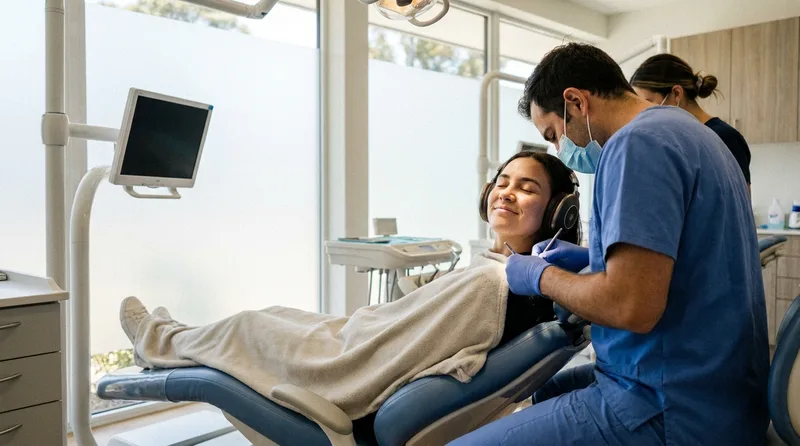
Managing dental anxiety is not about telling yourself not to be anxious. It is about putting specific practices in place that reduce the factors driving the anxiety and give you tools for the moments when it spikes.
Strategies that help:
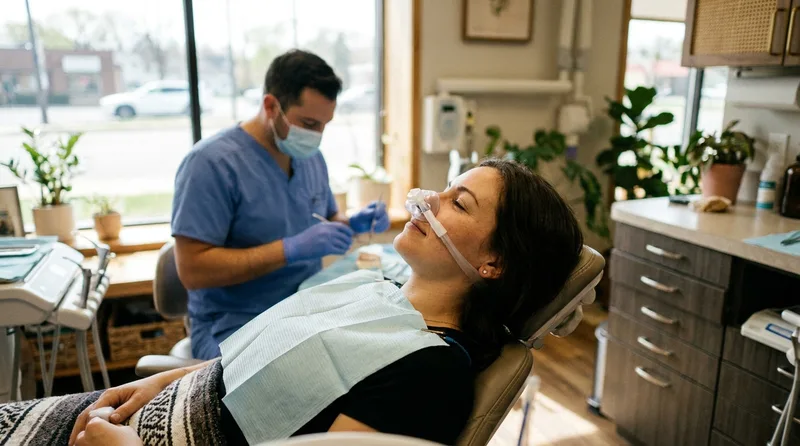
Sedation is one of the most important tools for patients whose anxiety is severe enough that behavioral strategies alone are not sufficient to make dental care manageable. At Susan J. Curley DDS, sedation options are available and are presented as a legitimate choice rather than a last resort for patients who really cannot manage.
Nitrous oxide, sometimes called laughing gas, is the most commonly used sedation in dentistry. It is administered through a small mask worn over the nose during the procedure, produces a relaxed and slightly euphoric state, and wears off completely within minutes after the mask is removed. Patients can drive themselves home after nitrous oxide. It is safe, reversible, and effective for mild to moderate anxiety.
Oral sedation involves taking a prescribed sedative medication before the appointment. It produces a deeper state of relaxation than nitrous oxide and can cause drowsiness that persists into the afternoon. Patients need a driver for appointments involving oral sedation. It is appropriate for patients with more significant anxiety or for longer appointments where sustained relaxation is helpful.
The right sedation option for a specific patient depends on the level of anxiety, the type of treatment planned, and the patient's medical history. Dr. Curley discusses these options openly at the consultation and recommends based on the individual situation rather than a standard protocol.
If it has been five, ten, or more years since your last dental visit, the situation is almost certainly manageable, and starting now is better than continuing to wait. A long absence means a thorough first appointment: X-rays, a comprehensive examination, and an honest conversation about options, conducted without commentary on the gap.
The patients who are most hesitant to come in are often the ones who most need reassurance that showing up is the right move regardless of what has happened before. If it has been five years, ten years, or longer since your last dental visit, the most important thing to understand is this: the situation is almost certainly manageable, and starting now is better than continuing to wait. Whatever has happened to the teeth in the interval since the last visit does not become easier to address by delaying further.
A long absence does not mean a catastrophic appointment. It means a thorough first appointment: a complete set of X-rays, a comprehensive examination, and an honest conversation about what is present and what the options are. At Susan J. Curley DDS, that appointment is conducted without commentary on how long it has been, without comparison to how things should look, and without pressure to commit to any treatment at that first visit. The information from that appointment belongs to you, and what you choose to do with it is your decision.
According to the American Dental Association, patients who return to regular dental care after a long absence and maintain consistent appointments going forward achieve oral health outcomes comparable to those who maintained continuous care, and early return to care prevents conditions from advancing to more complex treatment needs.
If you are ready to come back, or to come for the first time, the easiest next step is to call or message the office and say what you said to yourself while reading this. The team at Susan J. Curley DDS is used to this conversation and knows how to make it comfortable.
If you are ready to come back, or to come for the first time, the easiest next step is to call the office and say what you said to yourself while reading this article. The team at Susan J. Curley DDS is used to this conversation and knows how to make it comfortable. Contact the office at susanjcurleydds.com/contact to book, or reach out through the contact form on the website. If it is easier to send a message than to call, that is fine too.
According to the National Institute of Dental and Craniofacial Research, finding a dental provider who takes dental anxiety seriously and offers accommodations for anxious patients is one of the most important factors in helping people return to regular care after a period of avoidance. That description fits Susan J. Curley DDS.
It has been a while. That's okay.
Susan J. Curley DDS in Wall Township, NJ is a judgment-free practice. Call or book online and tell us what you need. We will take it from there.
Book an AppointmentGetting back to dental care connects to several practical patient resource topics at Susan J. Curley DDS.
Results may vary. Please consult with your dentist at Susan J. Curley DDS for personalized treatment recommendations.
Written By
Dentist
Temporary crown care tips: what to avoid eating, how to floss carefully, and what to do if it comes loose or falls off entirely.
Cost of veneers NJ: what actually drives the price, from the number of veneers to material choice and treatment planning.
Crown after root canal: why almost every treated tooth needs one, what happens if you skip it, and the right treatment timeline.
Book your visit with Dr. Curley online or call us, and we'll take it from there.