crowns
Temporary Crown Care Tips: What to Avoid Before Your Crown
Temporary crown care tips: what to avoid eating, how to floss carefully, and what to do if it comes loose or falls off entirely.
Sep 13, 20269 min read



Getting a dental crown used to mean two appointments separated by two to three weeks, a temporary crown worn in the interim, and a second round of local anesthesia when the permanent crown arrived from the lab. At Susan J. Curley DDS in Wall Township, NJ, that model no longer applies. Same day dental crowns are available using in-office CAD/CAM technology that makes same day dental crowns possible that designs, mills, and delivers a permanent ceramic crown in a single visit, typically in about two hours from preparation to cementation.
This article explains how same-day crown technology works, how it compares to the traditional two-visit approach, and which situations are best suited to it.
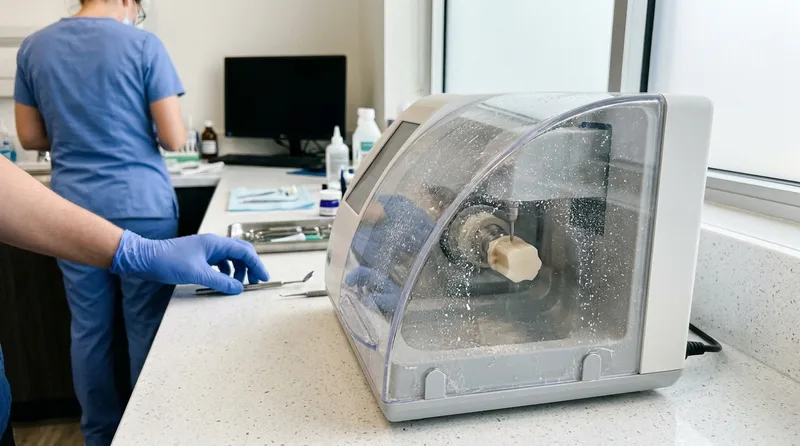
Same-day dental crowns are made using chairside CAD/CAM technology, which stands for computer-aided design and computer-aided manufacturing. The process replaces the traditional impression-and-lab workflow with a fully digital, in-office sequence that produces a finished ceramic crown in the time that would previously have been spent taking impressions and waiting for lab fabrication.
The steps in a same-day crown appointment:
The patient leaves the same day with a permanent ceramic crown, no temporary restoration, and no second appointment needed. Same day dental crowns compress what was a two-to-three week process into a single two-hour visit.
The traditional crown process involves the same preparation appointment but then requires a physical impression, a temporary crown placed over the prepared tooth, and a wait of two to three weeks while a dental laboratory fabricates the permanent restoration. The second appointment retrieves the temporary, seats the permanent crown, and adjusts the bite.
The comparison points that matter most to patients:
According to the American Dental Association's MouthHealthy resource on dental crowns, crowns are used to restore damaged or weakened teeth and can be made from several materials depending on the clinical situation and location of the tooth.
Same-day crowns at Susan J. Curley DDS are milled from ceramic blocks, most commonly lithium disilicate or zirconia-based ceramic, which offer a combination of strength and natural-looking translucency suitable for most crown indications. These materials are tooth-colored, do not contain metal, and bond well to tooth structure using modern dental adhesives.
Lithium disilicate ceramic is particularly well-suited to anterior and premolar crowns where aesthetics and moderate strength are both priorities. It has excellent light-transmitting properties that allow it to mimic the appearance of natural enamel closely. Monolithic zirconia blocks are available for posterior crowns where higher occlusal forces require greater strength, though they are somewhat less translucent.
According to Healthline, ceramic crowns are the most commonly chosen option for visible front and mid-arch teeth because of their ability to match the natural color and translucency of surrounding teeth. Same-day milled ceramic achieves this without the added time of laboratory fabrication.
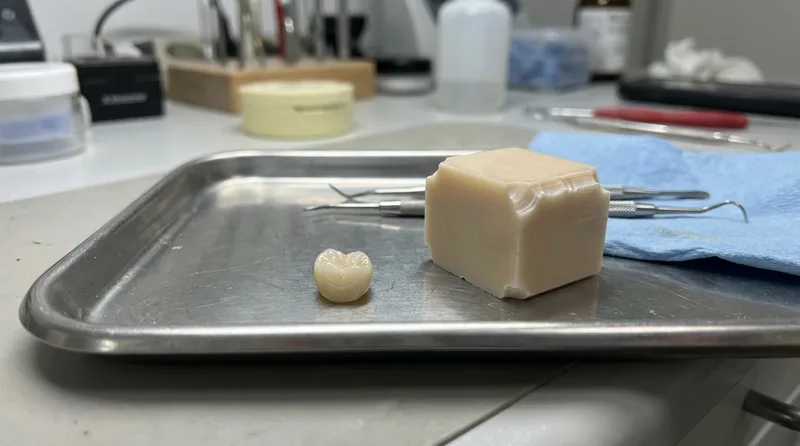
Same-day crowns made from high-quality ceramic blocks demonstrate clinical durability comparable to laboratory crowns. Published research shows CAD/CAM-milled ceramic crowns achieve survival rates above 90% at five years, according to systematic review data, consistent with traditional ceramic restorations.
Same-day crowns made from high-quality ceramic blocks have demonstrated clinical durability comparable to laboratory-fabricated ceramic crowns in published research. A systematic review published in the dental literature found that CAD/CAM-milled ceramic crowns showed survival rates above 90% at five years across multiple studies, according to that evidence, which is consistent with the performance of traditional ceramic restorations over the same period.
Durability depends significantly on the specific material chosen, the quality of tooth preparation and bonding technique, the patient's bite forces, and the tooth's location in the arch. Dr. Curley evaluates all of these factors when recommending same-day versus laboratory fabrication for any given crown. According to published research, approximately 95% of single-tooth crown indications in the premolar and anterior region are suitable for CAD/CAM chairside fabrication, according to that clinical data. There are still situations where a traditional lab crown is the better clinical choice.
Same-day crowns are well suited to most single-tooth indications, particularly anterior and premolar teeth where ceramic aesthetics and moderate bite forces align well with CAD/CAM materials. Common situations include failed large fillings, post-root-canal coverage, cracked teeth, and cosmetic restoration.
Same-day crowns are well suited to most crown indications on single teeth, particularly in the anterior and premolar areas where ceramic aesthetics are a priority and bite forces are moderate. Common situations where a same-day crown is an excellent fit include a large filling that has failed or cracked a tooth, a tooth that has been root-canal treated and needs full coverage, a cracked tooth that needs protection, and cosmetic improvement of a misshapen or significantly discolored tooth.
There are situations where a laboratory-fabricated crown remains preferable. Teeth with very high bite forces, such as first molars in patients who grind heavily, may benefit from the additional strength of a full-contour milled zirconia or PFM crown processed through a laboratory with different material options. Cases requiring matching to multiple adjacent crowns where extremely precise color layering is important may also be better served by a skilled laboratory ceramist. Dr. Curley discusses these considerations openly during the consultation so patients understand the clinical reasoning behind the recommendation.
A same-day crown appointment feels like a traditional crown preparation at first, then diverges when the digital scan replaces the impression tray. Most patients find watching their tooth appear in 3D on a screen memorable, and the milling phase gives them a 15-to-20-minute break before cementation.
A same-day crown appointment at Susan J. Curley DDS is similar in feel to a traditional crown appointment in the early stages, then distinctly different once the scanning and milling phases begin. The preparation under local anesthesia proceeds as it would in any crown appointment. The difference becomes noticeable when the scanner replaces the impression tray, and most patients find watching their tooth appear in three dimensions on the screen to be one of the more memorable parts of the visit.
The milling phase takes approximately 15 to 20 minutes, during which the patient can relax, and the finishing and cementation phase follows. The total chair time for a same-day crown appointment is typically 90 minutes to two hours, which is longer than a single traditional crown preparation appointment but significantly less time than two traditional appointments combined. Leaving with a finished, permanent crown in a single visit is the experience most patients find genuinely satisfying after years of assuming a second appointment was unavoidable.
To schedule a consultation or to discuss whether a same-day crown is right for your situation, visit susanjcurleydds.com/book-appointment or call the office directly.
Need a crown? Skip the second appointment.
Susan J. Curley DDS offers same-day dental crowns in Wall Township, NJ. One visit. Permanent result. No temporary crown, no second round of anesthesia.
Learn About Restorative Dentistry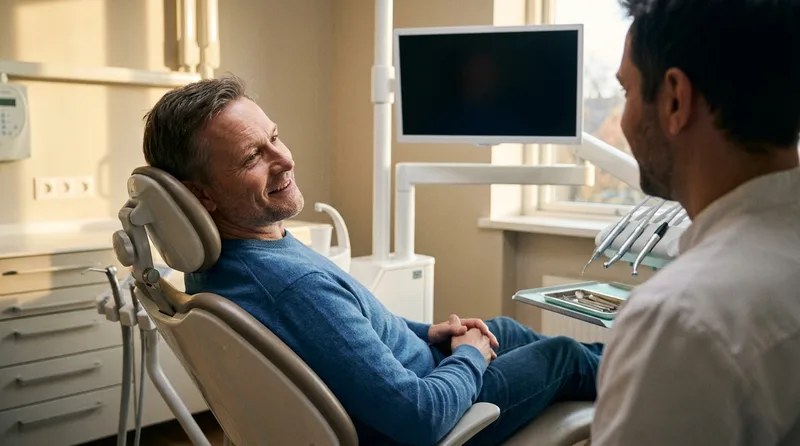
Same-day dental crowns are covered by most dental insurance plans at the same benefit level as traditional crowns, since the coverage is based on the procedure rather than the fabrication method. Whether a crown is made chairside or in a laboratory, the insurance code is the same and benefits apply accordingly.
Some plans require documentation that a crown is clinically necessary, which Dr. Curley's team provides as a standard part of the treatment authorization process. Pre-authorization can often be obtained before the appointment to give patients a clear picture of their out-of-pocket portion before work begins. Financing options are available for patients with limited coverage or no dental insurance.
Same-day crowns are one part of the restorative and technology picture at Susan J. Curley DDS.
Results may vary. Please consult with your dentist at Susan J. Curley DDS for personalized treatment recommendations.
Written By
Dentist
Temporary crown care tips: what to avoid eating, how to floss carefully, and what to do if it comes loose or falls off entirely.
Cost of veneers NJ: what actually drives the price, from the number of veneers to material choice and treatment planning.
Crown after root canal: why almost every treated tooth needs one, what happens if you skip it, and the right treatment timeline.
Book your visit with Dr. Curley online or call us, and we'll take it from there.