
smile-design
How to Build a Full Smile Makeover Plan That Works
Full smile makeover plan explained: how to properly sequence Invisalign, whitening, and veneers together for the best result.
Sep 22, 20266 min read



How long do veneers last is one of the most common questions patients ask before their cosmetic dentistry consultation. Most veneers last 10 to 15 years. Many perform well beyond that with good care.
This is genuinely reassuring news for anyone hesitant about the investment. Veneers are meant to be a long-term part of your smile, not a short-term fix that needs constant attention.
That said, "long-lasting" doesn't mean "maintenance-free." A handful of simple habits make the real difference between a veneer that lasts a decade and one that lasts two.
The sections below walk through those specific habits, one at a time, so you know exactly what actually matters rather than guessing based on general advice.
Nearly all Americans, 99.7% according to the American Academy of Cosmetic Dentistry, consider their smile an important social asset, consistent with the ADA's patient resources on veneers. This guide covers exactly what determines veneer lifespan and how to maintain them well.
None of the guidance here requires treating veneers as fragile. A few consistent habits, covered below, cover almost everything that actually affects how long they last.
Most patients find these habits become second nature within the first few weeks, at which point protecting your veneers stops feeling like a conscious effort at all.
By the time you reach that point, the daily habits covered here will simply feel like part of your normal routine, no different from brushing or flossing itself.
With that foundation in place, the sections below cover each factor in more depth, starting with lifespan itself and the difference material makes.
Most porcelain veneers last 10 to 15 years. Some last two decades or more with excellent care. Composite veneers typically last 5 to 7 years before needing replacement or touch-ups.
This range is an average, not a guarantee. Your specific lifespan depends on the material, your bite, and your daily habits. A well-matched, well-placed veneer tends toward the longer end of that range.
Two patients with the same material can still see different results. The dentist's skill during placement genuinely matters, alongside the choices you make every day afterward.
| Factor | Porcelain | Composite |
|---|---|---|
| Typical lifespan | 10 to 15 years, often longer | 5 to 7 years |
| Stain resistance | Excellent | Moderate |
| Repairability | Usually requires replacement | Can often be repaired chairside |
Porcelain veneers resist staining very well, since the material is non-porous. Composite veneers are more porous and can pick up stains from coffee, tea, and red wine over time. This is one of the clearest practical differences between the two materials.

This contrast issue is worth discussing with your dentist if it develops, since whitening the surrounding teeth or, in some cases, replacing older veneers can restore a matched, even look.
Sipping coffee or wine through a straw, and rinsing with water afterward, are simple habits that help protect composite veneers specifically from picking up stains over time.
A professional polish at your regular cleaning also helps composite veneers keep their shine, since it removes surface buildup that dulls the material over months of normal use.
This same cleaning visit is also when your dentist checks the bonding and margins closely, catching the kind of early wear that's difficult to notice on your own.
Grinding or clenching your teeth is one of the biggest risks to veneer longevity. Using your teeth to open packaging or bite fingernails also increases the risk of a chip.
Poor oral hygiene contributes too. Gum disease around a veneer's edge can compromise the whole restoration, even if the veneer material itself stays intact.
Diet plays a smaller role, but repeatedly biting into very hard foods puts steady stress on veneers over time. Being mindful, not overly cautious, is the reasonable middle ground.
Nail biting deserves a specific mention here, since it's a habit many people don't think of as risky but places repeated, concentrated pressure right on the edge of a veneer.
If nail biting is a hard habit to break, mentioning it to your dentist lets them watch that specific area more closely at your regular checkups.
Chewing on pens, pencils, or similar objects falls into this same category, an easy-to-overlook habit that concentrates repeated stress on one small edge of a tooth.
Recognizing these habits is often the first step, since most people genuinely don't realize how often they do them until they start paying attention on purpose.
Wondering how your veneers are holding up?
A checkup confirms whether your veneers are in great shape or need attention.
Schedule a Checkup →Watch for visible chips, a rough edge you can feel with your tongue, a change in color, or a loose feeling. Gum irritation near a veneer is also worth mentioning to your dentist.
Some of these signs are easier to feel than see, which is exactly why paying attention to how your veneers feel day to day matters just as much as how they look in the mirror.
A change you notice yourself between visits is valuable information for your dentist, even if it turns out to be minor once examined closely.
Keeping a simple mental note of when a change first appeared, and whether it's gotten better or worse, helps your dentist assess it more accurately at your next visit.
Trusting your instincts matters here. If something feels different, even subtly, a quick check is far simpler than waiting and hoping the issue resolves on its own.
A small chip can sometimes be polished or repaired without full replacement. Waiting too long can mean a repair is no longer enough, and the veneer needs replacing instead.
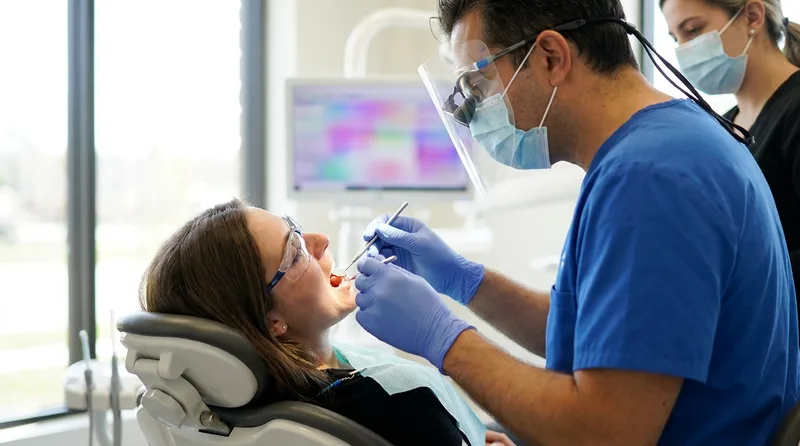
Brush twice daily and floss normally, just as you would with natural teeth. Veneers don't require special toothpaste, though a non-abrasive, low-abrasion formula is a reasonable, gentle choice either way.
Wearing a night guard if you grind your teeth is one of the most effective things you can do to protect your investment. Avoiding ice, hard candy, and using your teeth as tools matters too.
A custom night guard from your dentist fits more precisely than an over-the-counter version, which makes it more comfortable to actually wear consistently, night after night.
Comfort matters more than it might seem, since a night guard that feels bulky or ill-fitting is far less likely to actually get worn every night as intended.
None of this requires a complicated routine. Consistent basics, done well every day, protect veneers more effectively than any special product or occasional deep-cleaning effort.
If you're ever unsure whether a specific product or habit is safe for your veneers, asking your dentist directly is always faster and more reliable than searching online for a general answer.
An electric toothbrush with a gentle setting works well for most patients, though a standard soft-bristled manual brush is perfectly fine too, as long as the technique is thorough.
Flossing around veneers deserves the same care as flossing around natural teeth, sliding gently rather than snapping the floss down hard against the gumline.
Veneers themselves don't respond to whitening treatments the way natural teeth do. Whitening only affects your natural enamel, which can create a mismatch if you whiten after veneers are placed. This is a common surprise for patients. Once veneers are placed, their color is essentially fixed until they're eventually replaced, which is worth planning around from the very beginning.
Discussing your long-term whitening goals with your dentist before treatment, not after, ensures the final shade works for you well into the future, not just on day one.
This single conversation, held at the start rather than years later, is often what separates a patient who's fully satisfied with their smile from one dealing with an avoidable mismatch.
Our guide on teeth whitening options covers this in more detail. Whitening your natural teeth before veneers, rather than after, avoids this mismatch entirely.
Veneers typically need replacement when they chip significantly, when the bonding fails, or simply when they've reached the end of their expected lifespan. Your dentist can confirm which applies to your case.
Replacement doesn't mean starting from scratch in terms of decision-making. Your dentist already has your shade, shape, and preferences on file, which makes the process considerably more straightforward the second time.
Many patients find replacement, when it eventually comes, feels less significant than their original veneer decision, since the outcome and process are already familiar and predictable.
Planning ahead for eventual replacement, rather than being surprised by it, helps you approach that future decision calmly rather than as an unexpected expense or inconvenience.
Our guide on digital smile design covers how a replacement case is planned if that time comes. Replacement is usually a smooth, predictable process.
How long do veneers last ultimately depends on the material, your habits, and consistent care rather than a single fixed number. Regular dental visits catch 80% of oral health issues before they become serious, according to CDC oral health data, and the same principle protects your veneers over time. Results may vary. Please consult with your dentist at Susan J. Curley DDS for personalized treatment recommendations.
If it's been a while since your veneers were checked, a routine visit is the simplest way to confirm everything still looks and feels right.
Keep Your Veneers Looking Their Best
Schedule a checkup with Dr. Curley in Wall Township to make sure your veneers are holding up well.
Book Appointment →Have questions before booking?
Contact Our Wall Township Office →Written By
Dentist
Full smile makeover plan explained: how to properly sequence Invisalign, whitening, and veneers together for the best result.
Digital smile design mockup explained honestly for patients: how it is created, why it is trustworthy, and what it shows you.
Smile design for a gummy smile: what actually causes it and which treatment options can genuinely help you feel confident.
Book your visit with Dr. Curley online or call us, and we'll take it from there.