smile-design
How to Build a Full Smile Makeover Plan That Works
Full smile makeover plan explained: how to properly sequence Invisalign, whitening, and veneers together for the best result.
Sep 22, 20266 min read



Dental checkup while pregnant is it safe? Yes, routine dental care is considered safe throughout pregnancy at our general dentistry practice. Dental visits are actually recommended rather than something to put off until after delivery. Many expecting patients aren't sure whether to keep or delay their regular cleaning, so this is worth addressing directly.
Nearly 1 in 4 adults in the US has untreated tooth decay, according to CDC oral health data. Pregnancy hormones can actually increase certain oral health risks. This makes staying on schedule with dental care more important during pregnancy, not less. This guide covers what's genuinely safe and what timing works best.
Every pregnancy is different, and this guide covers general, well-established guidance rather than advice specific to your individual health history. Coordinating between your dentist and your OB-GYN remains the best way to confirm what applies to your specific situation. What follows walks through X-rays, anesthesia, timing by trimester, common symptoms, and what to mention at your visit, so you have a clear picture before you ever sit in the chair.
Yes, going to the dentist while pregnant is safe. Routine cleanings, exams, and most necessary treatment can continue throughout pregnancy according to both the ADA and ACOG. Skipping dental care during pregnancy is not recommended and can allow issues to worsen.
Some patients assume dental visits should wait until after the baby arrives. The opposite is generally true: untreated dental issues during pregnancy have been linked to broader health concerns. This is part of why routine care is actively encouraged rather than postponed. Letting your dentist know you're pregnant simply adjusts a few details of the visit, not whether the visit happens at all. Your dental team handles this routinely and can walk you through exactly what changes and what stays the same.
Many patients feel some hesitation about dental work during pregnancy. This often comes from outdated advice or general caution about anything medical during this time. Current guidance from dental and obstetric professional organizations agrees on this point. Routine and necessary dental care is safe and recommended throughout pregnancy.
If you've been putting off a checkup out of uncertainty, that hesitation is understandable but not necessary. Call ahead and mention your pregnancy when you book. This lets the front desk prepare appropriately, so there's nothing to figure out once you arrive.
Pregnancy hormones increase blood flow to the gums. This can make them more prone to inflammation, sensitivity, and a condition commonly called pregnancy gingivitis. Regular checkups help catch and manage these changes before they become more serious gum problems.
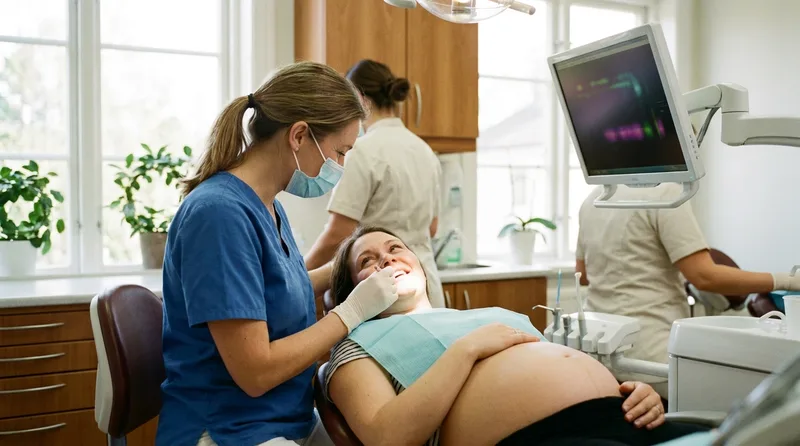
Morning sickness and changes in eating habits during pregnancy can also affect oral health. Frequent vomiting exposes teeth to stomach acid, and cravings sometimes shift toward more frequent snacking. Regular dental visits catch 80% of oral health issues before they become serious, according to the ADA. This applies just as much during pregnancy as any other time.
If morning sickness has been an issue, rinse your mouth with water afterward rather than brushing right away. This helps protect enamel that's been temporarily softened by stomach acid. This small habit adjustment is worth mentioning to your dentist, who can suggest other changes suited to your specific symptoms.
Increased snacking, especially on carbohydrate-heavy foods that satisfy pregnancy cravings, can also raise cavity risk if oral hygiene doesn't adjust accordingly. A quick rinse or a piece of sugar-free gum after snacking helps offset this without requiring a full change in eating habits.
Dental X-rays are considered safe during pregnancy when needed. The radiation dose is extremely low, and a lead apron with a thyroid collar further shields the abdomen. Routine, non-urgent X-rays are sometimes deferred as a precaution, but necessary ones are not avoided.
If an X-ray is needed to diagnose or treat a specific problem, like a suspected infection or a broken tooth, delaying it isn't necessarily the safer choice. An untreated dental infection carries its own risks. Your dentist will weigh the specific situation and only recommend an X-ray when it genuinely changes the treatment plan.
Modern digital X-rays also use significantly less radiation than older film-based systems, which further reduces any already-minimal exposure. Combined with proper shielding, this makes a necessary dental X-ray a low-risk part of diagnosing and treating an active problem during pregnancy.
If you're ever unsure whether a specific X-ray is necessary versus optional, asking your dentist directly is reasonable and expected. A good dental team will explain the reasoning rather than simply proceeding. They will factor in your pregnancy as part of that conversation.
Have dental concerns during pregnancy?
Our team coordinates care with your OB-GYN to keep both you and your baby comfortable and healthy.
Schedule a Visit →Local anesthetic used for routine dental procedures, like a filling, is generally considered safe during pregnancy. It stays localized rather than circulating broadly through the body. Your dentist and OB-GYN can confirm this applies to your specific situation.
Nitrous oxide, sometimes used for anxiety, is typically avoided during pregnancy as a precaution, particularly in the first trimester. This varies by provider and situation. Mentioning any pregnancy-related concerns or anxiety upfront lets your dental team choose the most appropriate comfort option.
If you're someone who typically relies on sedation for dental visits due to anxiety, discuss alternatives ahead of time rather than during the appointment itself. This gives your dental team time to plan a comfortable approach that doesn't rely on options generally avoided during pregnancy.
The second trimester is generally considered the most comfortable window for non-urgent dental treatment. Morning sickness has often eased by then, and it's still comfortable to sit in a dental chair for a longer appointment. Urgent issues are treated whenever they arise, regardless of trimester.
None of this means treatment is unsafe outside the second trimester, it's simply about comfort and positioning as pregnancy progresses. A true dental emergency is treated promptly no matter which trimester you're in.
Lying flat or reclined for an extended period can feel less comfortable later in pregnancy. Many dental offices adjust chair positioning or offer more frequent breaks during longer procedures in the third trimester. Mentioning what feels comfortable for you helps your dental team adjust accordingly.
| Stage | What to Expect |
|---|---|
| First trimester | Cleanings continue; nitrous oxide typically avoided |
| Second trimester | Most comfortable window for non-urgent treatment |
| Third trimester | Shorter visits, adjusted positioning for comfort |
Common dental symptoms during pregnancy include swollen or bleeding gums and increased tooth sensitivity. Occasionally a harmless gum growth called a pregnancy tumor appears and typically resolves after delivery. Mentioning any of these at your checkup helps your dentist address them appropriately.
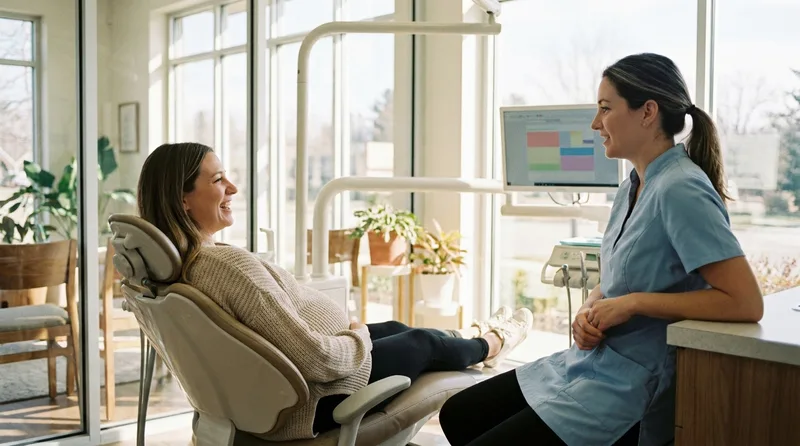
These symptoms are common enough that your dental team has seen them many times before. There's no need to feel embarrassed bringing them up. Most resolve with good home care and professional cleanings, and genuinely concerning changes are the exception rather than the rule.
Bleeding gums during brushing or flossing are one of the most commonly reported changes. Many patients understandably wonder whether they're doing something wrong. In most cases, this is simply the pregnancy-related gum sensitivity mentioned earlier. Gentle, consistent oral hygiene alongside regular cleanings keeps it manageable. Regular dental visits catch 80% of oral health issues before they become serious, according to the ADA. This is exactly why checkups shouldn't be skipped during this time.
Purely elective cosmetic treatments, like teeth whitening, are often postponed until after delivery simply as a precaution. There's no established danger specific to pregnancy for most routine dental care. Necessary treatment, including fillings and infections, should not be delayed.
The general guideline is simple: anything needed to prevent or treat active disease proceeds as normal. Treatments that are purely cosmetic and can comfortably wait are often postponed until after pregnancy. Your dentist can walk through which category your specific situation falls into.
Procedures like routine fillings, crowns, and treatment for a dental infection all fall into the "proceed as needed" category. Delaying them risks the problem worsening. Whitening, veneers, and other purely elective cosmetic work are more commonly pushed to after delivery, simply because there's no downside to waiting on those.
If you're mid-treatment on something like Invisalign when you become pregnant, most plans can continue with minor adjustments to check-in scheduling rather than stopping entirely. Discuss your specific treatment plan with your dentist once you know you're expecting to confirm what makes sense to continue versus pause.
Tell your dentist you're pregnant, how far along you are, any medications you're taking, and any pregnancy complications your OB-GYN has flagged. This information shapes small adjustments to positioning, timing, and comfort options during your visit, consistent with the ADA's general patient guidance.
Coordinating between your dentist and OB-GYN is especially useful if any medication is being considered as part of treatment. Your OB-GYN can confirm what's appropriate given your specific pregnancy. Most routine dental care doesn't require this level of coordination, but it's a simple step for anything beyond a standard cleaning.
Bring a list of current medications and any pregnancy-specific notes from your OB-GYN to your dental appointment. This makes coordination straightforward rather than something you have to remember from memory. Front desk teams are used to this request and can build it into your file for future visits too.
Dental checkup while pregnant is it safe ultimately has a reassuring answer: yes. Staying on schedule is generally the better choice rather than waiting. Results may vary. Please consult with your dentist and OB-GYN at Susan J. Curley DDS for personalized treatment recommendations.
If you're expecting and wondering whether to keep your dental appointment, the short answer is yes. Your dental team is ready to make the visit comfortable for your specific stage of pregnancy.
Expecting? Keep Your Smile Healthy Too
Schedule a comfortable, pregnancy-aware checkup with Dr. Curley in Wall Township.
Book Appointment →Have questions before booking?
Contact Our Wall Township Office →Written By
Dentist
Full smile makeover plan explained: how to properly sequence Invisalign, whitening, and veneers together for the best result.
Digital smile design mockup explained honestly for patients: how it is created, why it is trustworthy, and what it shows you.
Smile design for a gummy smile: what actually causes it and which treatment options can genuinely help you feel confident.
Book your visit with Dr. Curley online or call us, and we'll take it from there.